
Eastern Lowland vs Mountain Gorillas. Two Great Apes, Two Very Different Lives
Did you know that the gorilla you dream of meeting in Uganda or Rwanda has a close relative that can grow even larger, lives in a different forest environment, and faces a very different fight for survival? Most travellers hear the word gorilla and picture a silverback emerging from the misty slopes of Bwindi or the Virunga volcanoes. But there is another eastern gorilla, found in the forests of the Democratic Republic of Congo that deserves just as much attention.
So, what is the difference between a mountain gorilla and an eastern lowland gorilla? Are they separate species? Do they live in the same kind of habitat? And why can one be tracked on a well-established safari while meeting the other is far less straightforward?
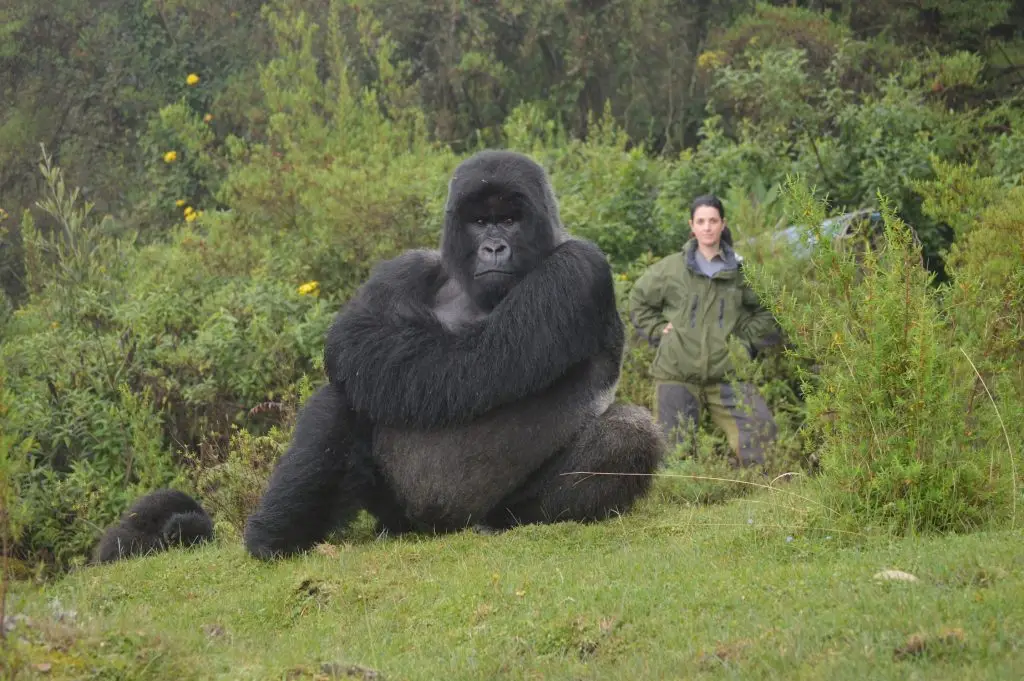 Here is the surprising part: they are not separate species, but two distinct subspecies of the eastern gorilla (Gorilla beringei). The mountain gorilla is scientifically known as Gorilla beringei beringei, while the eastern lowland gorilla also widely called Grauer’s gorilla is Gorilla beringei graueri. The International Union for Conservation of Nature (IUCN) recognizes both under the eastern gorilla species.
Despite sharing a common species, these great apes have adapted to different environments, and their conservation stories are not the same.
Mountain gorillas inhabit the high-altitude forests of Uganda, Rwanda and the Democratic Republic of Congo, while Grauer’s gorillas are found in the forests of eastern Congo, across a range of elevations that includes both lowland and mountainous terrain.
Their differences go beyond where they live. Their physical features, habitat, conservation challenges and opportunities for responsible wildlife tourism all help tell a bigger story about the survival of Africa’s great apes.
In this guide, we compare the two subspecies, separate fact from popular assumptions, and explain why most travellers heading to Uganda or Rwanda will encounter mountain gorillas rather than their eastern lowland relatives.
Two subspecies of one species
Are mountain gorillas and eastern lowland gorillas different species? Not quite. Despite their differences in appearance, habitat and way of life, they belong to the same species; the eastern gorilla (Gorilla beringei).
Scientists recognize two subspecies: the mountain gorilla (Gorilla beringei beringei) and Grauer’s gorilla (Gorilla beringei graueri), commonly known as the eastern lowland gorilla. This is the classification followed by the International Union for Conservation of Nature (IUCN).
So, what separates them? Geography is a major part of the story. Mountain gorillas live in two isolated populations: one in Uganda’s Bwindi Impenetrable National Park and another in the Virunga Mountains, shared by Uganda, Rwanda and the Democratic Republic of Congo (DRC).
Grauer’s gorillas, meanwhile, are found only in eastern DRC, where they inhabit forests across a broad range of elevations.
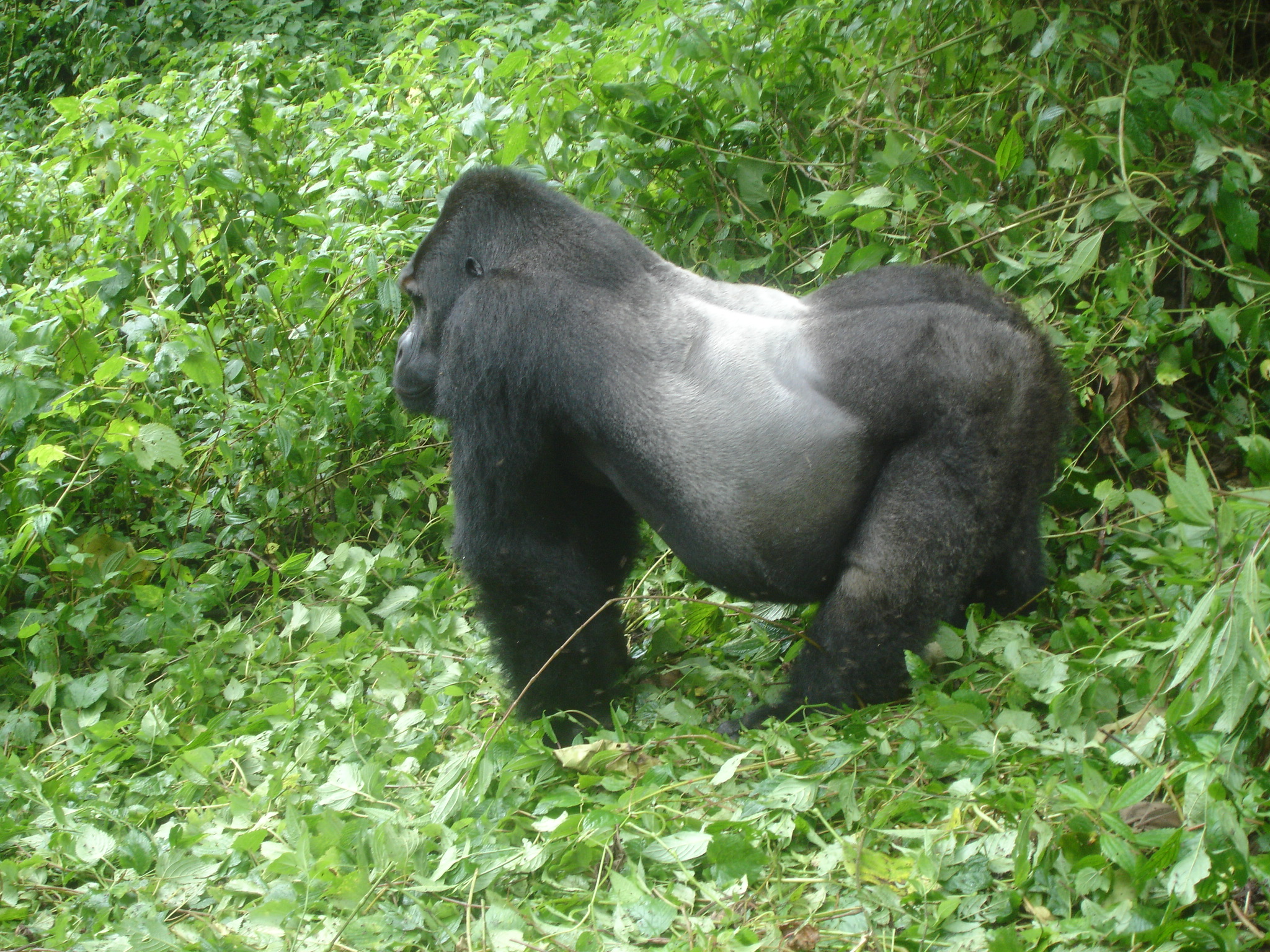 There is also an important detail hidden in the name eastern lowland gorilla. Despite the label, Grauer’s gorillas do not live exclusively in lowland forests. They occur from lowland areas to mountainous terrain, and their elevation range overlaps with that of mountain gorillas.
The name is widely used, but Grauer’s gorilla is the more precise common name when discussing the subspecies.
Their classification reflects recognised biological differences, including their genetics and evolutionary history, rather than simply the type of forest they occupy.
Both remain part of the eastern gorilla species, yet each faces different conservation circumstances. Understanding that distinction is essential when comparing their physical features, habitats, behaviour and chances of survival in the wild.
Where Each One Lives
If you want to understand the difference between mountain gorillas and Grauer’s gorillas, start with the map. Both belong to the eastern gorilla species, but their populations occupy different parts of the Great Lakes region of Central Africa.
Mountain gorillas survive in just two population areas. The first is the Virunga Massif, a chain of volcanic mountains spanning Uganda’s Mgahinga Gorilla National Park, Rwanda’s Volcanoes National Park and the Democratic Republic of Congo’s Virunga National Park.
The second is the Bwindi–Sarambwe ecosystem, centred on Bwindi Impenetrable National Park in Uganda and extending into the neighbouring Sarambwe Nature Reserve in eastern DRC. These two populations are geographically separated.
Grauer’s gorillas tell a different story. They are found exclusively in the forests of eastern DRC, with important populations in and around Kahuzi-Biega National Park, Maiko National Park, the Itombwe Massif and several community-managed forest areas and nature reserves.
Smaller populations also occur around Mount Tshiaberimu in Virunga National Park. Their distribution is fragmented, meaning different groups occupy forest areas separated by settlements, farmland and other altered landscapes.
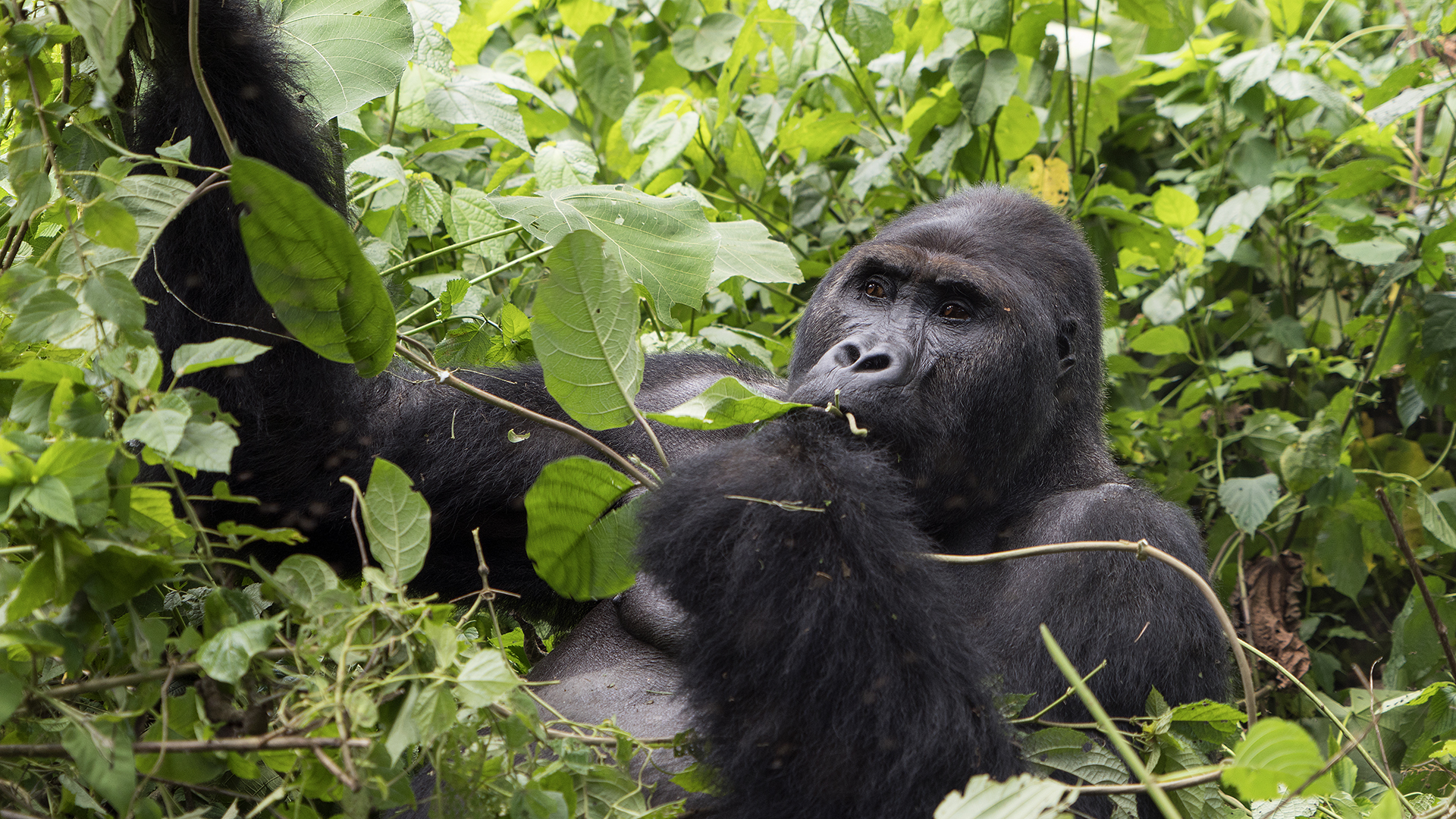 The IUCN Green Status Assessment confirms that fewer than 7,000 Grauer’s gorillas remain in the wild, establishing that their population has fallen by approximately 60% over the past two decades
That distinction matters. Mountain gorillas have experienced a notable conservation recovery, while Grauer’s gorillas continue to face serious threats across much of their range. Both need protection, but their conservation circumstances are far from identical.
Could you tell the two apart just by looking at them? Sometimes, yes but it helps to know what you are looking for.
Mountain gorillas have long, thick fur, an adaptation that helps them cope with the cooler temperatures of their high-altitude forest habitat. Their bodies are powerfully built, with broad chests and strong arms suited to moving through dense vegetation and steep terrain.
Grauer’s gorillas, commonly called eastern lowland gorillas, are generally larger-bodied and more robust, with a broad torso, large hands and a comparatively shorter coat. They are widely described as the largest of the gorilla subspecies, although size varies considerably between individuals, particularly between males and females.
The differences are not just about appearance. Their habitats influence what they eat and how they search for food. Mountain gorillas rely heavily on leaves, stems, shoots, pith and other readily available plant material.
Because fruit is less prominent in their high-altitude diet, they can often find enough food without travelling as far as some lowland gorilla populations.
Grauer’s gorillas also eat plenty of leaves and other vegetation, but fruit can make up a more important part of their diet when it is available.
Finding fruiting trees may require them to travel farther, and their diet changes with the seasons and the food available in their habitat. It would be misleading, however, to suggest that eastern lowland gorillas eat only fruit or that mountain gorillas never do. Both are adaptable feeders.
What about their group sizes and social lives?
Both subspecies live in social groups, commonly organized around a dominant silverback, adult females and their offspring. But group size is not fixed. It varies with the population, food availability, individual relationships and other ecological factors.
Mountain gorilla groups can include many individuals, and some well-studied groups have grown considerably over time. Grauer’s gorilla groups also vary in size and composition.
Researchers continue to study how habitat conditions, food distribution and human pressures influence their social behaviour, so it is better not to assign one standard group size to either subspecies.
For visitors, the most important point is that neither animal is simply a different version of the other. They share an evolutionary history, but their physical characteristics, food sources and environments have shaped two distinct ways of living.

The two subspecies are in very different situations. Mountain gorillas have been recovering slowly under intensive protection, while eastern lowland gorillas have suffered severe declines in recent decades, largely from hunting, habitat loss, and the effects of conflict in the region.
This contrast is among the most important points in the story. Tourism, secure borders, and long-term investment have helped one population grow. The other has faced instability that makes sustained conservation far harder.
Can You See Them?
Yes, both mountain gorillas and eastern lowland gorillas can be observed in the wild, but the opportunities for visitors are very different.
Mountain gorilla trekking is an established tourism activity in Uganda and Rwanda, with permits, trained guides and clear rules designed to protect both visitors and gorillas.
Travellers can book treks in Uganda’s Bwindi Impenetrable and Mgahinga Gorilla national parks or Rwanda’s Volcanoes National Park.
Eastern lowland gorillas, also known as Grauer’s gorillas, have historically been tracked by visitors in the Democratic Republic of Congo (DRC), particularly in Kahuzi-Biega National Park.
However, the security situation currently makes this option unsuitable for ordinary tourism. Kahuzi-Biega’s official park website announced on 1 January 2026 that the park was closed to visitors and tourism because of insecurity in South Kivu.
This is not a minor detail to overlook when planning a wildlife holiday. The UK Foreign, Commonwealth & Development Office advises against all travel to South Kivu, including Bukavu, while Australia’s Smartraveller maintains a Do not travel warning for the DRC because of the volatile security situation, conflict and other serious risks.
Travellers should consult their own government’s latest advisory before considering any journey to the region.
For now, Uganda and Rwanda remain the practical options for travellers hoping to experience gorilla trekking through established tourism programmes.
If your interest is specifically in eastern lowland gorillas, it is worth following updates from conservation authorities and Kahuzi-Biega National Park rather than making plans based on older travel information.
Mountain gorilla trekking is available through established tourism operations in Uganda and Rwanda. Although eastern lowland gorilla tourism has existed in the DRC, Kahuzi-Biega is currently reported closed to visitors.
Do not plan a visit unless the park officially announces reopening and current government travel advice supports travel to the area.
The story of the two subspecies shows what conservation depends on. Protection, funding, and community support can bring a species back from the edge, but they need stability to work. When a region is in conflict, rangers, researchers, and communities all face enormous obstacles.
Visiting mountain gorillas through legitimate permits supports conservation directly. Beyond that, donations to reputable organizations working across the region, and choosing operators who invest in communities, extend the benefit.
Mountain gorillas and eastern lowland gorillas are close relatives that live very different lives. One is a symbol of conservation hope, the other a reminder of how fragile that hope can be. Seeing a mountain gorilla family in Uganda or Rwanda becomes more meaningful when you know there’s a second story running beside it.
