
Walking with Gorillas in Uganda and Rwanda
Walking with Gorillas, There are very few moments in a traveller’s life that permanently alter the way one sees the world. Standing in the dense, misty rainforest of East Africa, just metres away from a family of mountain gorillas — watching a silverback beat his chest, seeing a mother gently nurse her infant, or locking eyes with an ancient elder gorilla — is one such moment. It is raw, humbling, and utterly unforgettable.
Mountain gorillas (Gorilla beringei beringei) are among the most endangered great apes on Earth. With fewer than 1,100 individuals remaining in the wild, they exist in only two isolated populations: the Virunga Massif — a chain of volcanoes straddling Uganda, Rwanda, and the Democratic Republic of Congo — and the Bwindi Impenetrable Forest in southwestern Uganda. These are the only places in the world where you can trek through ancient forest and come face to face with these magnificent animals.
This guide is a comprehensive exploration of gorilla trekking in both Uganda and Rwanda — the two premier destinations for this extraordinary experience. From the logistics of planning your trek, to the physical demands of the hike, the cultural context of conservation, and the deeply personal encounter itself, this article covers everything you need to know before you set foot on the forest trail.
 Understanding Mountain Gorillas
Taxonomy and Biology
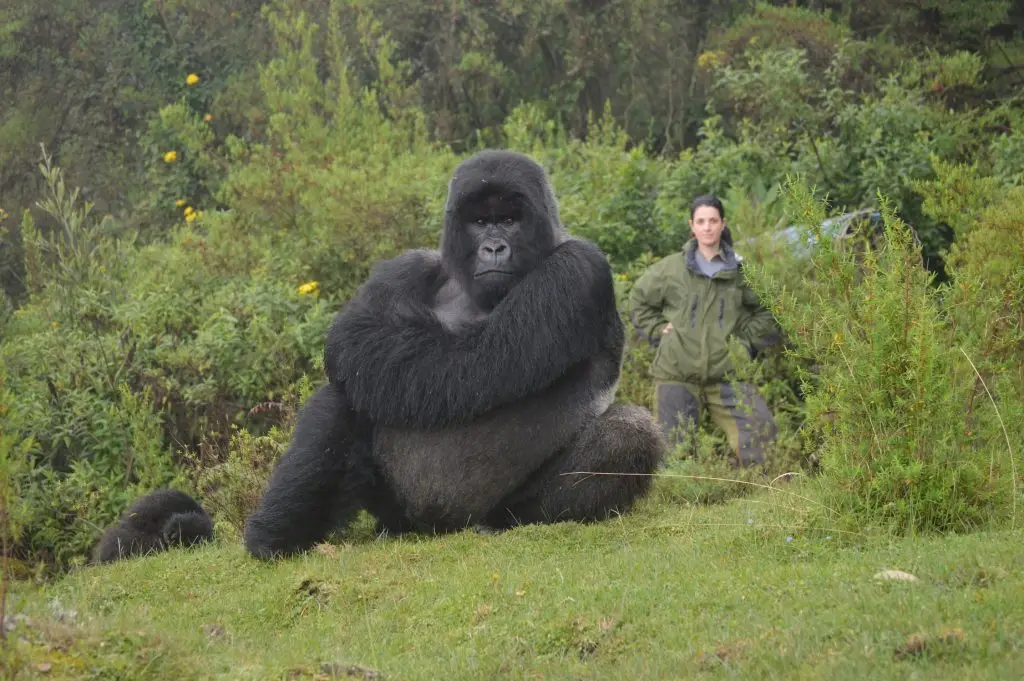
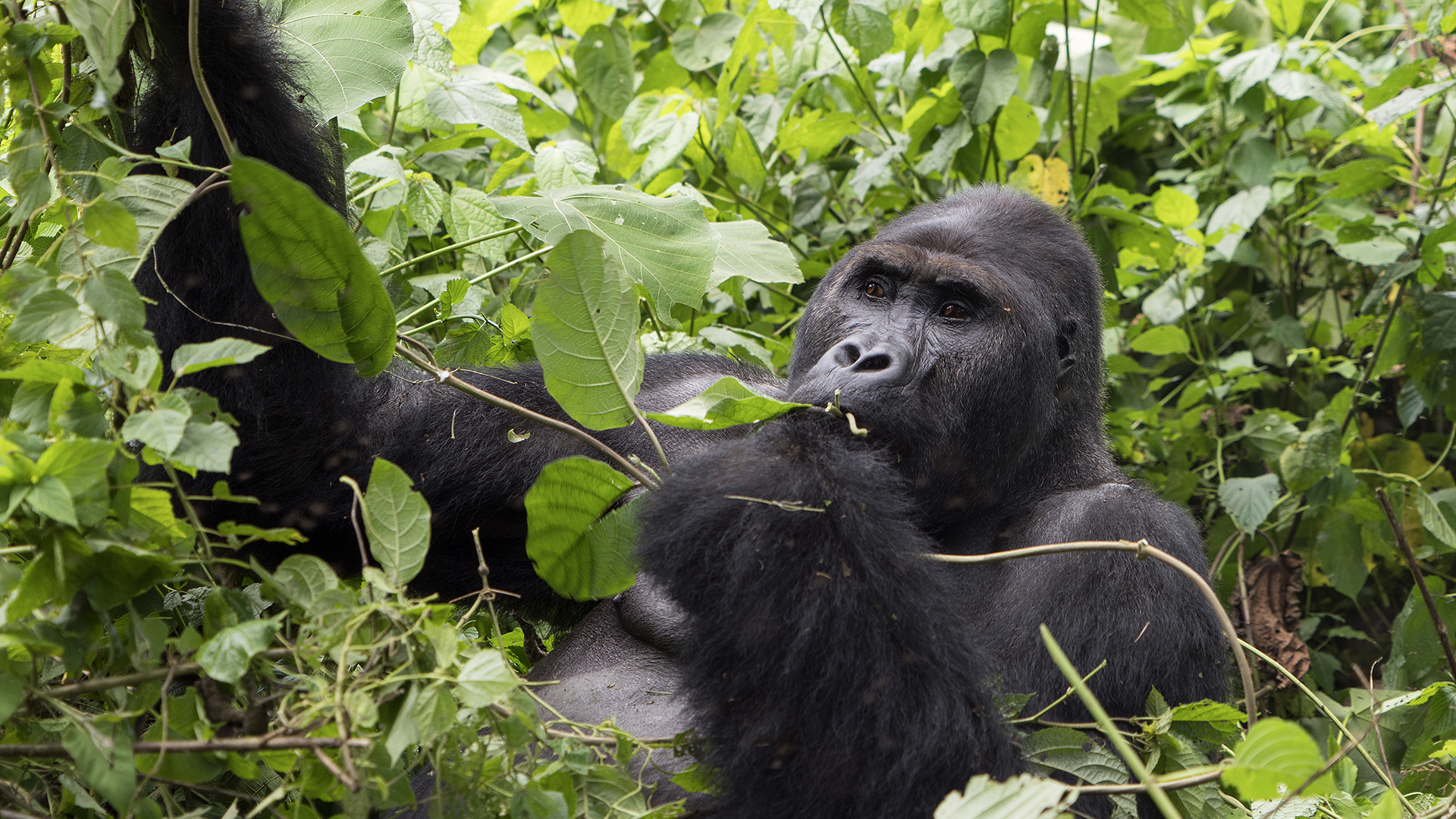
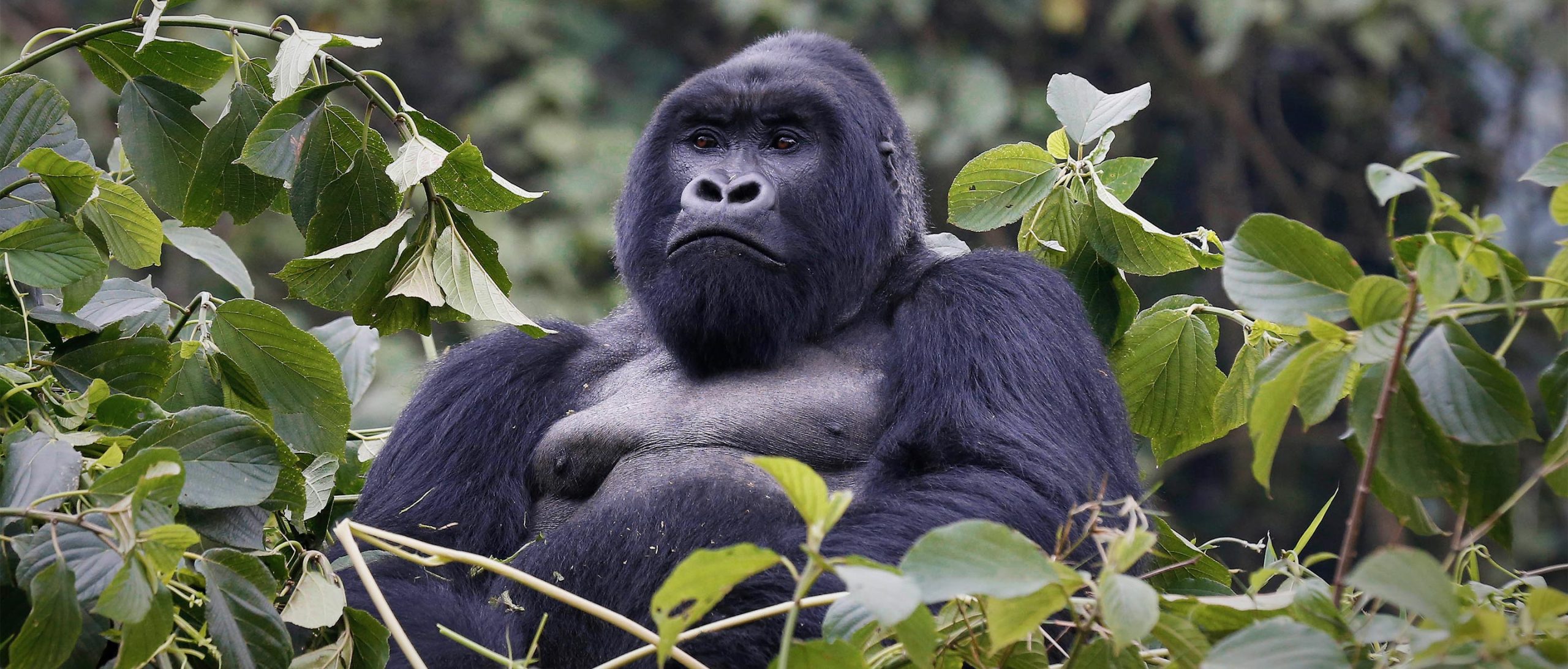
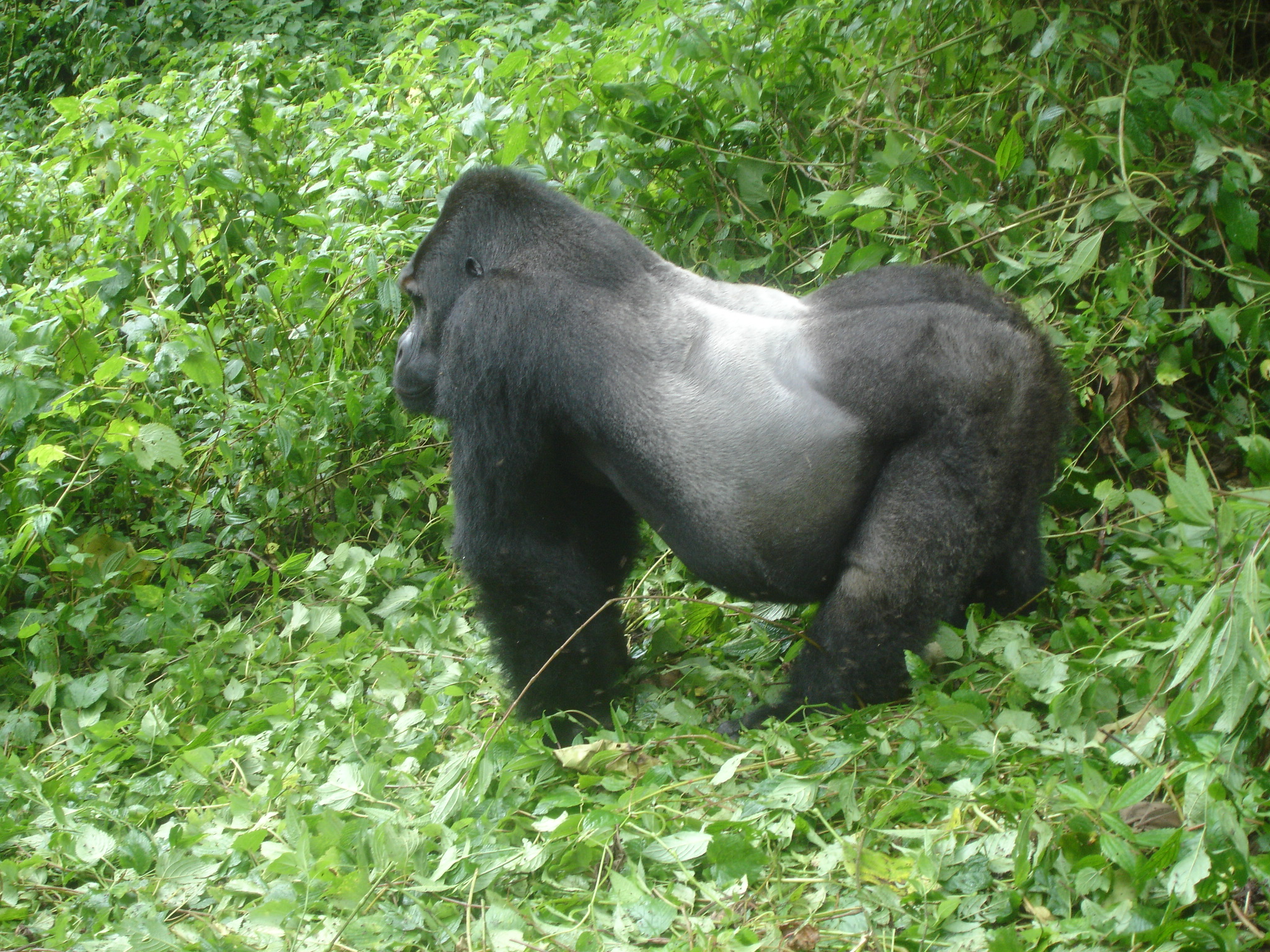
Mountain gorillas are the largest living primates on Earth. Adult males, known as silverbacks due to the distinctive saddle of silver hair that develops on their backs as they mature, can weigh up to 220 kilograms (485 pounds) and stand nearly 1.8 metres tall. Despite their imposing size, mountain gorillas are primarily herbivorous, feeding on leaves, stems, roots, bark, and occasionally insects.
Gorillas share approximately 98.3 percent of their DNA with humans, making them one of our closest living relatives. This genetic closeness is evident in their complex social structures, emotional depth, and intelligence. Gorillas have been observed using tools, displaying grief, and demonstrating problem-solving abilities. They communicate through a rich repertoire of vocalisations, facial expressions, and body language.
A gorilla family — or troop — typically consists of one dominant silverback, several females, and their offspring. Troops can range in size from five to over thirty individuals. The silverback is both protector and decision-maker, responsible for the safety and movements of the entire group. Sub-adult males, known as blackbacks, often remain in the troop until they are old enough to strike out on their own.
The Conservation Story
The story of the mountain gorilla is, at its heart, a story of conservation success hard won against enormous odds. In the early 1980s, the mountain gorilla population had plummeted to fewer than 250 individuals. Habitat destruction, poaching, civil conflict, and disease had brought the species to the brink of extinction. The tireless work of researchers like the legendary Dian Fossey — whose groundbreaking study at Karisoke Research Centre in Rwanda helped transform scientific and public understanding of gorillas — began to turn the tide.
Today, conservation efforts by organizations including the Dian Fossey Gorilla Fund, the International Gorilla Conservation Programms (IGCP), the Wildlife Conservation Society, and the national parks authorities of Uganda and Rwanda have led to a remarkable recovery. The mountain gorilla is the only great ape whose population is actually growing. This success has been driven in large part by community-based conservation programmes and, critically, by tourism revenue generated from gorilla trekking permits.
 Gorilla Trekking in Uganda
Uganda is widely considered the premier gorilla trekking destination in the world, offering two distinct locations — Bwindi Impenetrable National Park and Mgahinga Gorilla National Park — as well as a greater number of habituated gorilla families and comparatively more affordable permits than neighbouring Rwanda. The country’s tourism tagline, ‘The Pearl of Africa,’ a phrase famously coined by Winston Churchill, feels entirely justified when you experience the lush diversity of its landscapes and wildlife.
Bwindi Impenetrable National Park
Bwindi Impenetrable National Park is the crown jewel of Uganda’s gorilla trekking experience. A UNESCO World Heritage Site inscribed in 1994, Bwindi covers approximately 331 square kilometres in the southwestern corner of Uganda, nestled against the border with the Democratic Republic of Congo. It is one of the oldest and most biologically diverse rainforests in Africa, with a history stretching back over 25,000 years.
The name ‘Bwindi’ comes from the Rukiga language and means ‘place of darkness’ — a fitting description of the forest’s dense canopy, steep terrain, and labyrinthine network of trails. The park is home to over 400 plant species, 350 bird species (including 23 Albertine Rift endemics), 120 mammals, and 202 species of butterflies. It is one of the few remaining places on Earth where lowland and montane vegetation zones overlap, creating an extraordinarily rich ecosystem.
Bwindi is home to roughly half the world’s remaining mountain gorilla population, with approximately 19 habituated gorilla families available for tourism. These families are spread across four trekking sectors: Buhoma in the north, Ruhija in the east, Rushaga in the south, and Nkuringo in the southwest. Each sector has its own character, its own level of difficulty, and its own group of habituated gorilla families.
The Four Trekking Sectors of Bwindi
- Buhoma Sector: The most accessible and most visited sector, Buhoma is located in the northern part of the park. It is the gateway most travellers use for gorilla trekking and offers several habituated families including the famous Mubare family — the first to be habituated for tourism in 1993. Accommodation options range from budget bandas to high-end lodges.
- Ruhija Sector: Situated at higher altitudes in the eastern part of the park, Ruhija offers a more rugged trekking experience. The terrain is steeper and the trails more challenging, but the rewards — including exceptional birding and a more remote, untouched atmosphere — are considerable.
- Rushaga Sector: In the southern part of Bwindi, Rushaga has the highest concentration of habituated gorilla families of any sector, making it an excellent choice for those who want a higher likelihood of a shorter, more comfortable trek. Rushaga is also home to the gorilla habituation experience (more on this below).
- Nkuringo Sector: Perhaps the most scenic sector, Nkuringo sits on a ridge with panoramic views of the Virunga volcanoes and the Congo basin. The treks here can be among the most physically demanding, but the setting is extraordinarily beautiful and the sense of remoteness is profound.
 Mgahinga Gorilla National Park
Uganda’s second gorilla trekking destination, Mgahinga Gorilla National Park, covers just 33.7 square kilometres in the extreme southwest of the country, forming Uganda’s portion of the larger Virunga Conservation Area. The park encompasses the slopes of three of the Virunga volcanoes — Mount Muhabura (4,127 metres), Mount Gahinga (3,474 metres), and Mount Sabyinyo (3,645 metres) — and is also home to the critically endangered golden monkey.
Mgahinga is less visited than Bwindi, partly due to the smaller number of available gorilla permits — only one family, the Nyakagezi group, is habituated for tourism — and partly due to its remoteness. However, this means that trekking in Mgahinga feels more exclusive and adventurous. The landscape is dramatic and volcanic, and the backdrop of the great Virunga cones adds a visual grandeur that is unlike anywhere else.
The Gorilla Habituation Experience
One of Uganda’s most distinctive offerings — unavailable anywhere else in the world — is the Gorilla Habituation Experience (GHE), available in the Rushaga sector of Bwindi. While standard gorilla trekking allows visitors just one hour with a fully habituated gorilla family, the GHE permits participants to spend up to four hours with a gorilla family that is in the process of becoming accustomed to human presence.
The GHE is led by researchers and trackers from the Uganda Wildlife Authority, and visitors gain a rare insight into the actual science of habituation. Because the gorillas are not yet fully habituated, interactions can be more unpredictable and raw — the silverback may charge or display, young gorillas may be skittish — making the experience feel even more authentically wild. The permit for the GHE costs USD 1,500 per person and only four visitors are permitted per session.
 Uganda Trekking Permits and Costs
A standard gorilla trekking permit in Uganda costs USD 800 per person. This includes the park entry fee, the services of a professional ranger guide, and the one-hour gorilla encounter. The permit must be booked in advance through the Uganda Wildlife Authority (UWA) or through a licensed tour operator. Given the limited number of permits available — each habituated family can receive a maximum of eight visitors per day — early booking is strongly advised, particularly for peak season travel (June to September and December to February).
While USD 800 may seem substantial, it is considerably lower than Rwanda’s permit price and remains one of the most cost-effective ways to experience mountain gorillas. Revenue from permits contributes directly to conservation efforts and to community development programmes in the villages surrounding the parks, creating a powerful economic incentive for local communities to support rather than encroach on gorilla habitat.
Gorilla Trekking in Rwanda
Rwanda — the ‘Land of a Thousand Hills’ — has positioned itself as Africa’s premier luxury eco-tourism destination, and its gorilla trekking experience in the Volcanoes National Park is the centrepiece of that offering. Compact, efficiently managed, and increasingly accessible via Kigali’s expanding international airport, Rwanda offers a different flavour of gorilla encounter: shorter travel times from the capital, a sophisticated tourism infrastructure, and a landscape of breathtaking volcanic beauty.
Volcanoes National Park
Volcanoes National Park (Parc National des Volcans) is Rwanda’s oldest national park, established in 1925 as part of what was then Africa’s first protected area. Located in the northwestern corner of the country, just two to three hours from Kigali, the park covers 160 square kilometres and encompasses five of the eight Virunga volcanoes: Karisimbi (4,507 metres — the highest), Bisoke, Muhabura, Gahinga, and Sabyinyo.
The park is perhaps best known as the site of Dian Fossey’s Karisoke Research Centre, established in 1967 in the saddle between mounts Karisimbi and Visoke. Fossey’s decades of fieldwork here — documented in her seminal book ‘Gorillas in the Mist’ and later depicted in the 1988 film — transformed public understanding of gorillas and galvanised the global conservation movement. Visiting the Dian Fossey Tomb, where she is buried alongside some of the gorillas she fought to protect, remains a profoundly moving complement to any gorilla trek.
Volcanoes National Park is home to twelve habituated gorilla families available for trekking, in addition to two research groups. The families range in size from small, intimate groups of fewer than ten individuals to large troops exceeding thirty members. Each family has its own personality, its own history, and its own dynamics, and rangers are expert at matching visitor groups to families based on fitness level, interests, and group size.
The Trekking Experience in Rwanda
Gorilla treks in Rwanda depart every morning from the park headquarters in Kinigi, near the town of Musanze (formerly Ruhengeri). The briefing begins at 7:00 AM, where visitors are assigned to their gorilla family and receive an orientation from park rangers covering safety rules, etiquette, and what to expect. By 8:00 AM, trekking parties set off into the bamboo forest that forms the lower altitudinal zone of the park.
One of Rwanda’s practical advantages is the relatively short distance from Kigali to the park. Unlike Uganda, where some trekking sectors require a seven to nine hour overland journey, Rwanda’s compact geography means that visitors staying in Kigali can make a pre-dawn departure and begin trekking at the standard morning start time. Many high-end operators even offer helicopter transfers from Kigali, reducing travel time to under 30 minutes.
Rwanda has also pioneered a unique pricing model: a percentage of each permit fee is shared directly with the local communities through the Revenue Sharing Programme, which funds schools, health centres, and community infrastructure in the park’s buffer zone communities. This model has been widely praised as a template for community-based conservation and has been studied by governments across Africa.
Rwanda Permit Costs and Premium Tourism
Rwanda charges USD 1,500 per person for a gorilla trekking permit — the highest in the world. The price was deliberately set at this level to attract high-value, low-volume tourism, positioning Rwanda as a premium destination and ensuring that revenues remain sufficient to fund conservation even with smaller visitor numbers. Critics have argued that this makes gorilla trekking inaccessible to many travellers; proponents argue that it has been transformative for both conservation and the local economy.
The premium pricing has helped Rwanda attract an extraordinary roster of luxury lodges and camps in and around Volcanoes National Park. Properties such as Singita Kwitonda Lodge, One&Only Gorilla’s Nest, Bisate Lodge by &Beyond, and Sabyinyo Silverback Lodge offer accommodation experiences that rival the best in the world, combining spectacular design, gourmet cuisine, and deep conservation credentials. Many of these properties offer complimentary permit transfers and other logistical services that streamline the trekking experience considerably.
 The Gorilla Trek: What to Expect
Before You Trek: Preparation and Fitness
Gorilla trekking is classified as a moderately strenuous to strenuous activity, depending on the terrain and the location of the gorilla family on any given day. Treks can last anywhere from 30 minutes to eight hours, and they typically involve hiking through steep, densely forested terrain — often wet, muddy, and slippery — at altitudes ranging from 1,500 to over 2,500 metres above sea level. While no specific athletic training is required, a reasonable level of cardiovascular fitness will make the experience significantly more enjoyable.
In preparation for your trek, it is advisable to begin a regular walking or hiking programme at least two to three months in advance, focusing particularly on uphill terrain. Altitude can affect some visitors, particularly those arriving directly from sea level, so spending a day or two acclimatising in the local area before trekking is wise. Staying well-hydrated and resting adequately in the days before your trek are also important.
What to Wear and Bring
Proper clothing and equipment can make the difference between a comfortable trek and a miserable one. The forest environment is unpredictable: mornings can be cold, afternoons hot, and rain can arrive without warning at any time of year. Layering is essential. Here is what experienced trekkers recommend:
- Sturdy waterproof hiking boots: Ankle support is crucial on the uneven forest floor. Break them in thoroughly before your trip.
- Long-sleeved shirts and long trousers: To protect against nettles, insects, and scratching vegetation. Neutral, dark colours (khaki, olive, grey) are preferable to bright hues.
- Waterproof jacket or poncho: A lightweight, packable rain layer is non-negotiable.
- Gardening gloves: Invaluable for grabbing vegetation on steep climbs and protecting hands from stinging nettles.
- Gaiters: Highly recommended to keep mud and moisture out of boots.
- Daypack: Carry water (at least 2 litres), snacks, sunscreen, insect repellent, a hat, and any personal medication.
- Camera: Ensure batteries are fully charged. A camera strap is recommended to keep hands free for climbing. Flash photography is strictly prohibited.
- Walking stick: Wooden walking sticks are typically available for hire at the park gate and are enormously useful on steep descents. Trekking poles are equally effective.
The Morning Briefing
Every gorilla trek begins with a morning briefing at the park headquarters, typically between 7:00 and 8:00 AM. Here, visitors are divided into groups of no more than eight — the maximum number permitted per gorilla family per day — and assigned to their allocated family. Lead rangers provide a comprehensive orientation covering the history of the assigned gorilla family, current health status, approximate location (based on the previous afternoon’s tracking data), and the rules that govern the encounter.
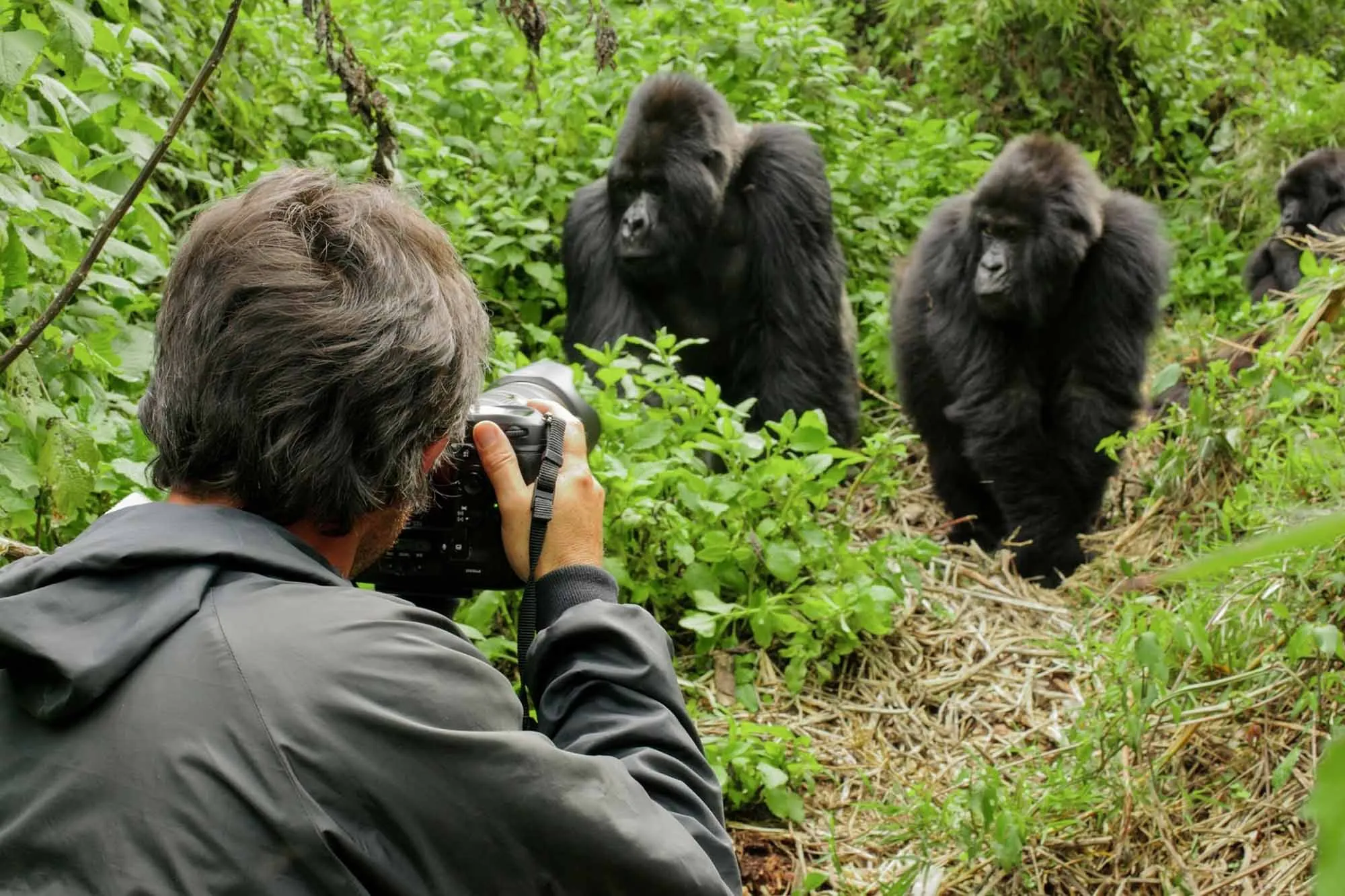
The rules are strict and non-negotiable, and they exist for good reason: the health and wellbeing of the gorillas depends upon every visitor adhering to them carefully. Key rules include maintaining a minimum distance of seven metres from the gorillas at all times; not eating or drinking in the presence of gorillas; keeping voices low and movements calm; not touching the gorillas under any circumstances; not using flash photography; and immediately withdrawing if a gorilla approaches closer than the minimum distance.
Into the Forest
Once the briefing concludes, the trekking party — consisting of up to eight visitors, a lead ranger, and several armed escorts (for security and wildlife management) — sets off into the forest. The initial section often passes through farmland or the bamboo belt at the park boundary before entering the ancient primary forest. The transformation in atmosphere is immediate and dramatic: the canopy closes overhead, the light turns green and diffuse, and the sounds of the outside world fade to silence.
Trackers from the park set out hours before sunrise to locate the gorilla family, who will have made a new nest for sleeping each night. The trackers communicate the family’s position to the lead ranger by radio, helping to direct the trekking group efficiently. This does not make the trek easy — gorilla families move constantly as they forage, and the forest terrain can be brutal — but it does ensure that the vast majority of treks result in a successful encounter.
As you approach the gorilla family, the ranger signals the group to slow down, keep quiet, and crouch low. The first signs of gorilla presence are often indirect — broken vegetation, fresh dung, the sound of knuckles drumming on the forest floor — before the animals themselves come into view. The first glimpse of a gorilla in the wild produces an emotional response that few travellers are fully prepared for. It is at once thrilling, humbling, and deeply moving.
The One-Hour Encounter
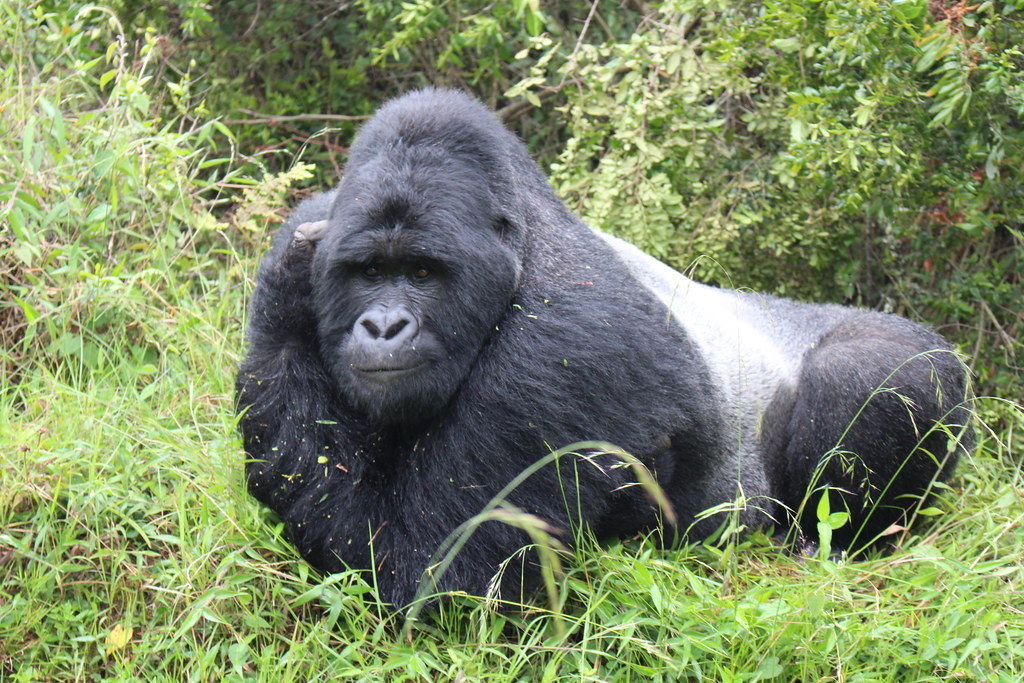
Once the gorilla family has been located and your group has settled quietly among the vegetation, the one-hour clock begins. The sixty minutes that follow are among the most extraordinary in any traveller’s experience. Gorillas go about their daily routines largely indifferent to your presence — a mark of their full habituation — and this normalcy is what makes the encounter so profound. You are not watching a performance; you are witnessing real lives being lived.
The silverback typically positions himself where he can monitor both his family and the visitor group simultaneously. He may rest, groom a female, or sit sphinx-like surveying his domain. Juveniles are often the most entertaining and the least decorous: they wrestle, chase each other up trees, roll down slopes, and occasionally venture disconcertingly close to visitors. Mothers with infants are especially captivating — the tenderness and attentiveness of gorilla motherhood is immediately recognisable and deeply touching.
The hour passes with bewildering speed. Most visitors report that they are so absorbed in the experience — watching, photographing, feeling — that they lose all track of time. When the ranger quietly indicates that the hour is up, the walk back through the forest offers time to absorb what has just happened. Many visitors describe feeling moved to tears, or a profound sense of having connected with something ancient and irreplaceable.
 Uganda vs. Rwanda: Choosing Your Destination
One of the most common questions among prospective gorilla trekkers is whether to go to Uganda or Rwanda. The answer depends heavily on priorities: budget, travel time, accommodation style, additional activities, and the overall experience sought. Both destinations offer outstanding gorilla encounters, but they differ considerably in character.
Uganda: Wild, Affordable, and Diverse
Uganda is the better choice for travellers on a relative budget, those who want to combine gorilla trekking with other wildlife experiences (chimpanzee tracking, boat safaris on the Kazinga Channel, tree-climbing lions in Queen Elizabeth National Park, golden monkeys in Mgahinga), and those who prefer a more rugged, adventurous travel experience. Bwindi’s sheer scale — with nearly 20 habituated families across four trekking sectors — means that permits are more consistently available and the variety of trekking environments is unmatched.
The journey from Kampala or Entebbe to Bwindi takes between seven and ten hours by road, depending on the sector, and this is the principal logistical challenge of Uganda’s gorilla trekking circuit. However, charter flights to airstrips at Kisoro and Kihihi have made this less of an obstacle, and the overland journey through Uganda’s rolling southwestern highlands is genuinely beautiful in its own right.
Rwanda: Luxurious, Efficient, and Iconic
Rwanda suits travellers who value ease, efficiency, and luxury, and who are willing to pay a premium for them. The proximity of Volcanoes National Park to Kigali means that a gorilla trek can comfortably be accomplished as part of a shorter regional itinerary. Rwanda’s tourism infrastructure is world-class, and the concentration of top-tier lodges around the park is remarkable. The dramatic backdrop of the Virunga volcanoes adds a cinematic quality to the experience.
Rwanda is also the logical choice for travellers who want to combine gorilla trekking with visits to Nyungwe Forest National Park (home to habituated chimpanzees and one of Africa’s most important montane forests), Akagera National Park (Rwanda’s savannah wildlife reserve, recently restocked with lions and rhinos), or the extraordinary cultural and memorial sites around Kigali. Rwanda is a small, safe, and efficiently managed country, and travelling independently is straightforward.
A Comparison at a Glance
For those unable to visit both destinations — which, it should be said, together make for one of the finest wildlife itineraries in Africa — the following considerations may help with the decision. Permit cost: Uganda USD 800 vs Rwanda USD 1,500. Number of habituated families for tourism: Uganda approximately 19 vs Rwanda 12. Trek duration: both variable, typically 2–6 hours. Distance from main gateway city: Uganda 7–10 hours by road from Entebbe vs Rwanda 2–3 hours from Kigali. Gorilla Habituation Experience: available only in Uganda. Luxury lodge concentration: Rwanda leads. Additional wildlife diversity: Uganda leads significantly.
When to Go: Seasons and Timing
Gorilla trekking is possible year-round in both Uganda and Rwanda, but the experience varies considerably with the seasons. The equatorial climate of both countries produces two main wet seasons and two main dry seasons, and these have a significant bearing on trekking conditions, trail difficulty, and the behaviour of the gorillas themselves.
Dry Season: June–September and December–February
The two dry seasons — the long dry season from June to September, and the short dry season from December to February — are widely considered the best times to trek for gorillas. Trail conditions are generally firmer and less slippery, making the physical demands of the hike somewhat more manageable. Skies tend to be clearer, making for better photography. Gorilla families in Bwindi often move to higher elevations during the dry season in search of food, which can extend trek times but also leads to encounters in spectacular highland forest settings.
The long dry season (June to September) coincides with the northern hemisphere summer holiday period and is the busiest and most expensive time to visit. Permits should be booked many months in advance — sometimes a year or more — for this period, particularly for Rwanda. The December-February window is somewhat quieter and can offer excellent value while still providing favourable trekking conditions.
Wet Season: March–May and October–November
The wet seasons bring their own particular rewards, and experienced trekkers often speak highly of visiting during these months. Rain transforms the forest into an intensely vivid, emerald-green landscape of extraordinary beauty. Gorilla families tend to remain at lower altitudes, often in bamboo and mixed forest zones, making treks shorter on average. Permit availability is generally better, and accommodation rates at most lodges are considerably lower during the green season.
The trade-offs are real: trails can be extremely muddy and slippery, rain gear and waterproof bags for camera equipment are essential, and the dramatic light of clear forest mornings is harder to come by. The long rains of March to May can be particularly heavy in Uganda, and some of the more remote trekking sectors in Bwindi can become challenging to access. However, for those comfortable with a wetter, muddier experience, the wet season offers a more intimate, less crowded encounter with both the forest and the gorillas.
Community, Culture, and Conservation
The Human Story Around the Parks
The story of gorilla conservation cannot be told without understanding the communities that live alongside the parks. The communities of southwestern Uganda and northern Rwanda — primarily Bakiga, Bafumbira, and Batwa peoples in Uganda, and Hutu, Tutsi, and Batwa communities in Rwanda — have lived adjacent to gorilla habitat for generations. For many, the establishment and expansion of protected national parks displaced communities that had long depended on the forest for firewood, medicinal plants, and agricultural land.
The tension between conservation and community livelihoods is one of the defining challenges of African wildlife management. Gorilla tourism revenue sharing programmes — operated by both Uganda Wildlife Authority and Rwanda Development Board — have been instrumental in reframing gorillas not as a threat to community prosperity but as a resource that generates tangible local benefit. Schools, health centres, water wells, and small enterprise funds have been built from gorilla tourism revenues in villages surrounding both parks.
The Batwa and the Forest
The Batwa people — sometimes called ‘pygmies,’ though this term is considered offensive by many — were the original forest dwellers of the Bwindi and Mgahinga ecosystems. Hunter-gatherers who had lived sustainably within the forest for millennia, the Batwa were evicted from the forest when Bwindi was gazetted as a national park in 1991. This displacement, carried out with little compensation or alternative provision, had devastating consequences for Batwa communities and remains a source of deep historical grievance.
In recent years, several initiatives have worked to address this injustice and to support the cultural survival and economic empowerment of Batwa communities. The Batwa Cultural Trail, operated from Buhoma and Nkuringo sectors of Bwindi, offers visitors an authentic insight into traditional Batwa forest lore — tracking, honey gathering, fire-making, and storytelling — and directs revenues directly to Batwa communities. Engaging with these experiences adds a powerful cultural dimension to any gorilla trekking itinerary.
Health, Disease, and Gorilla Welfare
The close genetic relatedness between gorillas and humans means that gorillas are susceptible to virtually all human respiratory diseases. A common cold or bout of flu, entirely manageable for a healthy adult, can be fatal to a gorilla with no acquired immunity. This is the principal reason why all trekkers are required to maintain a minimum distance of seven metres, and why visitors with obvious symptoms of illness — coughs, colds, diarrhoea, or fever — are prohibited from trekking.
Park rules requiring visitors to remove masks below the waist when coughing or sneezing, to wear surgical masks in some parks, and to wash hands before entering the forest are not performative formalities: they are genuine biosecurity measures with life-or-death implications for the gorillas. Tragically, respiratory disease outbreaks — some of which have been linked to human transmission — have caused gorilla deaths in both Bwindi and the Virungas in recent years. Adhering strictly to health protocols is both a legal requirement and an ethical obligation.
Practical Planning: A Complete Guide
Getting There
For Uganda, the main international gateway is Entebbe International Airport, served by airlines including Ethiopian Airlines, Kenya Airways, Turkish Airlines, Qatar Airways, KLM, and others connecting through major African and European hubs. From Entebbe, the journey to Bwindi Impenetrable National Park takes seven to ten hours by road depending on the trekking sector, or approximately one hour by charter flight to the Kisoro or Kihihi airstrips. Several reliable charter operators service these routes daily.
For Rwanda, Kigali International Airport is served by a growing number of airlines, including RwandAir — the national carrier, which has expanded aggressively in recent years — as well as Ethiopian Airlines, Kenya Airways, Brussels Airlines, and Qatar Airways. The drive from Kigali to Volcanoes National Park headquarters takes approximately two to three hours via the town of Musanze. Helicopter transfers are available from Kigali for those seeking maximum convenience.
Visas and Documentation
Uganda offers an e-visa system for most nationalities, allowing applications to be completed online at least a few weeks before travel. The standard tourist visa costs USD 50 for most nationalities. Travellers who plan to combine Uganda and Rwanda in a single itinerary may wish to apply for the East Africa Tourist Visa, which covers Uganda, Rwanda, and Kenya for USD 100 and allows multiple entries across all three countries.
Rwanda similarly operates an efficient e-visa system, and the country is known for its streamlined, courteous border and immigration procedures. Both countries require a valid passport with a minimum of six months’ validity beyond your intended travel dates, and yellow fever vaccination is required for travellers arriving from yellow fever endemic countries — which includes most of sub-Saharan Africa.
Health and Vaccinations
Before travelling to East Africa for gorilla trekking, consult a travel medicine specialist or tropical health clinic well in advance of your departure — ideally at least six to eight weeks before travel. Standard recommended vaccinations for both Uganda and Rwanda include yellow fever (often legally required), typhoid, hepatitis A and B, meningococcal meningitis, and a tetanus booster. Rabies vaccination is advisable for extended stays or those travelling to more remote areas.
Malaria prophylaxis is strongly recommended for both Uganda and Rwanda, including the areas around the gorilla parks, even though risk is lower at higher altitudes. Consult your physician about the most appropriate regimen — options include atovaquone-proguanil (Malarone), doxycycline, and mefloquine. Personal insect repellent containing DEET, long-sleeved clothing in evenings, and permethrin-treated bed nets are additional prudent precautions.
Accommodation Options
Both Uganda and Rwanda offer a broad spectrum of accommodation options near the gorilla trekking parks, from simple community campsites to some of the most exquisite wilderness lodges in Africa. In Uganda, properties like Bwindi Lodge, Mahogany Springs, Nkuringo Bwindi Gorilla Lodge, and Chameleon Hill offer a range of styles and price points, while the Sanctuary Gorilla Forest Camp inside Bwindi’s boundaries provides an unparalleled sense of immersion in the forest ecosystem.
In Rwanda, the lodge landscape around Volcanoes National Park is extraordinary. Bisate Lodge by &Beyond, with its striking design inspired by traditional royal compounds and its intensive reforestation programme, is widely regarded as one of the best lodges in Africa. Singita Kwitonda Lodge represents the pinnacle of luxury, while Sabyinyo Silverback Lodge — operated to benefit a local community trust — provides a compelling combination of comfort and social purpose. One&Only Gorilla’s Nest offers a more traditional safari lodge atmosphere with stunning volcano views.
Booking Your Permit
Uganda gorilla trekking permits can be booked directly through the Uganda Wildlife Authority (www.ugandawildlifeauthority.go.ug) or through a licensed Ugandan tour operator. Rwanda gorilla trekking permits are booked through the Rwanda Development Board (www.rdb.rw) or through a licensed operator. Most travellers find it most convenient to book both permits and accommodation through a reputable tour operator who can manage all logistics — transfers, guides, accommodation, and ancillary activities — within a single, coherent itinerary.
For peak season travel (June–September and December–February), booking permits six to twelve months in advance is strongly advised for Rwanda and three to six months in advance for Uganda. For wet season travel, booking two to three months in advance is usually sufficient, though earlier is always better to ensure your preferred trekking sector and accommodation are available.
The Transformative Power of the Encounter
It is easy to describe the logistics of gorilla trekking — the permits, the hiking boots, the health protocols, the altitude. What is harder to convey is what the actual encounter feels like: the specific quality of silence that settles over a group of eight humans kneeling in the forest as a silverback passes within three metres; the sound of a juvenile gorilla knuckle-walking across a fallen log; the particular green light of the forest when rain has just stopped and the leaves are still trembling with moisture.
Travelers who have trekked for gorillas describe the experience in terms that suggest something more than tourism. The words that recur in their accounts — humility, reverence, connection, grief, wonder, gratitude — suggest an encounter that operates on a level deeper than entertainment or adventure. There is something about meeting a being who shares the vast majority of your genetic code, who lives in complex social bonds of love and loyalty, and who navigates a world of extraordinary beauty and fragility, that prompts a reckoning with what it means to be human and what obligations we carry toward the natural world.
Many visitors to Bwindi and Volcanoes National Park report that their gorilla encounter was one of the most significant experiences of their lives. Some return repeatedly. Many become advocates for gorilla conservation, donating to conservation organizations, speaking to others about the importance of protecting these forests, or adjusting their travel choices to minimize environmental impact. The encounter creates what conservationists call an ‘ambassador effect’ — transforming passive observers into active defenders.
This is ultimately the deepest purpose of gorilla tourism, beyond the revenue it generates and the economic incentives it creates. Every person who walks through those ancient forests and sits quietly in the presence of a mountain gorilla family carries that experience home with them. It becomes part of how they understand the world, part of what they care about and what they fight for. In a century that will require a fundamental renegotiation of the relationship between humanity and the natural world, these encounters in the forests of Uganda and Rwanda may matter far more than we know.
Conclusion: A Journey Worth Making
Walking with gorillas in Uganda and Rwanda is, without question, one of the defining wildlife experiences available to travelers anywhere on Earth. It combines physical challenge with emotional depth, logistical complexity with profound simplicity, and personal adventure with urgent global significance. Whether you choose the wild, sprawling forests of Bwindi, the dramatic volcanic landscape of Uganda’s Mgahinga, or the iconic beauty of Rwanda’s Volcanoes National Park, you will emerge from the forest having encountered something that will stay with you for the rest of your life.
The mountain gorilla has come back from the edge of extinction through the dedication of rangers, researchers, local communities, and governments. Your presence in those forests — your permit fee, your accommodation booking, your support of community enterprises and cultural experiences — is part of the ongoing effort to ensure that these animals continue to thrive. Go, and go with open eyes: to the gorillas themselves, to the forests they inhabit, to the communities whose lives are intertwined with theirs, and to the larger story of which you, as a visitor, become briefly and meaningfully a part.