
Northern Tanzania Circuit for First-Timers
Northern Tanzania is where a great many people take their first safari, and for good reason. Within a few days’ driving you can watch elephants under baobab trees, look down into a volcanic crater packed with animals, and cross open plains that seem to have no edge. The difficulty isn’t finding things to see. It’s working out which parks to include, how long to spend in each, and in what order.
This guide walks through the classic northern circuit for a first-timer, park by park, with a sample seven-day shape you can adapt.
 What “the northern circuit” means
It refers to the string of well-known parks and conservation areas in northern Tanzania, generally starting and ending in Arusha. The core names are Tarangire, Lake Manyara, the Serengeti, and the Ngorongoro Conservation Area, with Arusha National Park sometimes added as a short, gentle start.
Arusha is the usual hub, served by Kilimanjaro International Airport. Most itineraries begin with a road transfer from there.
Tarangire elephants and baobabs
Tarangire is famous for large elephant herds and ancient baobab trees. It tends to be at its best in the dry season, roughly June to October, when animals gather near the river.
It’s a good first stop, close to Arusha, quieter than the Serengeti, and an excellent place to learn the rhythm of a game drive.
Lake Manyara: forest, lake, and birds
Smaller and more compact, Lake Manyara combines groundwater forest, open grassland, and a shallow alkaline lake that can attract flamingos and other waterbirds in season. It’s known for tree-climbing lions, though sightings aren’t guaranteed.
Many itineraries give it only half a day or a single night, as it works well as a warm-up between longer drives.
The Serengeti Trip
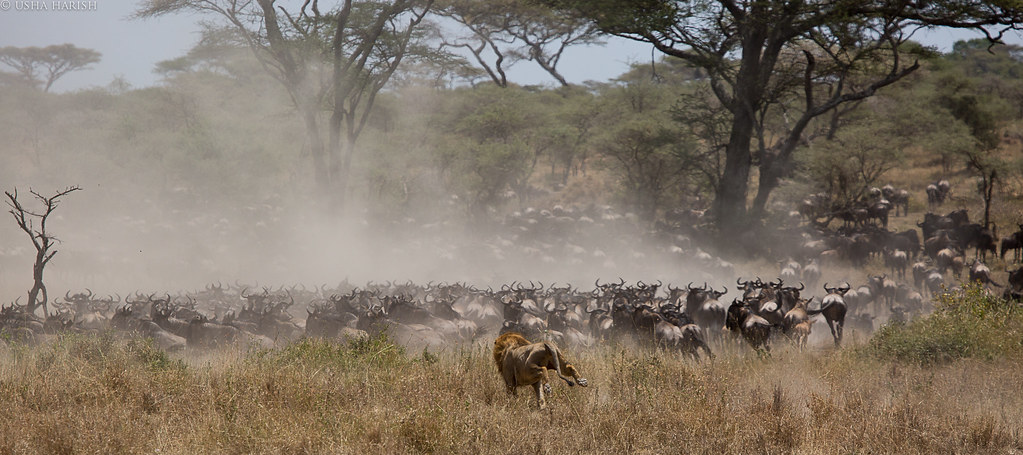
The Serengeti is too large to treat as one single safari area. Its main regions the southern plains, central Seronera, Western Corridor and northern Serengeti offer different landscapes, wildlife patterns and seasonal highlights.
The southern plains and Ndutu are most important from December to March, particularly for calving and predator activity.
Central Seronera is a strong year-round area because resident wildlife remains there even when the migration moves elsewhere.
The Western Corridor and Grumeti become particularly relevant around May to July, when the herds move west and north.
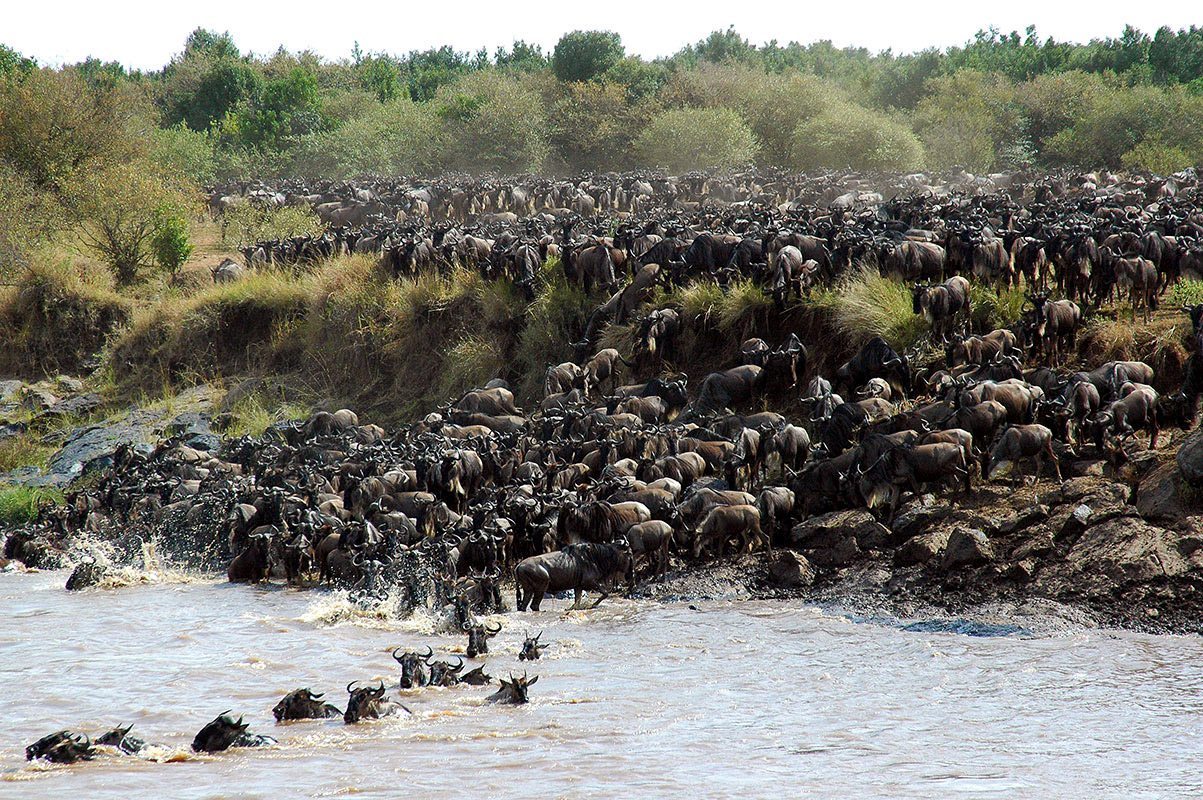
By July to October, attention shifts to the northern Serengeti around Kogatende and the Mara River, where migration crossings may occur. These are typical patterns rather than fixed dates, because rainfall can move the herds earlier or later.
For first-timers, the central Serengeti is the most reliable base. Leopards, lions, and cheetahs are often seen around Seronera, and the mix of kopjes and open plains makes for varied game viewing. If your dates match the migration, your operator may suggest moving toward the herds.
Two full nights is the minimum. Three or four is much better, and you’ll notice the difference.
 Ngorongoro Crater
Ngorongoro is a huge collapsed volcano, with walls rising sharply around a floor that holds an unusual concentration of wildlife.
Lions, hyenas, elephants, buffalo, hippos, and, with luck, black rhinos live within a compact area.
Because it’s compact, sightings are often easy, and it makes a good contrast to the Serengeti’s open scale. Go early. Morning light on the crater rim is superb, and traffic thickens later.
The surrounding highlands are cool, so bring warm layers even on a hot day at lower altitude.
Sample seven-day shape
Day one is arrival and a night near Arusha. Days two and three might combine Tarangire and Lake Manyara. Days four and five would be the Serengeti. Day six would be Ngorongoro, then day seven a drive back to Arusha for onward flights.
Many first-timers find this pace comfortable. If you have a few extra days, add a second Serengeti night or a rest day at a lodge. If you have fewer days, drop Manyara and keep Tarangire, the Serengeti, and Ngorongoro.
Fly or drive?
Roads between the parks can be long, and some sections are rough. Small aircraft link Arusha and the Serengeti airstrips, saving a day of driving at higher cost. Many travelers combine the two, driving on the way in and flying back, or the other way round. Ask your operator to price both.
The dry months, roughly June to October, bring good roads, concentrated wildlife, and higher prices. The green months, roughly November to May, are quieter and cheaper, with amazing skies, better birding, and more mud. The southern plains calving season in the early months is a highlight of its own.
 Layers matter, since mornings in the highlands are chilly and afternoons can be hot. Bring a hat, sunscreen, binoculars, and a soft-sided bag, which is easier to pack in small aircraft and vehicles. Ask your doctor about malaria prevention and other health precautions well before you travel.
Trying to fit in too many parks is the biggest one. Two or three well-chosen stops beat five rushed ones. The second is spending too little time in the Serengeti. The third is expecting to see everything on the first drive. Wildlife rewards patience.
For a first trip of a week, Tarangire, the Serengeti, and Ngorongoro make a well-balanced core. Add Manyara if you have time and enjoy variety. Add a beach stay in Zanzibar afterwards if you’d like to end with rest.
