
Kwita Izina. Rwanda’s Gorilla Naming Ceremony Explained
Once a year, in the shadow of the Virunga volcanoes, Rwanda gathers to give names to the mountain gorillas born during the previous twelve months.
The ceremony is called Kwita Izina, and it combines tradition, conservation, and celebration. It’s one of the most distinctive cultural events in East Africa, and for visitors who time a trip well, it adds another layer to a gorilla trek.
This guide explains where the ceremony comes from, what happens, and how to plan around it.
 The meaning of the name
Every newborn gorilla represents another generation with a chance to survive and grow in Rwanda’s forests. That is part of what makes Kwita Izina, Rwanda’s annual gorilla naming ceremony, so meaningful.
The name comes from Kinyarwanda and means “to give a name,” but the tradition behind it carries a much deeper message about belonging, care, and responsibility.
In Rwandan culture, a child is traditionally given a name in a gathering of family and community, marking the child’s arrival and welcoming them into a wider circle of care. Rwanda has carried that same spirit into gorilla conservation.
In 2005, the country held its first official Kwita Izina ceremony, building on the work of rangers and researchers who named newborn gorillas to help identify and monitor individuals and their families.
The ceremony is much more than a public celebration. Each name helps distinguish a gorilla whose life will be followed by conservation teams, while the event draws attention to the work needed to protect mountain gorillas and their forest habitat. It also recognizes the communities living around Volcanoes National Park, whose involvement is essential to the long-term success of conservation.
Over the years, Kwita Izina has grown into an international event, bringing together conservationists, community representatives, tourism leaders, and visitors from around the world.
At its center, however, the message remains simple, giving a gorilla a name is a way of recognizing its place in a living population and renewing the commitment to protect its future.
For Rwanda, the ceremony is a celebration of how far mountain gorilla conservation has come and a reminder that this progress depends on continued effort from the people who protect the animals, the forests they depend on, and the communities that share the landscape with them.
A short history
Kwita Izina officially began in 2005, turning a conservation practice into a national event that would eventually attract attention from around the world.
Before the first official ceremony, park rangers and researchers had already been naming newborn mountain gorillas to help identify individuals, follow their development, and monitor their families.
Rwanda built on that work and its own cultural tradition of naming newborn children to create a ceremony that celebrates both new life and the responsibility of protecting it.
In its early years, the event focused largely on raising awareness of mountain gorilla conservation. Over time, it grew into an international gathering attended by government leaders, conservation experts, community representatives, celebrities, and tourism stakeholders.
The ceremony has also become a way for Rwanda to share its conservation progress and encourage continued support for the protection of Volcanoes National Park and its surrounding communities.
Kwita Izina now does more than give names to newborn gorillas. It recognizes the people whose work makes conservation possible, including rangers, trackers, researchers, and veterinarians.
At the 2025 ceremony, for example, local conservation workers took part as namers alongside international figures from sport, entertainment, and conservation. The event also highlighted plans to restore and expand gorilla habitat, as well as initiatives intended to benefit communities living near the park.
The 21st ceremony, held on 4 September 2026, continued that tradition, with 22 baby mountain gorillas named. Some of the names honored the dedication of rangers and the shared responsibility of protecting gorillas across borders. Others reflected commitment, unity, and hope for the future.
These choices show how the ceremony connects the life of an individual gorilla to a much wider conservation effort.
Its growth also reflects a central lesson of conservation, protecting wildlife takes more than safeguarding animals in a national park. It requires skilled people, supportive communities, suitable habitat, and continued cooperation.
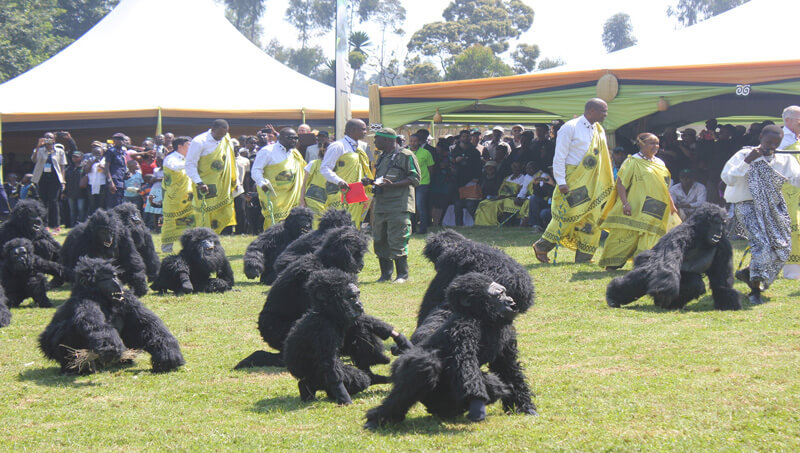
The ceremony usually takes place in the Kinigi area near Volcanoes National Park, with performances, speeches, and the formal naming itself. Guests, often including international visitors invited to participate, are given the chance to propose names, which are then announced for individual gorillas.
Names often carry meaning, referring to values, local places, or hopes for the future. The naming isn’t a mere formality, since it connects the animals’ identities to the work of people monitoring them.
Kwita Izina is held annually, but the date can change from one year to the next, so travellers should confirm the schedule before making plans around the ceremony.
The most recent edition, the 21st Kwita Izina, took place on 4 September 2026 in Kinigi, near Volcanoes National Park in Musanze District. The Rwanda Development Board confirmed the date and reported that 22 baby mountain gorillas were named at the event.
The ceremony has often taken place during the drier months, but the calendar is not fixed. The 2024 edition, for example, was postponed, showing why it is best not to rely on dates from previous years. As of 12 October 2026, an official date for the 2027 ceremony has not yet been confirmed in the sources checked.
Access varies. Some parts of the programme are open to the public, while others are limited to invited guests. Tour operators often arrange attendance for clients, particularly when the event is accompanied by related activities.
Even if you can’t attend the ceremony itself, local celebrations, community events, and festivals often run around it, giving a flavour of the occasion.
The days around Kwita Izina typically bring related events, such as conservation conferences, cultural performances, and community activities. For travelers interested in conservation, these can be as rewarding as the ceremony itself.
Why it matters for conservation
Kwita Izina is a celebration, but its importance goes well beyond the naming of newborn gorillas.
It keeps conservation in the public eye and reminds people that protecting wildlife requires long-term commitment from government, researchers, rangers, tourism operators, and the communities living near the forest.
Giving each gorilla a name also helps conservation teams identify individuals and follow their development as they grow.
There is encouraging progress to celebrate. Mountain gorillas were once considered at the highest level of threat, but their conservation status improved from Critically Endangered to Endangered in 2018 after their population increased.
They remain endangered today, however, and still face threats from habitat loss, disease, and pressure on the forests where they live.
The International Gorilla Conservation Programme cites a widely used global estimate of 1,063 mountain gorillas in the wild, based on census figures.
Rwanda reports that more than 600 live in the Virunga Massif, which includes the gorilla habitat shared by Rwanda, Uganda, and the Democratic Republic of Congo.
By August 2026, the programme had supported nearly 1,300 projects with more than RWF 23 billion, helping fund services and livelihood initiatives. These benefits matter because conservation is more sustainable when local people also share in its rewards.
Kwita Izina cannot guarantee the future of mountain gorillas on its own. Continued protection, habitat restoration, responsible tourism, and support for neighbouring communities remain essential.
The ceremony provides an opportunity to celebrate progress while reminding the world that the work is far from over.
Planning a Trip around Kwita Izina
If you want to attend Kwita Izina and go gorilla trekking, start planning as early as possible. The ceremony attracts local and international visitors to Kinigi, near Volcanoes National Park, and demand for accommodation and transport may increase around the event.
However, the scale of the effect on prices and availability varies, so check actual rates rather than assuming every lodge will charge more.
Once dates are announced, contact accommodation providers in Musanze and near the park to check availability. Booking early gives you more choice, particularly if you want to stay close to Kinigi.
Gorilla trekking permits are separate from access to the naming ceremony. If you want to do both, confirm your trekking date and permit availability directly with an authorised operator or the relevant tourism authorities before finalizing your travel arrangements. Do not assume that attending Kwita Izina includes a gorilla trek.
It is also sensible to leave some flexibility in your itinerary. A few extra days in Musanze allow time for other experiences around Volcanoes National Park, while a stay in Kigali gives you an opportunity to explore the capital before or after the event.
With the main arrangements confirmed and some room for changes, you can enjoy Kwita Izina without trying to fit everything into a rushed schedule.
Kwita Izina works because it ties something modern, conservation, to something traditional, naming.
For visitors, it offers a window into how Rwandans see their relationship with the gorillas, and it makes the experience of trekking feel more connected to the place.
