
Masai Mara vs Serengeti. How to Choose Between East Africa’s Two Great Plains
The Masai Mara and Serengeti form one connected ecosystem, stretching across Kenya and Tanzania, with the same broad wildlife populations moving between the two countries. Both offer lions, leopards, cheetahs, elephants, buffalo, giraffes and large herds of wildebeest and zebra. The real difference is in scale, landscape, wildlife density, safari atmosphere, accessibility and the time of year you visit.
The Masai Mara is smaller and more compact, which can make wildlife viewing feel concentrated and allow you to cover more ground within a shorter safari. The Serengeti is much larger, offering vast open plains and a greater sense of wilderness, with different areas becoming more productive as the year progresses.

Masai Mara national reserve
Your choice therefore depends on what matters most to you. If you have only a few days and want to spend more time around concentrated wildlife areas, the Mara may fit your itinerary well.
In need of expansive landscapes, longer drives and the experience of exploring a much larger wilderness, the Serengeti offers a different kind of safari.
The timing of the Great Wildebeest Migration also matters. The herds move through different parts of the ecosystem during the year, so choosing between the Mara and Serengeti should not be based simply on the migration’s name. Your travel dates, preferred wildlife experiences, budget, accommodation style and tolerance for longer drives can all influence which side of the ecosystem makes more sense for your trip.
One ecosystem, two countries
The Masai Mara in Kenya and the Serengeti in Tanzania are best understood as northern and southern parts of a single great landscape. Animals move across the border with the seasons, and the migration that makes both famous doesn’t recognized the line on the map.
The practical consequence is that you’re really choosing a base, a style of safari, and a time of year, not two entirely different worlds.
The Serengeti is enormous, many times larger than the Mara reserve. Serengeti National Park covers about 14,763 km², while the Maasai Mara National Reserve covers about 1,510 km², making the Serengeti roughly 9.8 times larger by park/reserve area.
The wider Serengeti–Mara ecosystem is much larger still, spanning roughly 30,000 km² across Tanzania and Kenya, although that figure includes areas beyond the two protected areas themselves.
That size means long, open horizons, quieter corners, and the possibility of driving for hours and seeing few other vehicles.
The Mara is more compact, and wildlife density in the right season can feel remarkable. The surrounding private conservancies, where the number of vehicles and beds is limited, offer a quieter, more exclusive experience, including night drives and walking safaris that aren’t usually permitted inside the main reserve.
The migration. When and where
This is the question everyone asks, and the honest answer is that it depends on the month.
In the Serengeti, the calving season on the southern plains, around the Ndutu area, usually falls in the early months of the year, drawing predators as well as herds. Later, the herds move north through the western and northern Serengeti.
The Great Migration follows the rains rather than a fixed calendar. January to March is the main calving period in the southern Serengeti and around Ndutu, with February particularly important for seeing newborn wildebeest and the predators that gather around the herds.
From April through June, the animals begin moving north and west, reaching the Western Corridor and Grumeti area, where river crossings can occur around May and June.
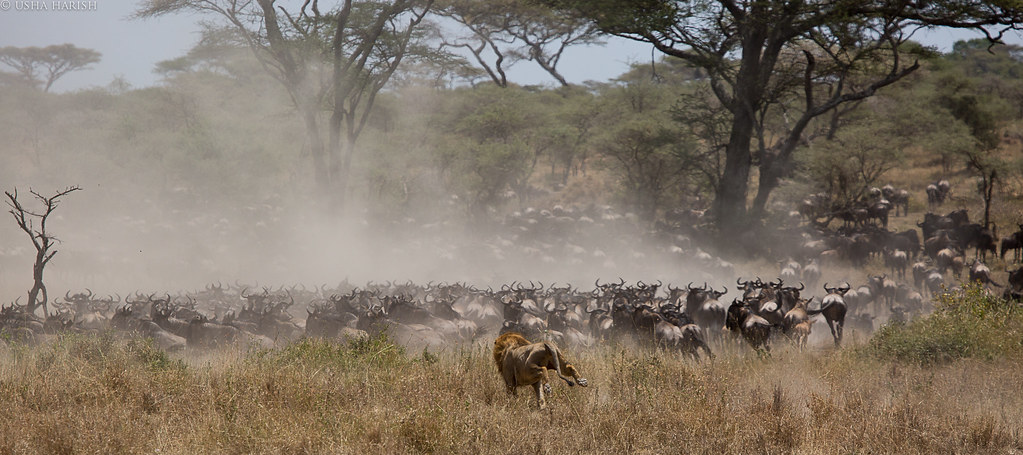 By July to September, the herds are generally spread across the northern Serengeti and the wider Mara ecosystem, with the most famous Mara River crossings often occurring around August and September.
The exact timing can shift from year to year because rainfall and grazing conditions determine where the herds move.
In the Mara, the famous Mara River crossings are most often seen in the second half of the year, roughly from mid-year into the early autumn months. Timing is never guaranteed, since rainfall and grazing shape the herds’ movements, so treat any calendar as a guide, not a promise.
Outside the migration, both places are rich in resident wildlife year-round: lions, elephants, giraffes, hyenas, cheetahs, and abundant birdlife.
The Mara is smaller and tends to draw crowds at the most famous crossing points in peak season. Expect several vehicles at a good sighting. Conservancies offer relief.
The Serengeti spreads visitors across a vast area, so many parts feel empty, though popular hotspots can still be busy.
Reaching the Mara typically means a road transfer or a short flight to airstrips near the reserve. The Serengeti is usually approached from Arusha, often by air to internal airstrips, or by long overland drives through other northern-circuit parks.
Neither country lets you cross freely between the two parks in one vehicle, so if you want both, plan separate trips or check carefully how cross-border arrangements work.
Safaris in both destinations range from simple tented camps to top-end lodges, and prices swing widely with the season, the camp, and the conservation fees.
Park and conservancy fees are a large part of the bill, and they change, so always confirm current rates with the relevant authority or operator.
As a rough principle, going in the shoulder seasons around the migration peaks often saves money and reduces crowds, though wildlife may be different.

central Serengeti National Park
Who each suits?
The Serengeti tends to suit travelers who want scale, solitude, and the chance to follow the migration across a changing landscape, or who plan a longer trip combining several northern Tanzania parks.
The Mara suits those with less time, who want dense wildlife quickly, or who are attracted to the idea of a conservancy stay with night drives and walking safaris, often combined with a Kenya coast or highlands extension.
Start with the month you’re travelling. If you’re going in the second half of the year, the Mara’s river crossings are a strong draw. Going early in the year, the Serengeti’s southern plains and calving season deserve serious thought.
Then think about how you like to travel. Value quiet and space, lean Serengeti or a Mara conservancy. Once prefer a shorter trip with reliable sightings, the Mara is hard to beat.
Neither is a wrong choice, and plenty of people end up doing both, one after the other, across a couple of trips. If you’d like help matching the destination to your dates, our team can talk through the options.