
How to Combine Gorilla Trekking with a Tanzania Safari- The Ultimate East Africa Adventure
Wondering whether it’s actually possible to encounter the magnificent mountain gorillas in their natural habitat and watch a million wildebeest thunder across the Serengeti in one trip, the answer is yes, it’s possible, and it’s one of the single best trips in African travel.
Why Combine Gorilla Trekking and a Tanzania Safari?
The Virunga mountain ranges along with Bwindi Impenetrable national park sit geographically close to Tanzania making it accessible by a 1-3 hours’ flight. Despite being at a short distance from each other, these destinations have such radically different landscapes and wildlife experiences that combining them gives travelers the two most iconic wildlife encounters in Africa that is, mountain gorillas and the Africa’s BIG 5 in a single trip.
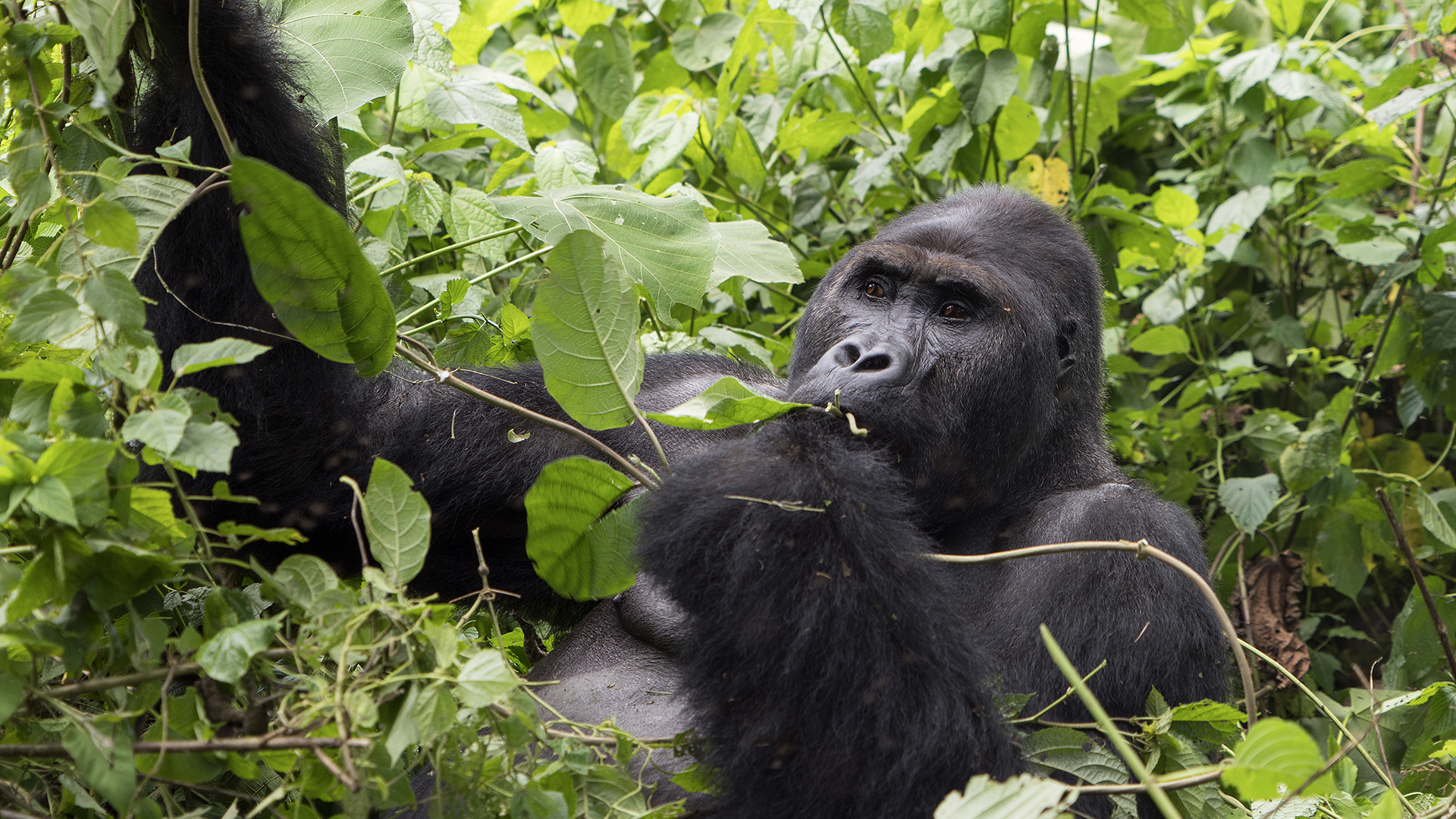 Rwanda and Uganda give you something Tanzania cannot, which is eye-to-eye contact with the endangered great apes in their natural rainforest habitat, an experience capped at a strict number of visitors per day and priced accordingly. And on the other hand, Tanzania gives you something Rwanda and Uganda cannot, which is the sheer scale of East Africa’s classic safari that is; endless grass plains, the Big Five, the wildebeest migration, and some of the finest safari lodges on the continent. Neither destination replaces the other but rather they complement each other perfectly.
Is it actually feasible to do both the gorilla trek and Tanzania safari in one trip?
Yes, Uganda, Rwanda and Tanzania are directly connected and can be accessed from one another either by road through the international land boarders or by flight thus making this one of the single easiest border to border wildlife combination in Africa.
In what order should you combine Gorilla trekking with a Tanzania safari?
The most optimal route would be starting with the gorilla trek first then the safari second. This is the recommended order since gorilla trekking is physically demanding and more exciting taking it on while you are still well rested and then enjoy the wildlife viewing at leisure.
Most travelers who visit the gorillas and combine it with an African safari in Tanzania like to sum up their experience with a beach relaxation in Zanzibar which without doubt is the best way to end this trip.
Below is a step-by-step guideline for combining this tour;
 Kigali (Rwanda)/Entebbe (Uganda) → Kilimanjaro or Arusha (Tanzania):
Several airlines such as Rwanda Air, and Air Tanzania fly this route several times a week, offering non-stop flights that last about 1 hour and 15 minutes. Some travelers connect through Nairobi with Kenya Airways, Addis Ababa with Ethiopian Airlines, or other regional carriers, which adds a stopover but can open up more schedule flexibility or better fares depending on season.
Kilimanjaro International Airport (JRO) is the main gateway for the northern Tanzania safari circuit, sitting about 45 minutes to an hour from Arusha, the safari launch town where most northern circuit trips begin and end. If you are looking to add Zanzibar to your itinerary, you will then typically fly either from Seronera airstrip in Serengeti or Kilimanjaro International Airport in Arusha to Zanzibar.
The Great Wildebeest migration pattern- Where and when to see the wildebeest migration
The Great Wildebeest migration is a year-round spectacular event that takes place across the Serengeti-Mara ecosystem. The migration is not a single event, so if your intention is to combine the gorilla trekking experience and the wildebeest migration then the best time for this trip depends on what you specifically want to see that is; Is your interest the calving season or the dramatic Mara River crossings. Luckily, both windows also fall within Uganda and Rwanda’s two dry seasons, that is the long dry season that runs from June to September and the shorter dry season that runs from December to February, making it ideal for combining both legs of the trip.
While this migration is always on the move throughout the year in the ecosystem, the question is when and where to see the wildebeest migration.
-
July to September- The classic peak season
This is the best time for the river crossing event since its when the migration herds cross the Grumeti and Mara Rivers in the western and northern Serengeti. Gorilla trekking conditions in Uganda and Rwanda are also at their driest and most comfortable during these months.
These months also fall within the peak season in East Africa therefore it is important to book your trip at least 6 months earlier to ensure that you do not miss out on your preferred gorilla trekking dates and top accommodation options.
-
December to March
This is the calving season in the southern Serengeti/Ndutu plains, when hundreds of thousands of wildebeest calves are born within a few weeks and predator action is correspondingly intense. It is also known as the short dry season in Uganda and Rwanda, and as a result offer excellent gorilla trekking conditions in both Uganda and Rwanda.
-
April to June
In these months, the wildebeest herds are dispersed across the Southern and Central Serengeti plains and are on the move towards the northern Serengeti for the dramatic Mara River crossing event. These are the rainy seasons in Uganda and Rwanda characterized by lush forests, heavy downpours and muddy, slippery trails therefore the hikes are more physically demanding, and strenuous.
-
November
In November, the short rains begin in the Serengeti causing the wildebeest herds to start their movement from the Masai Mara back into the lush grasslands of the Serengeti ahead of the calving season. In Uganda and Rwanda, this is a rainy season therefore expect downpours especially in the afternoons.
What does it cost to combine gorilla trekking with a Tanzania safari?
Combining a gorilla trek and a Tanzania safari comes with a significant overall trip cost however with careful planning and timing, this trip cost can be slightly reduced.
While it is not possible to know with certainty exactly what the trip cost would be, there are key players that contribute to the overall trip expense that is;

- Gorilla permits
In Uganda gorilla permits cost USD 800 per person in the high season and USD 600 per person in the low season (April, May and November)
In Rwanda, gorilla permits cost USD 1,500 per person.
- Safari costs
Tanzania park entrance fees- Ngorongoro Conservation Area, Serengeti, and Tarangire fees typically run USD 70–USD 90 per person per day, per park, and are usually bundled into the tour price making a significant impact on the overall cost.
Accommodation options in Uganda, Rwanda and Tanzania range from USD150 for budget options to USD1000+ for luxury lodges per person per night.
Ground transportation
Services of a professional guide
- International and Regional Flights
One-way International flights, regional flights and Bush flights to and from the different destinations of your choice typically run at a cost between USD 270 and above per person depending on season and how far ahead you book.
- Additional Expenses
Visa costing between USD 50- 100 per country
Porter fees for gorilla trekking range between USD15-20 per porter
Tips and gratitude
The single biggest lever for cost is your accommodation tier. Travelers with a low to moderate budget opting for budget to midrange accommodation options, spend relatively less on their trip compared to luxury level travelers chasing five-star lodgings.
Key safari cost saving tips
Despite the overall cost of the trip being high, there are a couple of tips that can assist you save a few dollars while still having your safari of a life time.
- Travel during the shoulder seasons that is, the months of April, May and November. These months offer a more attractive pricing since travelers are fewer compared to the peak seasons.
- Opt for a combination of Uganda gorilla trek and the Tanzania safari. Uganda offers gorilla permits at a cost of USD 800 per permit which is USD 700 less than the cost of Rwanda gorilla permits.
- Choose the midrange, clean accommodation options rather than the expensive lodging options.
- Limit the number of internal flights. While domestic flights reduce the exhaustion caused by the long drives, they accumulatively make the trip more costly than ground transportation.
What’s the difference between gorilla trekking in Rwanda vs. Uganda? Which is the better destination?
Both Uganda and Rwanda offer exceptional gorilla trekking experience but despite offering similar gorilla trekking experiences, there are a few factors that can influence your decision on which destination to visit.
In Uganda, gorilla permits cost USD 800 per permit whereas in Rwanda gorilla permits cost USD 1500. Mountain gorillas in Uganda can be spotted in either Bwindi Impenetrable national park or Mgahinga national park. Both these parks are sited in northwestern Uganda and are accessible by a 4-5 hours’ drive from Kigali International Airport and about 9-10 hours’ drive from Entebbe International Airport. This makes these parks quite difficult to access compared to Rwanda’s Volcanoes national park that is easily accessible by a 2-3 hours’ drive from Kigali.
Despite the higher cost of the gorilla permits in Volcanoes national park-Rwanda, the park offers generally shorter, less strenuous treks through a more open terrain whereas Uganda’s Bwindi Impenetrable national park and Mgahinga Gorilla National Parks present steeper and denser rainforest trekking, though the vegetation in Mgahinga national park is a lot similar to that of Volcanoes national park compared to the thick rain forests of Bwindi Impenetrable national park.
For luxury travelers, Rwanda is the best option since it offers a variety of luxury accommodation options.
Also, if taking a Tanzania safari is the priority and you simply want the gorilla encounter with minimal extra travel time, Rwanda is always the better fit for a Tanzania combination, since Kigali connects directly to Kilimanjaro. Uganda works better if you are also planning to see chimpanzees in Kibale Forest or combine with a Kenya safari via Entebbe–Nairobi routes
What Visas do you need for this trip?
Both Rwanda and Uganda are on entirely separate visa systems with Tanzania, so you will need a Rwanda visa/Uganda visa or simply the East Africa Tourist Visa if you are planning to visit Rwanda, Uganda, and Kenya in the same trip, plus a completely separate Tanzania e-Visa since Tanzania is not part of the East Africa Tourist Visa scheme, despite being an East African Community member.
Here’s how it breaks down:
- Rwanda: Most nationalities can obtain a visa on arrival or via Rwanda’s online portal. Many African, Commonwealth, and EU passport holders enjoy visa-free or simplified entry.
- Uganda: Citizens of most countries can obtain the visa to Uganda online and this application must be made and approved before arrival at Entebbe International Airport. Many African, Commonwealth, and EU passport holders enjoy visa-free or simplified entry.
- Tanzania: Requires its own separate e-Visa (applied for at the official Tanzania immigration e-services portal), typically costing between USD50–USD100 depending on nationality and single vs. multiple entry. Your Tanzania e-Visa covers both mainland Tanzania and Zanzibar so you do not need a separate Zanzibar visa.
- East Africa Tourist Visa: This is a joint USD 100 visa covering Kenya, Uganda, and Rwanda for 90 days with unlimited crossings between those three countries. This visa is useful for travelers combining Rwanda, Kenya or Uganda. It does not cover Tanzania under any circumstances, and you must apply for this visa through the immigration portal of whichever of the three countries you will use as your entry point.
- Yellow fever certificate
While this is not a visa, it is a requirement for entry into Tanzania and Uganda, if you are arriving from a country with risk of yellow fever transmission therefore it is important that you carry your International yellow fever certificate of vaccination with you.
Conservation and Responsible Travel
Every trip you take to East Africa plays an important role towards environmental conservation and survival of the wildlife, which includes but not limited to the endangered mountain gorillas.
In both Uganda and Rwanda, a significant portion of each gorilla permit fees goes directly to support the conservation efforts, that is; about 10% to the local communities, 15% to government projects and 75% to gorilla conservation initiatives for funding activities such as gorilla family monitoring, mountain gorilla habitat protection, and anti-poaching patrols, among others.
Tanzania’s national parks Authority also directs a portion of its collected tourism revenue towards wildlife conservation, and community projects for the neighboring communities.
It is then your responsibility as well, as a traveler to ensure that while you have the best experience on this trip of a life time, your visit to these countries leaves no footprints but contributes towards conservation. Here are a few guidelines on how to promote responsible travel.
- Respect wildlife viewing guidelines for example the strict mountain gorilla viewing distance of 10 metres.
- Support the local communities in the different possible ways such as through the use of porters for the gorilla trekking experience.
- Encourage wildlife friendly behavior for example do not feed the animals.
- Engage in community-based tourism initiatives by taking part in activities that are provided by the local communities.
- Minimize your environmental footprint through conscious choices such as proper disposal of wastes, responsible water consumption, and energy conservation.
Are there any add-ons that can be made on the gorilla trekking and Tanzania safari?
Along with the gorilla trek in Uganda or Rwanda and the wildlife viewing experience in Tanzania, other add-on activities travelers can take part in while visiting Uganda, Rwanda and Tanzania includes; chimpanzee trekking in Kibale national park or Nyungwe forest national park, golden monkey trekking in Volcanoes national park or Mgahinga national park, cultural experiences, boat excursions on Lake Bunyonyi, lake Kivu, or the twin lakes of Burera and Rubondo, and excursions along the beaches of Zanzibar, among others.