
Are there silverback gorillas in Africa or Asia
A silver back is a mature dominant male gorilla from the age of 12 years and older. These adult male gorillas are characterized by a silver hair that spreads across their back hence the name silverback.
Gorillas are divided into two species that is; the Eastern gorillas and the western gorillas. The Eastern gorillas are further divided into two subspecies which are the Eastern lowland gorillas and the mountain gorillas whereas the western gorillas are subdivided into the western lowland gorillas and the cross-river gorillas. The Eastern gorillas inhabit the regions of East and Central Africa in areas of Uganda, Rwanda and the Democratic of Congo. The western gorillas on the other hand inhabits the regions of Central and West Africa in areas of Angola, Cameroon, Central African Republic, Democratic Republic of Congo, Gabon, and Equatorial Guinea.
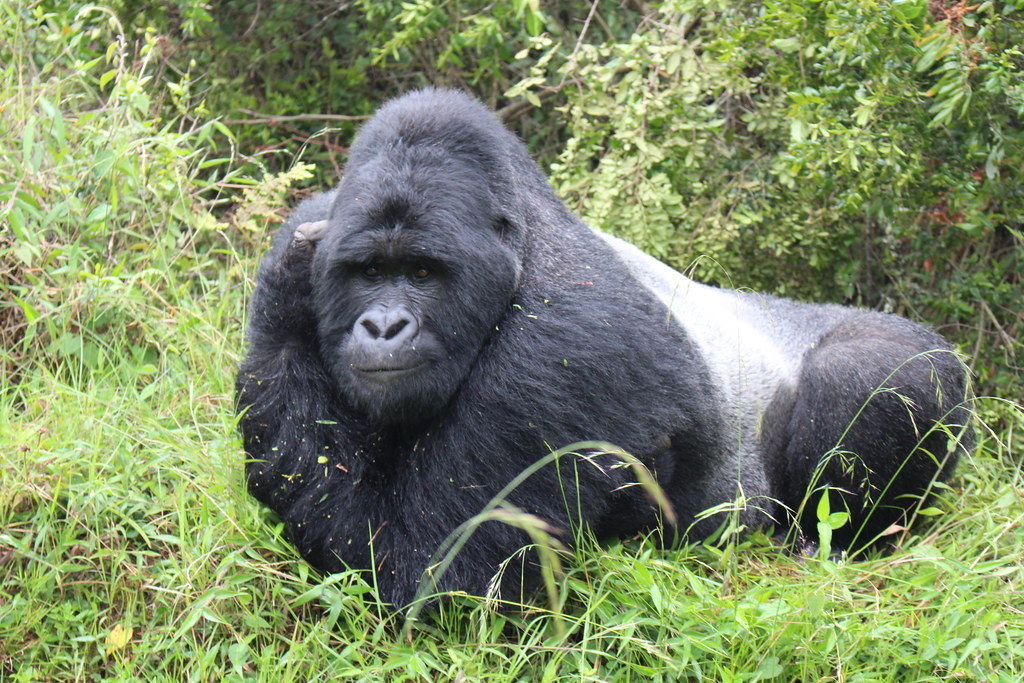 Gorillas inhabit the tropical and subtropical forests of Africa and these are the only places where gorillas can be seen in their natural habitat. To be exact, gorillas are native to Africa thus silverback gorillas are only in Africa occupying the different regions of Africa.
While there is a chance to see the western gorillas and the eastern lowland gorillas in the several zoos across Asia particularly in Japan. Mountain gorillas can only be spotted in their natural habitat in East and Central Africa specifically in Rwanda’ s Volcanoes national park, Uganda’s Bwindi Impenetrable national park and Mgahinga national park and the Democratic Republic of Congo’s Virunga national park, since this species does not thrive in captivity.
Why are mountain gorillas only in Africa?
Over the years, several attempts have been made to inhabit mountain gorillas in zoos across the world however all the efforts have been unsuccessful. This is because mountain gorillas only thrive in their natural habitat which are the dense tropical forests of East and Central Africa.
Mountain gorillas have highly specialized dietary needs composing about 140 unique plant species and an adult gorilla eats up to 34 kg of vegetation in a single day. This makes it impossible to replicate their exact diet while in captivity.
This species has low tolerance to high stress which they are exposed to when removed from their habitat as result of change in altitude and the natural environment. This lowers their immunity and reduces their survival rate.
 Since mountain gorillas share a 98% DNA with humans, they are highly vulnerable to human respiratory diseases such as cold, flu and parasites. Keeping them in captivity exposes them to a larger human population which is fatal to them.
As a result, mountain gorillas only live in their natural habitat which are the dense tropical forests. These habitats act as a refuge from threats and also offer the sufficient amount food needed by the gorillas everyday.
The weather conditions in Africa are not extreme. Unlike other continents, Africa does not experience winter or summer but rather a balanced dry and wet season, therefore the tropical forests are able to flourish all year round. Therefore, mountain gorillas can live in Africa especially in the regions close to the equator. As of to-date, mountain gorillas are endemic to Africa and there are no mountain gorillas surviving in captivity.