
Why are mountain gorillas endangered
Mountain gorillas are a subspecies of the Eastern gorillas and live in the high-altitude regions of Volcanoes national park in Rwanda, Virunga national park in the Democratic Republic of Congo, and in Bwindi Impenetrable national park and Mgahinga national Park in Uganda.
According to the IUCN reports from 2018, mountain gorillas are listed as an endangered species and this is attributed to a number of factors such as human pressure, environmental challenges, biological vulnerability, among others.
Mountain gorillas are only found in isolated regions of East and Central Africa in the Virunga Conservation area and Bwindi Impenetrable national park with a minimal population of about 1063 in the entire world making them highly vulnerable to extinction if threats are not carefully managed.
While conservation efforts have greatly improved over the years with the aim of protecting these rare great apes from extinction, they still remain an endangered species due to a number of threats.
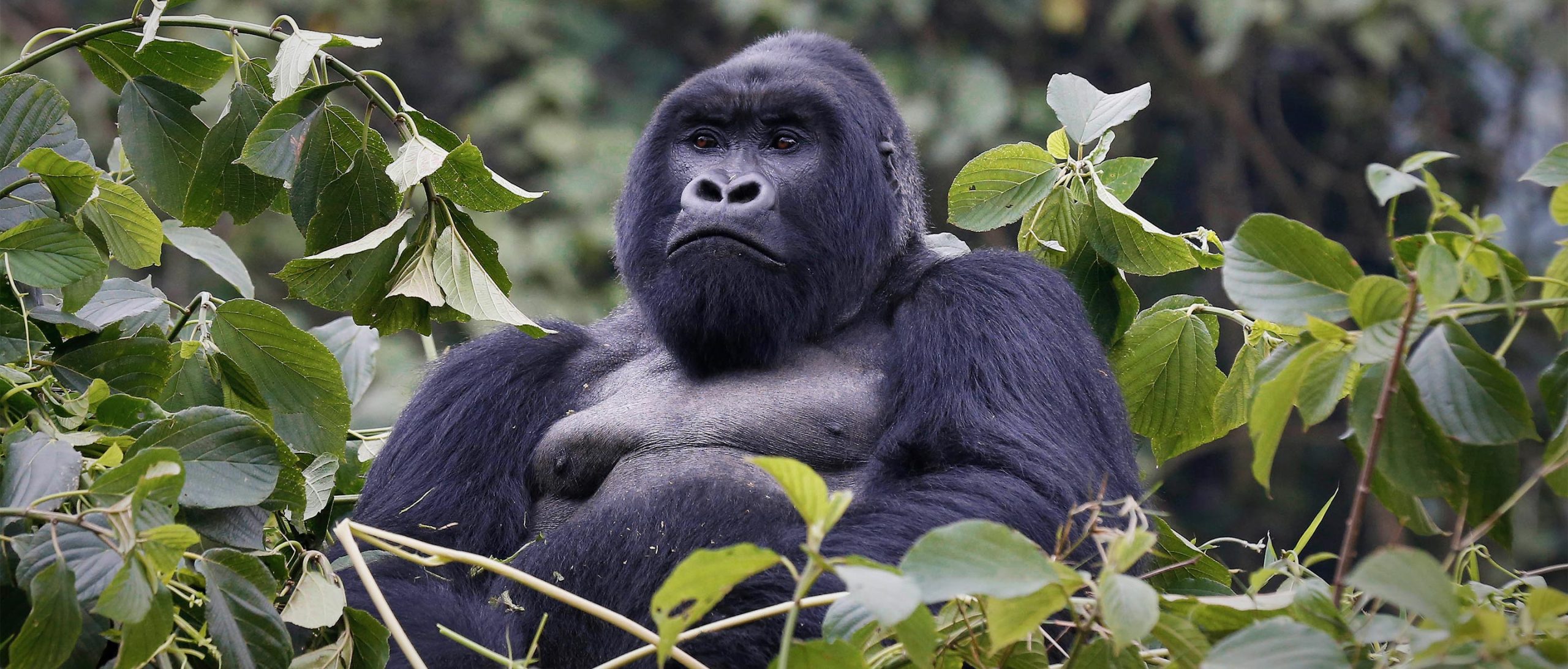 Habitat loss
As the human population increased, they began to encroach on the forests which are the habitats of the mountain gorillas for different purposes such as finding land for settlement, livestock keeping, agriculture, as well as cutting down trees for firewood and charcoal. This reduced the overall area available for the mountain gorillas to live in resulting into an increased human-gorilla conflict due to competition for space and resources. As a result, there was increase in poaching since most times the gorillas wondered onto the farms of the locals, and fragmentation that constrained the gorillas’ ability to disperse and create new genetically diverse populations.
-
Poaching
Although mountain gorillas are not commonly hunted for bushmeat or pet trade, they still get caught and harmed by traps set for other animals such as antelopes, and sometimes they are killed as result of retaliation by farmers and other members of the neighboring communities when they damage their crops or property.
-
Diseases
Mountain gorillas share a 98% DNA with humans making them highly susceptible to human diseases. When mountain gorillas come into contact with humans, they are prone to suffer from human diseases such as cold, flu, tuberculosis and parasites, among others and sometimes these primates experience these diseases in more severe forms since they have no immunity to human illness. A single out break of this disease may cause death of the entire gorilla family.
Often, mountain gorillas get into contact with humans through interactions with the people in the local communities, park rangers, researchers, and tourists who go for the gorilla trekking experience. As a conservation measure, the number of people visiting the mountain gorillas is limited to a maximum of 8 people per day and strict measures of interacting with these primates are enforced to ensure safety of this species.
 Political Instability
Mountain gorillas inhabit forests which are also the starting points for many civil unrests. The 1994 war in Rwanda and decades of civil unrest in the Democratic Republic of Congo have sent waves of refugees and heavily armed militias into the region around the Virunga Mountains parks which are home to a large mountain gorilla population, leading to increased poaching and destruction of the gorilla natural habitat. Wars also disrupt conservation efforts as these areas become dangerous and difficult to access and sometimes even impossible.
-
Slow Reproductive Rate
Mountain gorillas have a low reproductive rate compared to other animals. An adult female gorilla gives birth to only one baby in a period of 4-6 years and these new born babies depend on their mother for several years before finally becoming independent. While the reproduction rate is low, the infant mortality rate is high leading to a very slow population increase.
-
Climate change
Climate change is an emerging threat that can alter the delicate ecosystem mountain gorillas depend on. This is because a change in climate brings about change in rainfall patterns hence reduction in the vegetation availability which is their main source of food.
Despite the threats, over the years mountain gorillas have moved from the status of being critically endangered species to endangered species thanks to the intense conservation efforts.
Steps taken to protect the mountain gorillas.
-
Promoting Eco-Tourism
The future of mountain gorillas is closely intertwined with the success of sustainable gorilla tourism. As of to-date, more than 70% of the total population of mountain gorillas in the wild have been habituated allowing controlled and carefully managed gorilla tourism experiences in the different mountain gorilla trekking destination.
Controlled gorilla tourism has played a vital role in the steady increase of mountain gorilla populations. Unlike many endangered species, mountain gorillas are one of the few whose numbers are steadily increasing and this is largely due to tourism driven conservation. Annually, gorilla trekking generates millions of dollars through the sale of gorilla trekking permits and this income supports conservation through funding park ranger salaries, anti-poaching patrols, veterinary care, among others.
 Monitoring the mountain gorilla population
Effective conservation of mountain gorillas heavily depends on monitoring and research done through census and mountain gorilla studies. Without accurate data and scientific insight, it would be almost impossible to understand the challenges and threats these mountain gorillas face hence inability to design the right strategies to protect these endangered species. Research not only assists conservationists keep track of the mountain gorilla population but also provides critical insights into gorilla behaviour, health, and emerging threats or risks on their existence. This knowledge forms the foundation for informed decision making across the gorilla protected areas.
-
Community Benefits
Successful mountain gorilla conservation goes far beyond protecting the gorilla habitat and the mountain gorillas themselves to empowering the local communities that live alongside these endangered species since without the support of the local communities, long-term conservation would be impossible. Originally, most of the communities living near the gorilla protected areas largely depended forest resources through activities such as hunting, charcoal burning, agriculture expansion, harvesting herbal medicines for survival and these posed serious threats to the mountain gorillas and their habitat.
 To promote conservation, it is essential to implement strategies that ensure local communities benefit directly from the gorilla conservation such as creating for them income generating opportunities through employment as park rangers, trackers, porters and building community owned lodges such that the revenue obtained stays within the community.
-
Managing Human-gorilla conflict
Mountain gorilla protection depends on carefully addressing the need for gorilla preservation and supporting the livelihood of the neighbouring communities. Most of the regions surrounding the gorilla habitat rely mostly on land and natural resources for survival. This makes it essential to strike a balance between addressing the needs of the local communities and gorilla conservation. Whereas the local communities pose a serious threat to the mountain gorillas, they are also potential powerful allies in the gorilla conservation efforts.
