
Gorilla Trekking Footwear
| GORILLA TREKKING FOOTWEAR GUIDE
Best Boots & Shoes for Bwindi, Volcanoes & Mgahinga | Uganda & Rwanda Complete 2026/7 Buyer’s Guide for Gorilla Trekking Footwear |
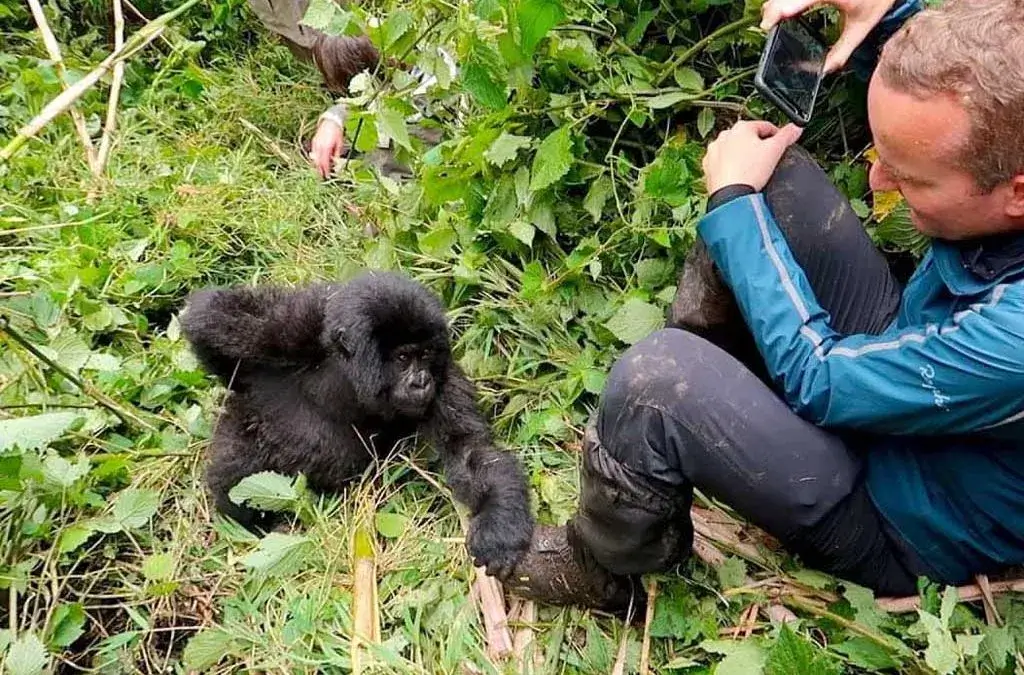
Gorilla trekking is one of Africa’s most extraordinary wildlife experiences — and also one of its most physically demanding. Deep inside Bwindi Impenetrable Forest (Uganda), Volcanoes National Park (Rwanda), or Mgahinga Gorilla National Park (Uganda), you’ll navigate steep muddy slopes, dense undergrowth, twisted roots, and slippery stream crossings — sometimes for six hours or more. The single most important piece of gear you’ll pack is the footwear on your feet.
This comprehensive guide covers everything you need to know about gorilla trekking footwear: what makes a boot suitable for the forest, which features matter most, top product recommendations across budgets, and expert tips on breaking in, maintaining, and packing your boots for safari.
Quick Answer: The best gorilla trekking boots are waterproof, ankle-supporting, high-grip hiking boots — ideally with a Gore-Tex membrane, Vibram outsole, and a shaft height of at least 6 inches. Budget $80–$350 for a quality pair that will last multiple safaris.
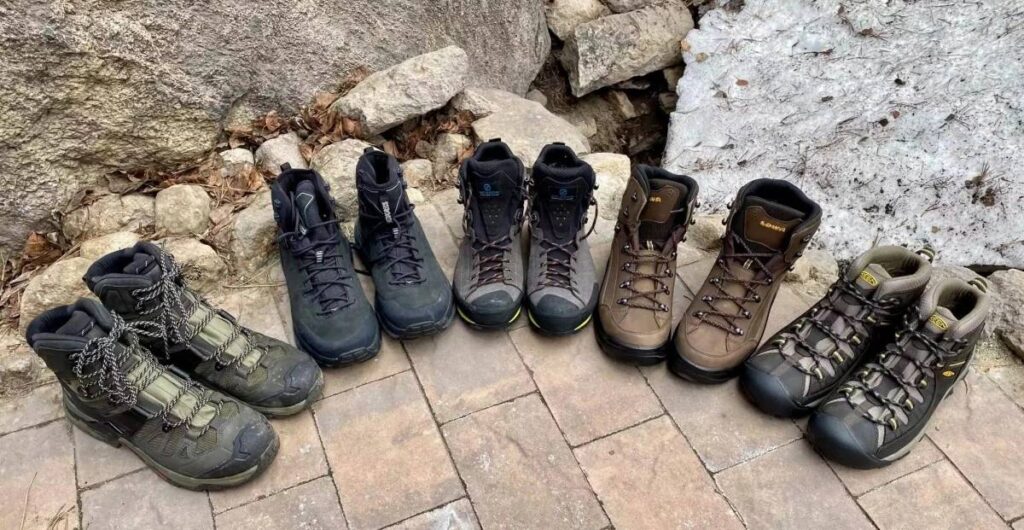 1. Why Footwear Is Critical for Gorilla Trekking
Gorilla trekking terrain bears no resemblance to a manicured national park trail. The equatorial rainforests of East and Central Africa receive between 1,200 mm and 2,000 mm of rainfall annually, creating permanently moist, muddy, root-strewn conditions year-round — even in the so-called dry season. Understanding the terrain helps you understand exactly what your boots must do.
The Terrain You’ll Face
- Mud and clay slopes: Volcanic red clay at Bwindi becomes extremely slippery when wet and sticks aggressively to boot soles.
- Steep ascents and descents: Elevation changes of 400–800 metres are common in a single trek day at Bwindi and Volcanoes NP.
- Root networks: Exposed tree roots and vegetation act as natural trip hazards, demanding ankle stability.
- River and stream crossings: Small crossings without bridges are frequent — waterproofing is non-negotiable.
- Fallen logs and dense undergrowth: Your feet are constantly placed on uneven, unpredictable surfaces.
- Nettle patches and stinging vegetation: A higher boot shaft protects your lower legs from the infamous safari ants and stinging nettles.
Why Regular Sneakers or Trail Runners Fail
Many first-time gorilla trekkers make the mistake of wearing trail running shoes or lightweight hikers. While these may feel comfortable on well-maintained trails, they fail in dense rainforest for several reasons:
- Insufficient ankle support on unpredictable root-covered ground leads to rolled ankles — the most common gorilla trekking injury.
- Low waterproofing means soaked feet within the first 30 minutes on a wet day.
- Shallow lug patterns clog with mud and lose traction rapidly.
- Low shaft height leaves ankles exposed to stinging nettles, safari ants, and vegetation.
A proper gorilla trekking boot is an investment in safety, comfort, and the overall quality of your experience.
2. Key Features of the Best Gorilla Trekking Boots
2.1 Waterproofing
This is the single most critical feature. Waterproofing comes in two main forms:
- ★ Gore-Tex (GTX) lining: The gold standard. Gore-Tex is a breathable waterproof membrane that keeps moisture out while allowing sweat vapour to escape. Look for boots labeled ‘GORE-TEX’ or ‘GTX’. Brands like Salomon, Merrell, Lowa, and Vasque all offer GTX variants of their popular hiking boots.
- ★ Proprietary membranes: Some brands use their own waterproof membranes — Salomon Climashield, Keen.Dry, Merrell M-Select DRYNESS. These are effective but generally slightly below Gore-Tex in long-term waterproofing durability.
- ★ DWR coating (Durable Water Repellent): Applied to the outer fabric as a surface treatment. DWR alone is insufficient for gorilla trekking — always combine with a membrane lining.
Recommendation: Always choose Gore-Tex or equivalent membrane waterproofing, not just DWR-treated leather or fabric.
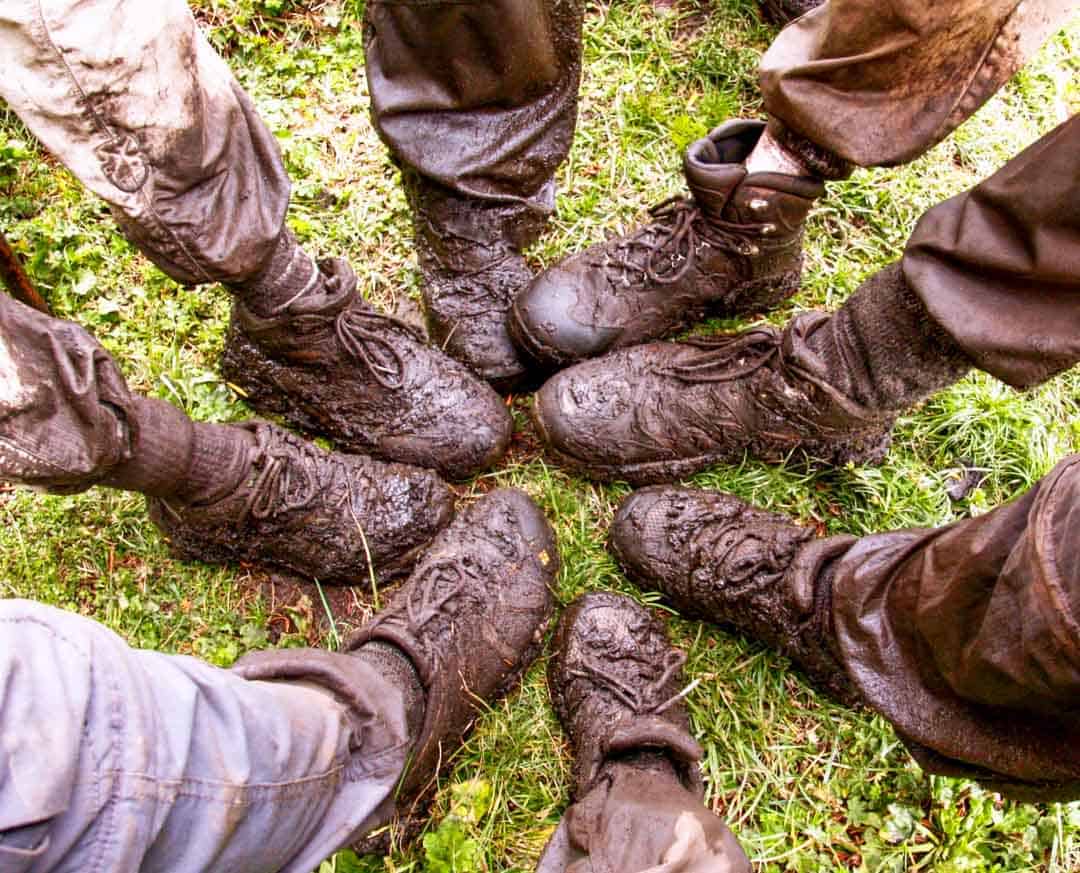 2.2 Ankle Support
High ankle support (6–8 inch shaft) is strongly recommended for gorilla trekking. The unpredictable placement of your feet on roots, rocks, and loose soil makes ankle stability essential. Mid-cut boots (4–5 inch shaft) are the absolute minimum acceptable level.
2.3 Outsole Grip
A deep, aggressive lug pattern is essential for gripping wet mud and slippery roots. The best gorilla trekking boots feature:
- Vibram outsoles: The industry benchmark for hiking grip. Multi-directional lugs, 4–6 mm deep, provide superior traction on wet, muddy, and rocky surfaces.
- Self-cleaning lug patterns: Spaced lugs that shed mud rather than accumulating it — critical for clay-heavy Bwindi terrain.
- Heel brake: A deeply cut heel lug for braking on steep descents without slipping.
2.4 Cushioning and Midsole
You may be on your feet for 4–8 hours during a gorilla trek. Adequate midsole cushioning reduces foot fatigue, protects against rock impact, and makes the experience significantly more enjoyable. Look for:
- EVA foam midsoles: Lightweight and shock-absorbing. Found across most mid-range to premium hiking boots.
- OrthoLite or equivalent insoles: Moisture-wicking, antimicrobial insoles that stay comfortable over long hike durations.
- Shanks (TPU or nylon): A stiffening plate in the midsole protects against rock puncture and reduces foot fatigue over uneven terrain.
2.5 Boot Weight
Heavier boots (550g+ per boot) offer more protection but contribute to fatigue on long treks. The ideal gorilla trekking boot balances protection and weight — most quality options fall in the 450–700g range per boot. Lightweight boots under 400g per boot typically sacrifice ankle support, outsole depth, or waterproofing quality.
2.6 Fit and Sizing
Proper fit is paramount. Gorilla trekking involves significant downhill sections where your toes can jam against the boot’s front if the fit is too short. Follow these fit guidelines:
- Leave 1–1.5 cm of space in front of your longest toe (often the second toe, not the big toe).
- Heel should sit firmly with minimal lift when walking on flat ground.
- Width across the ball of your foot should feel secure without pressure points.
- Always try boots on at the end of the day when feet are slightly swollen — this mimics trail conditions.
- Wear the same hiking socks you’ll use on the trek when fitting boots.
3. Best Gorilla Trekking Boots by Budget
The following recommendations have been selected for their proven performance in tropical rainforest hiking conditions across East Africa. All feature waterproof membranes, aggressive outsoles, and adequate ankle support.
3.1 Premium Gorilla Trekking Boots ($200–$350)
Salomon Quest 4 GTX — Editor’s Top Pick
The Salomon Quest 4 GTX is widely regarded as one of the best all-around mountaineering and tropical hiking boots available. Its advanced chassis provides exceptional stability, the Gore-Tex Extended Comfort lining offers reliable waterproofing, and the Contagrip outsole delivers excellent multi-terrain grip. The Quest 4 GTX is particularly well-suited to Bwindi’s steep, muddy, root-strewn terrain.
- Weight: ~630g per boot
- Shaft height: ~6 inches
- Outsole: Salomon Contagrip MA with multi-directional lugs
- Waterproofing: Gore-Tex Extended Comfort
- Ideal for: Bwindi, Volcanoes NP, Mgahinga — all terrain types
- Price range: $230–$310 USD
Lowa Renegade GTX Mid — Best Comfort
The Lowa Renegade GTX Mid has been a hiker’s favourite for over two decades. Its combination of full-grain leather upper, Gore-Tex lining, and Vibram Evo outsole makes it an exceptional choice for wet, demanding terrain. The Renegade is particularly praised for its out-of-the-box comfort — minimal break-in time required.
- Weight: ~530g per boot
- Shaft height: ~5 inches (mid cut)
- Outsole: Vibram Evo
- Waterproofing: Gore-Tex Performance Comfort
- Ideal for: Moderate to challenging gorilla trekking terrain
- Price range: $240–$290 USD
 Merrell Moab 3 Thermo Mid GTX — Best for Cold & Wet
For trekking in high-altitude gorilla habitat at Volcanoes National Park (Rwanda), where temperatures can drop sharply in the early morning and after rain, the Merrell Moab 3 Thermo Mid GTX adds insulation alongside waterproofing. An excellent choice for December–February and June–August when night and morning temperatures fall below 12°C.
- Weight: ~680g per boot
- Shaft height: ~6 inches
- Outsole: Vibram TC5+
- Waterproofing: Gore-Tex
- Special feature: 200g Thinsulate insulation for cold mornings
- Price range: $210–$260 USD
3.2 Mid-Range Gorilla Trekking Boots ($100–$200)
Keen Targhee III Mid Waterproof — Best Value
The Keen Targhee III Mid offers outstanding value for money. Keen’s proprietary KEEN.DRY waterproof membrane performs reliably in heavy rain, and the wider toe box is particularly comfortable for trekkers with wider feet. A popular choice for gorilla trekking safaris where budget is a consideration without compromising on essential features.
- Weight: ~560g per boot
- Shaft height: ~5 inches
- Outsole: KEEN.ALL-TERRAIN rubber with multi-directional lugs
- Waterproofing: KEEN.DRY membrane
- Special feature: Wider toe box — ideal for wider feet
- Price range: $130–$165 USD
Merrell Moab 3 Mid GTX — Most Popular
Consistently ranked among the world’s best-selling hiking boots, the Merrell Moab 3 Mid GTX offers reliable performance at an accessible price. Lighter than premium options, it is well-suited to moderate gorilla trekking terrain and is an excellent choice for first-time trekkers.
- Weight: ~480g per boot
- Shaft height: ~5 inches
- Outsole: Vibram TC5+
- Waterproofing: Gore-Tex
- Price range: $140–$175 USD
Columbia Newton Ridge Plus II Waterproof — Budget Mid-Range
- Weight: ~640g per boot
- Shaft height: ~7 inches — excellent ankle protection
- Outsole: Omni-Grip rubber
- Waterproofing: Columbia Omni-Tech
- Price range: $95–$130 USD
3.3 Budget Gorilla Trekking Boots (Under $100)
Budget boots can work for gorilla trekking if chosen carefully. Focus on waterproof membrane presence, ankle height, and outsole lug depth. Avoid cheap fashion-hiking boots that lack genuine waterproofing or structured ankle support.
- Hi-Tec Altitude VI i WP — around $75–$95 USD. Reliable waterproofing and ankle support at an entry-level price.
- Timberland White Ledge Mid Ankle — around $70–$90 USD. Solid leather construction with waterproofing; adequate for lighter trekking days.
- Salewa Mountain Trainer Lite — around $80–$110 USD. Excellent grip relative to price; popular with budget-conscious safari trekkers.
4. Gorilla Trekking Boot Comparison Table
Use this at-a-glance table to compare the top-recommended gorilla trekking footwear options across key performance metrics:
| Boot Model | Budget | Waterproofing | Outsole | Shaft | Best For |
| Salomon Quest 4 GTX | $230–$310 | Gore-Tex Extended | Contagrip MA | 6″ | All terrain, expert |
| Lowa Renegade GTX Mid | $240–$290 | Gore-Tex Performance | Vibram Evo | 5″ | Comfort, moderate |
| Merrell Moab 3 Thermo GTX | $210–$260 | Gore-Tex | Vibram TC5+ | 6″ | Cold/wet conditions |
| Keen Targhee III Mid WP | $130–$165 | KEEN.DRY | KEEN ALL-TERRAIN | 5″ | Wide feet, value |
| Merrell Moab 3 Mid GTX | $140–$175 | Gore-Tex | Vibram TC5+ | 5″ | First-timers |
| Columbia Newton Ridge II WP | $95–$130 | Omni-Tech | Omni-Grip | 7″ | Budget, ankle support |
5. Gorilla Trekking Footwear by Destination
5.1 Bwindi Impenetrable Forest, Uganda
Bwindi presents the most challenging gorilla trekking terrain of any destination in the world. The park protects a quarter of the world’s remaining mountain gorillas across four tracking sectors: Buhoma, Ruhija, Rushaga, and Nkuringo. Nkuringo in particular involves extremely steep ascents and descents of 800+ metres.
- Terrain: Extremely steep, perpetually muddy, heavy root cover, dense forest
- Rainfall: Year-round (1,400–2,000mm annually)
- Recommended boot type: High-cut (6–8 inch), Gore-Tex, aggressive Vibram outsole
- Best boots: Salomon Quest 4 GTX, Lowa Tibet GTX, Zamberlan Vioz GTX
- Gaiters: Strongly recommended for Nkuringo and Rushaga sectors
5.2 Volcanoes National Park, Rwanda
Rwanda’s Volcanoes National Park offers gorilla trekking on the slopes of the Virunga Volcano chain. Terrain is volcanic, steep, and sometimes involves bamboo forest sections. Altitude ranges from 2,400 to 4,500 metres, though gorillas are typically tracked between 2,400–3,500m.
- Terrain: Volcanic soil, bamboo zones, hagenia forest, rocky lava fields
- Altitude: 2,400–3,500m (cold mornings, afternoon rain common)
- Recommended boot type: Insulated or mid-weight Gore-Tex, good ankle support
- Best boots: Merrell Moab 3 Thermo GTX, Salomon X Ultra 4 Mid GTX, Keen Targhee III Mid
- Gaiters: Recommended during rainy seasons (March–May, October–November)
5.3 Mgahinga Gorilla National Park, Uganda
Mgahinga is Uganda’s smallest national park and sits in the Virunga range adjacent to the Rwanda and DRC borders. The terrain is similar to Volcanoes NP — volcanic, sometimes rocky, with patches of bamboo forest.
- Terrain: Volcanic soil, bamboo forest, mixed altitude vegetation
- Altitude: 2,227–4,127m (Mount Muhavura)
- Recommended boot type: Mid-weight hiking boot with Gore-Tex and good ankle support
- Best boots: Merrell Moab 3 Mid GTX, Keen Targhee III, Salomon X Ultra 4 Mid GTX
6. Gorilla Trekking Gaiters — Do You Need Them?
Gaiters are protective sleeves that cover the gap between your boot top and your trouser leg, sealing out mud, water, debris, and insects. For gorilla trekking, gaiters are a highly recommended addition to your footwear kit, especially in Bwindi.
Why Gaiters Matter for Gorilla Trekking
- Protection from safari ants: Safari ants (siafu) are the single biggest insect irritant on gorilla treks. They can climb up boot shafts and trouser legs rapidly. Gaiters form a physical seal that prevents entry.
- Mud and debris exclusion: Dense undergrowth pushes mud and leaf litter over boot tops.
- Extended waterproofing: Gaiters add a second layer of waterproofing above the boot’s membrane.
- Nettle protection: Dense stinging nettle patches are common in Bwindi — gaiters protect the lower leg.
Recommended Gaiters for Gorilla Trekking
- Outdoor Research Rocky Mountain Low Gaiters — Lightweight, packable, excellent for tropical conditions ($35–$45)
- Black Diamond Neve Pro Gaiters — More substantial coverage for Nkuringo-level terrain ($60–$80)
- Salomon Trail Gaiters — Designed to pair with Salomon boots, secure attachment system ($25–$40)
- REI Co-op Trail Gaiters — Budget-friendly option, widely available online ($25–$35)
7. Essential Gorilla Trekking Footwear Tips
| BREAK-IN YOUR BOOTS BEFORE THE TREK |
| ✓ Never wear new boots on the day of your gorilla trek.
✓ Break them in with 3–5 day hikes of at least 5km each in the weeks before travel. ✓ Focus on downhill sections — this reveals hot spots and pressure points early. ✓ Apply a leather conditioner if your boots have a full-grain leather upper. ✓ If blisters form during break-in, address fit or sock choice before the trek. |
| PACK THE RIGHT SOCKS |
| ✓ Wear moisture-wicking merino wool or synthetic hiking socks — never cotton.
✓ Cotton retains moisture, causing blisters within hours on wet tropical terrain. ✓ Pack at least 2 pairs of quality hiking socks for a gorilla trekking day. ✓ Consider liner socks inside heavier outer socks for extra blister prevention. ✓ Merino wool: naturally odour-resistant and temperature-regulating. |
| ️ WATERPROOFING MAINTENANCE |
| ✓ Apply a DWR re-treatment spray (Nikwax, Grangers) before your safari trip.
✓ Clean mud off boots within 24 hours — dried mud breaks down membrane integrity. ✓ Re-wax leather uppers with a leather wax conditioner before prolonged wet use. ✓ Allow boots to air-dry naturally — never use direct heat (fire, radiator, hairdryer). ✓ Gore-Tex effectiveness diminishes if the outer fabric becomes saturated — re-treat DWR regularly. |
8. What NOT to Wear for Gorilla Trekking
Equally important as knowing what to buy is knowing what to avoid. The following footwear types are unsuitable for gorilla trekking:
- ✗ Running shoes or gym trainers: Insufficient grip, ankle support, and waterproofing.
- ✗ Fashion hiking boots: Often lack waterproof membranes despite outdoor appearances. Many ‘hiking’ boots sold in general retail have minimal grip and thin midsoles.
- ✗ Sandals or open-toed footwear: Completely unsuitable — prohibited by most gorilla trekking park rules.
- ✗ Low-cut trail runners: Acceptable for mild trail running but inadequate ankle support and shaft height for gorilla trekking terrain.
- ✗ Wellington boots / rubber boots: While waterproof, they offer virtually no ankle support, poor grip on roots, and zero cushioning for multi-hour trekking. Avoid unless this is the only option.
- ✗ Brand-new boots on trek day: Even high-quality boots will cause blisters if not broken in. This is one of the most common gorilla trekking mistakes.
9. Gorilla Trekking Footwear FAQs
Q: Can I rent gorilla trekking boots in Uganda or Rwanda?
Yes, limited boot rental is available at some gorilla trekking lodges and through safari operators in both Uganda (Buhoma, Kisoro) and Rwanda (Kinigi). However, quality is inconsistent and sizing is limited. It is strongly recommended to bring your own boots for hygiene, fit, and performance reasons.
Q: Do I need waterproof boots even if I’m trekking in the dry season?
Yes. Uganda’s dry seasons (December–February and June–August) significantly reduce rainfall frequency, but Bwindi and Volcanoes NP remain wet environments year-round due to their equatorial rainforest character. Morning dew, shaded soil moisture, and occasional unseasonal rain make waterproof boots essential regardless of season.
Q: How long do gorilla trekking boots last?
A quality pair of hiking boots (Salomon, Merrell, Lowa) will typically last 800–1,200 km of hiking. For safari travellers who use them primarily for gorilla trekking and occasional trail hikes, this can represent 5–10+ years of use. Resole or replace Gore-Tex-lined boots when the membrane shows signs of failure — typically after 3–5 years of regular use.
Q: Are thick leather boots better than synthetic for gorilla trekking?
Both materials perform well in gorilla trekking conditions. Full-grain leather offers superior long-term durability and waterproofing when maintained with regular waxing, but is heavier and requires longer break-in time. Modern synthetic fabrics paired with Gore-Tex membranes offer lighter weight, faster drying, and comparable waterproofing performance for most gorilla trekking durations.
Q: Do trekking poles help with footwear performance?
Yes. Trekking poles complement good boots by distributing load across your arms and core, reducing the torque on ankle joints during steep descents, and providing additional stability on slippery mud. Most gorilla trekking operators provide wooden walking sticks at the trailhead, but collapsible carbon-fibre trekking poles (e.g. Black Diamond Trail, Leki Micro Vario) are significantly more effective.
10. Complete Gorilla Trekking Packing List — Footwear & Lower Body
Beyond your boots, the following footwear and lower-body items should be packed for a gorilla trekking safari:
| Item | Specification | Priority |
| Hiking boots | Waterproof, ankle-support, Gore-Tex, mid-to-high cut | Essential |
| Hiking socks | Merino wool or synthetic, moisture-wicking (2–3 pairs) | Essential |
| Gaiters | Lightweight trail gaiters to seal boot top | Strongly recommended |
| Camp shoes / sandals | Lightweight Crocs or Chacos for lodge evenings | Recommended |
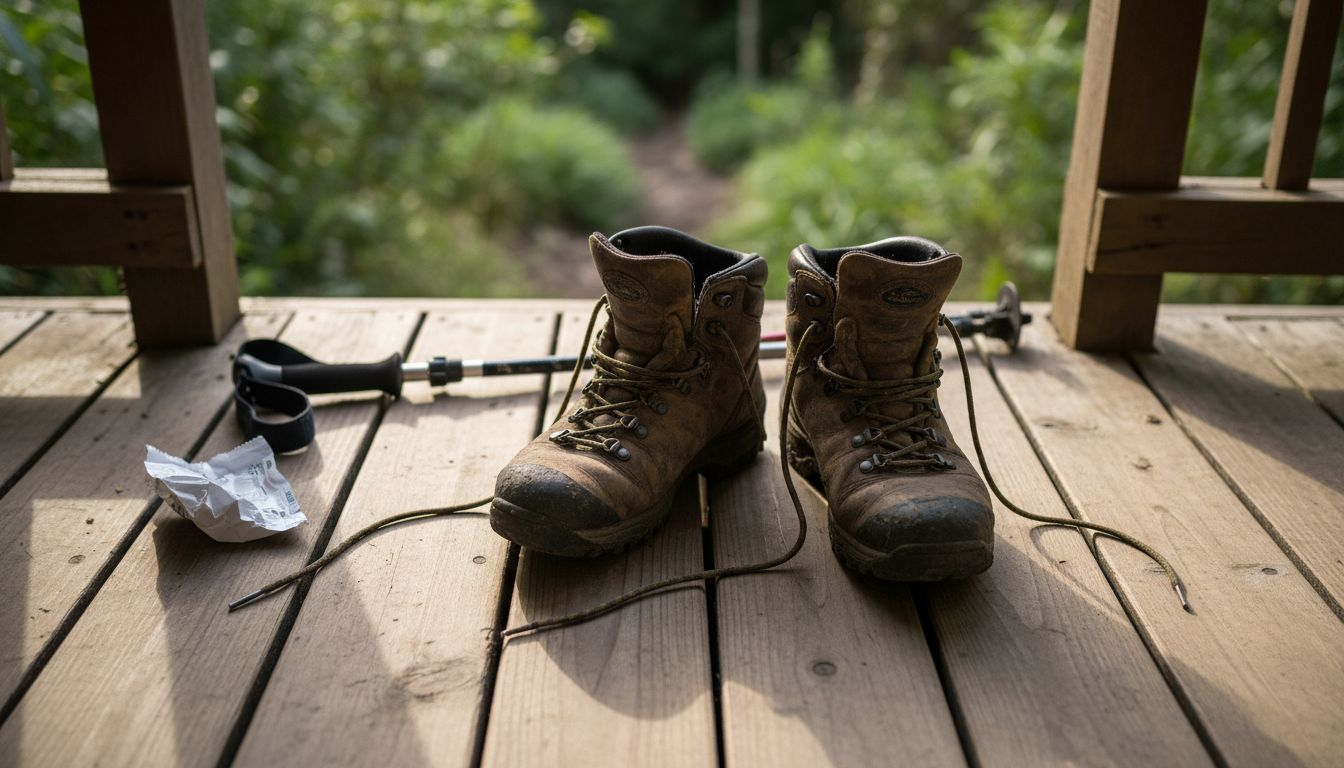
| Spare boot laces | Carry one spare set in same length | Useful |
| Boot bag / stuff sack | To store muddy boots post-trek | Useful |
| DWR spray (travel size) | Nikwax or Grangers boot waterproofer | Recommended |
| Blister prevention tape | Leukotape or moleskin for hot spots | Recommended |
| Trekking poles | Collapsible carbon-fibre, lightweight | Recommended |
11. Final Verdict: Best Gorilla Trekking Footwear in 2025
The right gorilla trekking boots are a significant investment — but one that pays off in safety, comfort, and the quality of your experience in the forest. Here are our final recommendations by category:
- Best overall: Salomon Quest 4 GTX — unmatched performance for Bwindi’s toughest terrain, worth every dollar.
- Best comfort: Lowa Renegade GTX Mid — outstanding all-day comfort with minimal break-in required.
- Best for Rwanda (Volcanoes NP): Merrell Moab 3 Thermo GTX — the insulation advantage at altitude justifies the premium.
- Best value: Keen Targhee III Mid Waterproof — best performance per dollar in the mid-range category.
- Best budget: Columbia Newton Ridge Plus II WP — solid ankle protection and waterproofing at an accessible price point.
Whichever boot you choose, commit to breaking it in well before your trek, pair it with quality merino wool socks, add gaiters for Bwindi, and you’ll be ready for one of the world’s greatest wildlife encounters.