
Silverback gorilla weight
A silverback gorilla is a fully matured male mountain gorilla often from the age of 15 to 18 years and above characterized by a silver-grey hair that extends across its back, thus the name Silverback. Most often, the silverbacks are the dominant males in the gorilla groups however sometimes a male gorilla becomes a silverback without necessarily being the leader of the group. Other than being the eldest members of the group, the silverback gorillas are also the largest and heaviest members of the group hence one of the most iconic gorillas.
On average, the silverback gorilla weighs between 400lb to 485lb however some extremely large silverbacks can weigh up to 600lb making them the heaviest primates in existence. Just like other mountain gorillas, a silverback gorilla is vegetarian and consumes up to 60lbs per day and this contributes significantly to its body weight.
When a silverback gorilla stands upright on its two limbs, it can reach a height between 5.5 to 6 feet displaying a towering and intimidating presence. Most of the times however the silverbacks maintain their natural posture of walking on four limbs which makes them shorter.
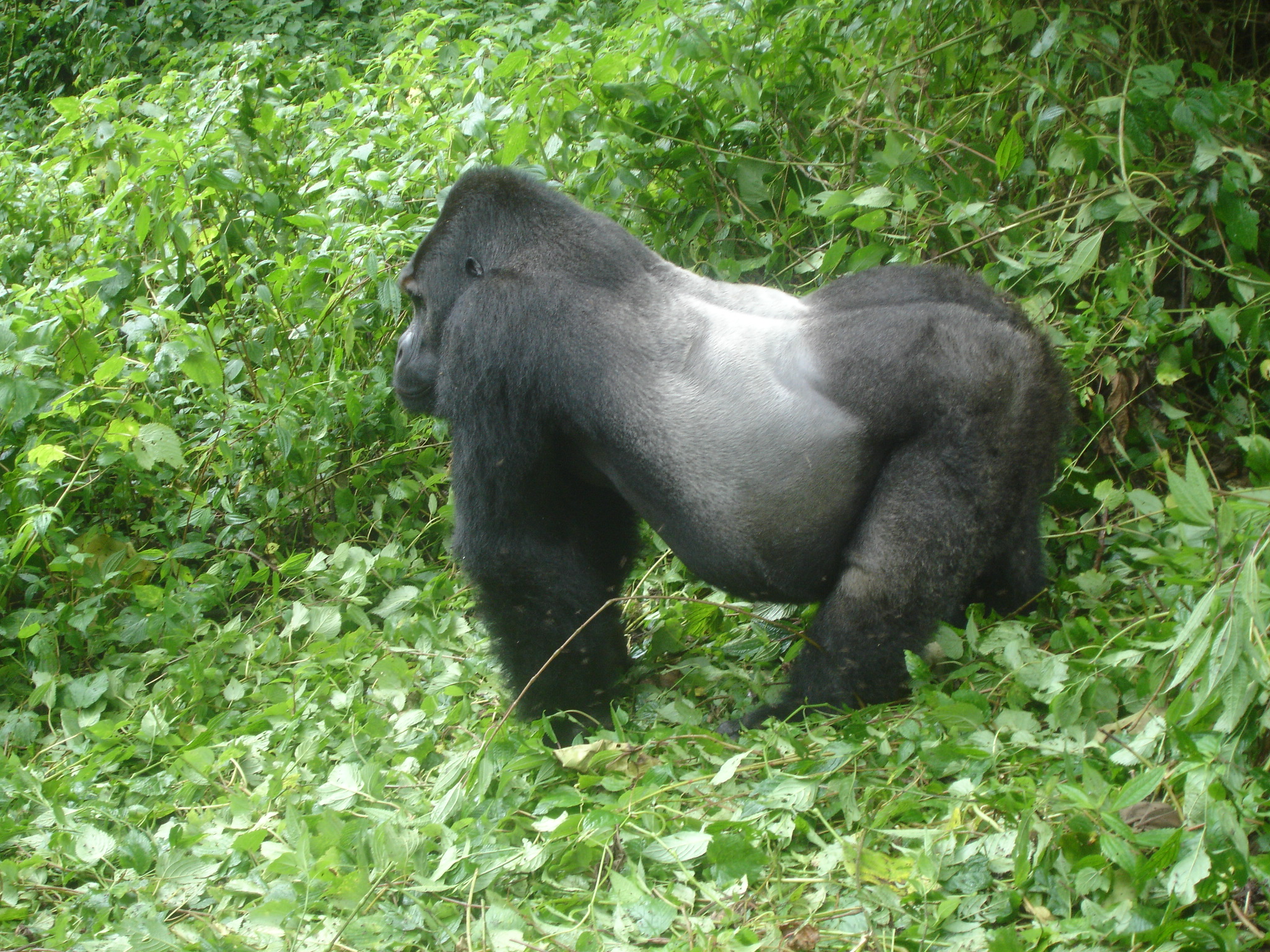 Despite being large in size, silverback gorillas possess incredible strength due to their muscle mass that allows them to show remarkable displays of strength, such as bending thick branches and lifting objects far heavier than their own body weight. A large portion of their body mass is made up of powerful muscles, giving them the physical advantage needed to thrive in the wild. This immense strength plays a crucial role in their survival such as when looking for mates, or defending their group from potential threats and attacks.
What factors contribute to the weight of the silverback gorilla?
There are several factors that contribute to the weight of a silverback gorilla and these include;
-
Diet
Mountain gorillas are herbivores; therefore, their diet majorly comprises fruit, leaves, stems, roots and bamboo shoots. Given the nature of their natural habitat, mountain gorillas have abundance of food at their disposal and this directly affect their size and weight since mountain gorillas eat a significant percentage of their body weight. However, when there is scarcity of food, gorillas experience weight loss which affects their strength and overall health.
-
Age
Male gorillas are born with an average weight of 4lb and this weight keeps increasing rapidly as they undergo growth however as they approach adulthood, their weight begins to stabilize. Silverbacks do not reach their full weight until they are about 15 to 20 years old.
-
Environment
Gorillas living in more abundant vegetation with numerous food sources such as the eastern lowland gorillas that live in the lowland forests of Central Africa tend to grow larger in sizes and weigh more compared to the mountain gorillas living in the more challenging, high-altitude areas of East and Central Africa.
-
Genetics
Just like humans, genetics play an important role in determining the overall size of a silverback gorilla. Genetically, some gorillas are naturally larger and well-built compared to others hence weigh more. This difference in genes influences factors such as muscle development, bone structure, and overall growth which implies that even within the same group, silverbacks may vary significantly in size and weight.
 What is the significancy of the weight of the silverback?
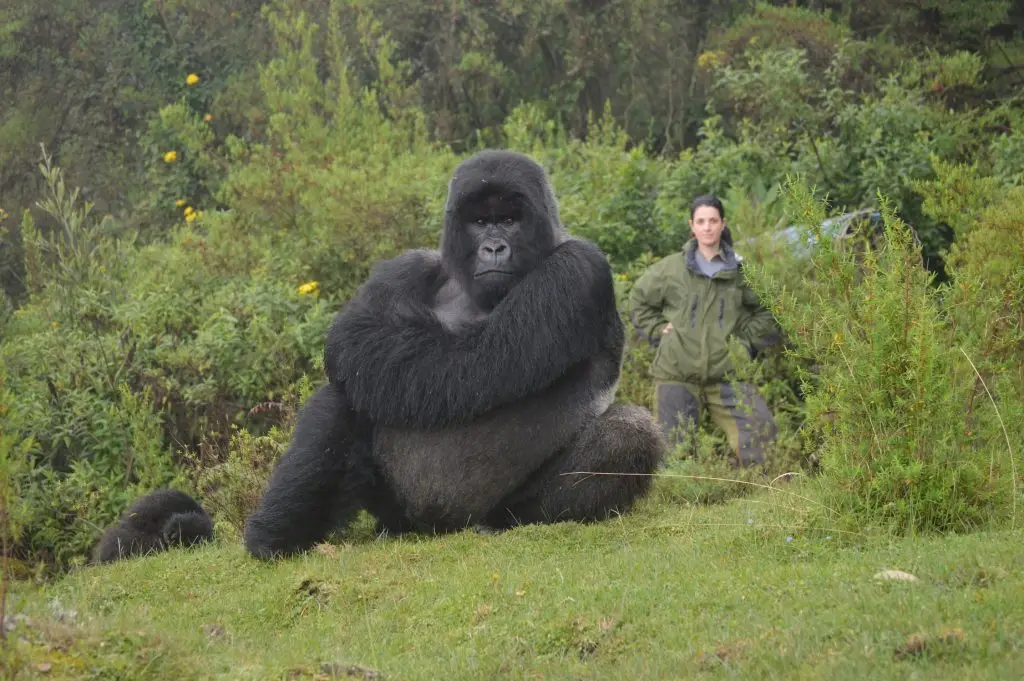
Despite its intimidating appearance, the silverback posses a calm and tolerant nature and this is often witnessed during their interaction with the infant gorillas in the group.
The strength of the silverback is primarily not for aggression however is significant in the different ways.
-
Protection
As the leaders and protectors of their families, these silverbacks must posses enormous strength so as to protect and defend the other members of the group. His strength and weight allows for him to fight off danger thus protecting the females and the younger members in his group.
-
Reproduction
Larger dominant silverbacks tend to have higher reproductive success compared to those that are smaller in size. This is due to its large size that often commands respect from females hence the ability to have many offspring within the group.
-
Dominance
Being the leaders of the group, it’s important for the silverback to command respect from the other members of the group such as the adult males so as to maintain peace and stability within the group. The weight of the silverback allows it to assert this leadership hence the ability to lead the group for awhile, most often until his death when a new silverback takes over the leadership of the group.
