
Role of a Silverback in a Gorilla family
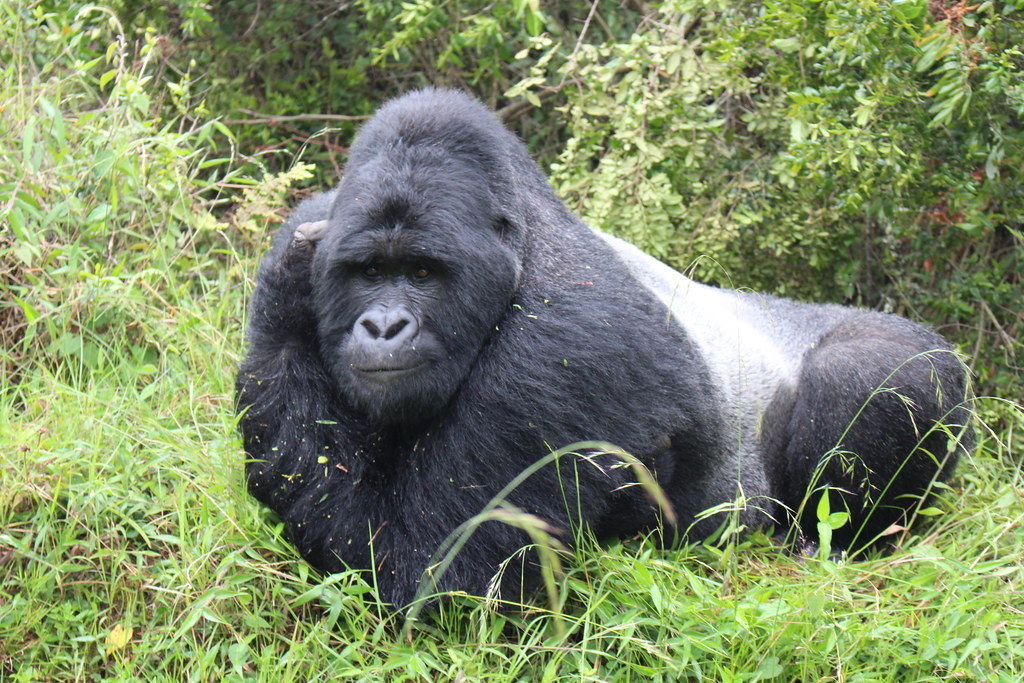
Among the great apes, few figures command as much awe and respect as the silverback gorilla. Named for the distinctive saddle of silver-grey hair that develops across a mature male’s back — typically around the age of 12 to 13 years — the silverback is far more than just a physically imposing creature. He is the cornerstone of gorilla social life: a protector, decision-maker, mediator, and father figure rolled into one extraordinary individual.
Gorillas (genus Gorilla) are the world’s largest living primates, found in the tropical and subtropical forests of central sub-Saharan Africa. They live in cohesive social groups known as troops or bands, typically consisting of one dominant silverback, several adult females, their offspring, and occasionally subordinate younger males called blackbacks. In some larger groups, multiple silverbacks may coexist, though one always holds primary dominance.
 Understanding the role of the silverback is not merely an academic exercise — it offers profound insights into the nature of leadership, social cohesion, parental care, and survival strategy. This article examines every dimension of the silverback’s role within his family group, drawing on decades of field research and behavioral studies.
Physical Characteristics That Define Authority
The transformation from blackback to silverback is a gradual biological process driven by hormonal changes and maturation. As a male gorilla ages past twelve years, testosterone levels rise significantly, triggering visible physical changes that communicate his status to the entire troop and to rival groups.
The Silver Saddle
The silver hair that gives the silverback his name is not merely an aesthetic feature — it is a social signal. It grows across the back, hips, and sometimes the thighs, creating a striking visual contrast against the otherwise dark coat. In the dense forest environment, this silver patch is instantly recognizable, helping group members identify their leader at a glance and warning rival males to keep their distance.
Size and Strength
Adult silverbacks are massive animals. Male western gorillas typically weigh between 140 and 200 kilograms (310 to 440 pounds), while mountain gorillas can exceed 220 kilograms in the wild. They stand up to 1.8 metres (6 feet) tall when upright and possess an arm span that can reach 2.6 metres. Their muscular development — particularly in the chest, shoulders, and arms — is extraordinary, granting them strength estimated to be six to ten times that of an adult human.
This physical superiority is not deployed recklessly. A silverback rarely needs to resort to actual combat. His sheer size and presence are usually sufficient deterrents against threats. When he does fight, however — whether against rival silverbacks or predators like leopards — his capacity for damage is formidable.
The Sagittal Crest
Mature silverbacks also develop a pronounced bony ridge atop the skull called the sagittal crest. This structure anchors the powerful jaw muscles used for chewing tough vegetation. It further adds to the silverback’s imposing profile, reinforcing his appearance as a formidable leader. Combined with his broad, flat nostrils, deep-set eyes, and pronounced brow ridge, the silverback projects unmistakable dominance.
Social Structure and the Silverback’s Central Role
Gorilla society is built around the silverback. Unlike many other primate societies where leadership may be more fluid or shared, a gorilla troop is decidedly organized around a single dominant male who serves as the group’s anchor. Every major decision — where to travel, when to rest, how to respond to danger — ultimately flows through him.
Family Composition
A typical gorilla families consists of one dominant silverback, two to five adult females, their juvenile and infant offspring, and sometimes one or more subordinate blackback males (typically 8 to 12 years old). In larger troops — particularly among mountain gorillas — multiple silverbacks may be present, but a clear hierarchy exists among them, with one male holding ultimate authority.
Troop sizes vary considerably. Among western lowland gorillas, groups tend to be smaller (averaging around 5 to 10 individuals), while mountain gorilla troops can number 30 or more. The larger the group, the more complex the silverback’s social management becomes.
Leadership and Decision-Making
The silverback leads all group movements. Each morning, he determines the direction of travel and the pace of the day’s foraging. Group members watch him closely and follow his lead. This is not blind obedience — gorillas are intelligent and observant animals — but a deeply ingrained social behaviour shaped by millions of years of evolution. The silverback’s experience and accumulated knowledge of his home range make him genuinely the best navigator for the group.
When the troop rests, forages, or builds nests for the night, these activities typically begin when the silverback initiates them. He also mediates disputes within the group, using a range of vocalizations and body language — from stern stares and grunt sequences to dramatic chest-beating displays — to maintain order and resolve tension without resorting to physical confrontation.
The Silverback as Protector
Protection is perhaps the most viscerally impressive aspect of the silverback’s role. He stands between his family and every form of external threat — natural predators, rival gorilla groups, and human intruders. This protective duty is carried out with extraordinary dedication and, when necessary, tremendous courage.
Defence Against Predators
The primary natural predator of gorillas is the leopard, though adult silverbacks are rarely taken by predators due to their size and ferocity. When a threat is detected, the silverback positions himself between the danger and his group. He issues alarm calls to warn the troop and encourage them to retreat, while he remains to confront the threat.
His defensive repertoire is spectacular and deliberately theatrical. The famous chest-beating display — where the silverback pounds his cupped hands rhythmically against his chest — produces a resonant sound audible over a kilometer away. This display is accompanied by hooting calls that escalate in frequency and volume, tearing of vegetation, ground-slapping, and bipedal charging. The combination is designed to intimidate without necessitating physical combat. If the threat does not retreat, however, the silverback will engage — sometimes fatally.
 Defense Against Rival Groups
Encounters between gorilla troops can be tense and occasionally violent. When home ranges overlap and groups meet, silverbacks face off in dramatic confrontations. These can involve prolonged displays, loud screaming, and chest-beating from both males, with subordinate members of each group watching anxiously from behind.
Actual combat between silverbacks is relatively rare but can result in serious injuries or death. More commonly, one male backs down after the display phase, and the groups separate. Infanticide — the killing of infants by a rival silverback — is a known occurrence during these encounters, which is one reason why a silverback’s protective role is so critical. A silverback who is killed or driven off leaves his females and offspring dangerously vulnerable.
Response to Human Threats
In areas where gorillas and humans coexist, the silverback’s protective role extends to managing interactions with people. Habituated gorilla groups studied by researchers have shown that silverbacks carefully assess human behavior, distinguishing between familiar researchers (generally tolerated) and unknown intruders (met with alarm displays). In the face of poachers or armed intruders, silverbacks have been documented engaging in life-threatening confrontations to defend their families — a testament to the depth of their protective instinct.
Reproductive Role and Mating
The silverback holds exclusive or near-exclusive mating rights within his group. This reproductive monopoly is central to his status and is one of the primary reasons younger males compete so intensely to attain silverback status. For the females, association with a dominant, healthy silverback confers significant reproductive advantages.
Mate Selection and Bonds
Contrary to a purely coercive model of mating, research has shown that female gorillas exercise considerable choice in their associations. Females do not simply follow any male — they select silverbacks who demonstrate consistent protective ability, stable temperament, and skill at leading the group to good foraging areas. A female dissatisfied with her silverback may transfer to a different group, taking her offspring with her.
Female gorillas are not bonded strongly to one another but tend to form individual affiliative relationships with the silverback. This creates a hub-and-spoke social structure where the silverback is the central attachment figure — a pattern quite distinct from chimpanzees, where female-female bonds are more developed.
Breeding Season and Reproduction
Gorillas have no fixed breeding season and can reproduce year-round. Females signal reproductive readiness through behavioral and physical cues, and the silverback typically sires all or most of the offspring within the group. Gestation lasts approximately 8.5 months, and females give birth to a single infant, rarely twins. Given these slow reproductive rates — females typically give birth every four to six years — the silverback’s role in ensuring offspring survival is critical to the group’s long-term viability.
Parental Care and Relationships with Offspring
One of the most surprising and endearing aspects of silverback behavior is the depth of paternal care he provides. Far from being merely a dominant male focused on mating and fighting, the silverback plays an active and nurturing role in the lives of the group’s young.
Tolerance and Play
Silverbacks are remarkably tolerant of infants and juveniles. Young gorillas frequently clamber over, jump on, and play beside the silverback with apparent impunity. Field researchers at Karisoke Research Center in Rwanda — the site of Dian Fossey’s landmark studies — observed silverbacks allowing young gorillas to tumble across their massive backs, pull at their hair, and play-wrestle with gentle patience. This playful accessibility reinforces social bonds and contributes to the psychological security of growing gorillas.
Protection of Orphans
When a female dies, leaving orphaned offspring, the silverback often takes on a direct caretaking role for those infants. Documented instances show silverbacks allowing orphaned gorillas to sleep in their nesting spot, share their food, and remain in close contact for comfort. This behavior is particularly notable given that the orphan may not be his biological offspring — demonstrating that the silverback’s parental drive extends beyond simple genetic investment.
Teaching and Socialization
Young gorillas learn crucial survival skills by observing and interacting with the silverback. Foraging techniques, social protocols, and appropriate responses to threats are all absorbed through proximity to this experienced adult. The silverback’s behavioral patterns serve as a template for growing males, who will eventually leave the group to either form their own troops or attempt to take over existing ones.
 Communication and Behavioural Repertoire
The silverback communicates through a rich and varied repertoire of sounds, postures, and gestures. This communication system is essential for managing group cohesion, expressing emotional states, issuing warnings, and maintaining social hierarchies.
Vocalizations
Gorilla vocalizations are among the most studied in the animal kingdom. The silverback’s vocal range includes deep belch vocalizations (soft, repetitive sounds indicating contentment during foraging), pig grunts (used for group coordination), screams and barks (alarm signals), and the famous roar — a full-throated, resonant call that can carry over great distances through dense forest and is used during encounters with rivals or serious threats.
Each silverback has a unique vocal signature, and group members can identify their leader by voice alone — an important capability in dense forest where visual contact is not always possible. Infants and juveniles quickly learn to interpret these sounds and respond appropriately.
Chest-Beating Display
The chest-beating sequence is one of the most iconic behaviours in the animal kingdom. A full display by a silverback follows a recognizable sequence: increasingly rapid hoots, rising to a climax, followed by standing upright, throwing vegetation, the chest-beating itself (lasting one to two seconds), dropping to all fours, and a ground-slapping run. The entire performance may last up to 30 seconds and serves multiple functions: intimidating rivals, impressing females, and rallying group members.
Research has shown that the acoustic properties of the chest-beat — its pitch, duration, and resonance — correlate with the silverback’s body size, providing an honest signal to rivals assessing whether a confrontation is worth pursuing. Larger silverbacks produce deeper, more resonant beats that advertise their superior size without requiring a direct physical encounter.
Body Language and Facial Expressions
Posture, gaze, and facial expression are equally important communication tools. A direct, sustained stare from a silverback signals dominance or threat; subordinate gorillas typically avoid eye contact or redirect their gaze as a gesture of submission. Hair erection — piloerection — makes the silverback appear even larger during tense encounters. Relaxed postures and play-faces (open mouth with relaxed expression) signal safety and ease within the group.
Foraging, Territory, and Home Range Management
A gorilla troop’s survival depends on efficient use of available habitat. The silverback’s intimate knowledge of his home range — built over many years of experience — is one of his most valuable contributions to the group’s welfare.
Foraging Leadership
Gorillas are primarily herbivores, consuming vast quantities of leaves, shoots, bark, roots, and fruit. An adult silverback can eat up to 34 kilograms (75 pounds) of vegetation per day. His role in leading the group to productive foraging areas — and away from depleted zones — directly affects every member’s nutritional condition. The silverback’s long memory for seasonal food availability, water sources, and safe sleeping sites is a genuine survival asset that younger animals cannot replicate.
Home Range and Territory
Gorilla troops typically occupy overlapping home ranges rather than strictly defended territories. A mountain gorilla group’s home range averages 20 to 40 square kilometres. The silverback navigates this range with precision, balancing the need to find food with the desire to avoid dangerous encounters with neighboring groups. In areas with high gorilla density, this navigation becomes a constant strategic challenge.
While gorillas do not actively patrol and mark territory in the manner of, say, chimpanzees, the silverback’s responses during inter-group encounters effectively determine whether the group expands into new areas or retreats from established ones. Over time, his decisions shape the troop’s relationship with the broader landscape.
Succession: What Happens When a Silverback Dies?
The death, incapacitation, or disappearance of a silverback is among the most disruptive events that can befall a gorilla troop. Because the group’s cohesion is so tightly organized around a single individual, his loss creates an immediate crisis.
8.1 Group Dissolution
When the sole silverback of a group dies — particularly if there are no mature sons to assume leadership — the group often dissolves. Adult females, stripped of their protector and leader, typically transfer to other groups, often along with their older offspring. Infants and very young juveniles left without maternal protection face extremely high mortality risk, particularly from infanticide by males of the groups the females join.
Succession Within Multi-Male Groups
In larger troops with multiple silverbacks, succession is more orderly. The dominant silverback’s eldest son or the most experienced subordinate silverback may assume leadership relatively smoothly. In mountain gorilla populations, researchers have documented groups that successfully transferred leadership from father to son, maintaining group integrity across generations.
Lone Silverbacks
Young males who leave or are expelled from their natal group enter a solitary phase as lone silverbacks. During this period — which may last several years — they forage alone, sometimes in loose association with other lone males, and gradually build the experience needed to attract females and form their own groups. This is an extraordinarily challenging and dangerous phase; lone males are more vulnerable to predation and have no allies in confrontations with established groups. Those who successfully navigate this period and build a troop represent the next generation of family leaders.
Emotional Life and Intelligence of the Silverback
Modern primatology increasingly recognizes the rich emotional and cognitive lives of gorillas, and the silverback’s behaviour provides compelling evidence for this complexity. He is not simply an instinct-driven animal but a cognitively sophisticated being capable of nuanced social judgment.
Problem Solving and Tool Use
While gorillas are less renowned for tool use than chimpanzees, observations in the wild and in captivity have documented gorillas using sticks to test water depth, employing rocks to crack open hard-shelled foods, and using branches as walking aids. Captive silverbacks — most famously Koko, who learned sign language — have demonstrated vocabulary, abstract reasoning, and even apparent self-awareness through mirror recognition.
Grief and Social Bonding
Gorillas appear to experience and express grief. When group members die, silverbacks and other gorillas have been observed remaining with the body, touching it, and exhibiting restless, agitated behaviour. The depth of the silverback’s bonds to his group members — forged over years of shared experience — means that the loss of a long-term companion is a genuinely disruptive emotional event.
Individual Personality
Long-term field studies have revealed that silverbacks have distinct individual personalities. Some are notably more tolerant and gentle in their leadership style, mediating conflicts through calm intervention; others are more authoritarian and quick to use displays of force. These personality differences affect the social atmosphere of the entire troop and influence which females choose to stay and which may transfer away. A silverback’s ‘management style,’ in a very real sense, shapes the culture of his family group.
Conservation Status and the Significance of Silverback Survival
All gorilla subspecies are currently classified as either Critically Endangered or Endangered on the IUCN Red List. The survival of gorilla populations is inextricably linked to the survival of their silverbacks, because the loss of a dominant male can collapse an entire family group.
Threats to Silverbacks
Silverbacks face a range of anthropogenic threats. Poaching — for bushmeat, trophies, or the illegal pet trade — directly targets them. Habitat destruction through deforestation, agricultural expansion, and mining operations fragments and reduces their home ranges. Disease transmission from humans, including respiratory illnesses to which gorillas have little immunity, is an increasing concern in areas with high human-gorilla contact.
Armed conflict in regions like the Democratic Republic of Congo and Rwanda has historically put gorilla populations — and the silverbacks who protect them — at acute risk, as national parks become battlegrounds and law enforcement breaks down.
Conservation Success Stories
The mountain gorilla (Gorilla beringei beringei) represents one of conservation’s greatest recent successes. Through sustained efforts by organizations like the Dian Fossey Gorilla Fund, the Rwanda Development Board, and the Virunga National Park authorities, mountain gorilla numbers have increased from approximately 620 individuals in the 1980s to over 1,000 today — the only great ape subspecies whose numbers are currently rising.
Protecting individual silverbacks is a cornerstone of these efforts. Veterinary intervention to treat wounded or snared silverbacks, anti-poaching patrols, and community engagement programs that provide economic alternatives to poaching have all contributed to keeping these irreplaceable leaders alive and their troops intact.
 Conclusion
The silverback is, in every meaningful sense, the heart of the gorilla family. His role encompasses physical protection, social leadership, reproductive success, parental care, navigational expertise, emotional support, and generational continuity. Remove him, and the intricate social fabric of the troop unravels. Preserve him, and an entire family — with its complex relationships, learned behaviours, and irreplaceable genetic heritage — endures.
Studying the silverback teaches us much about leadership beyond the animal kingdom. His authority is earned not through brute force alone, but through demonstrated competence, consistent protection, and long-term investment in the well-being of those who depend on him. He leads by presence, by knowledge, and by example — offering a model of protective, engaged, and selfless leadership that resonates far beyond the forests of central Africa.
As habitat loss and human pressures continue to threaten gorilla populations, understanding and valuing the role of the silverback has never been more important. Every silverback lost is not merely an individual gone — it is a family structure dismantled, a generation of knowledge extinguished, and a small step toward the silence of extinction. The preservation of these magnificent creatures is one of the defining conservation challenges of our age, and the silverback stands at its center.
