
Gorilla Communication
Just like humans who these they share almost 98% DNA, gorillas communicate through a variety of methods including body pastures, facial expression and vocalization. Gorillas have displayed significant intelligence and those in captivity have even learned simle human sign language.
Primatologists have observed mountain gorillas use 16 different types of communication calls. The mountain gorillas use short barks when it’s mildy alarmed or curious. To intimidate their rivals, male gorilla strut with stiff legs, beat their chests, and use vocalizations like hoots or roars.
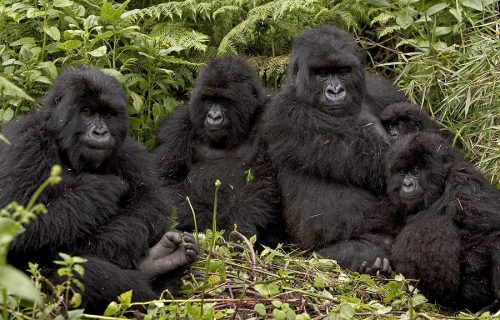
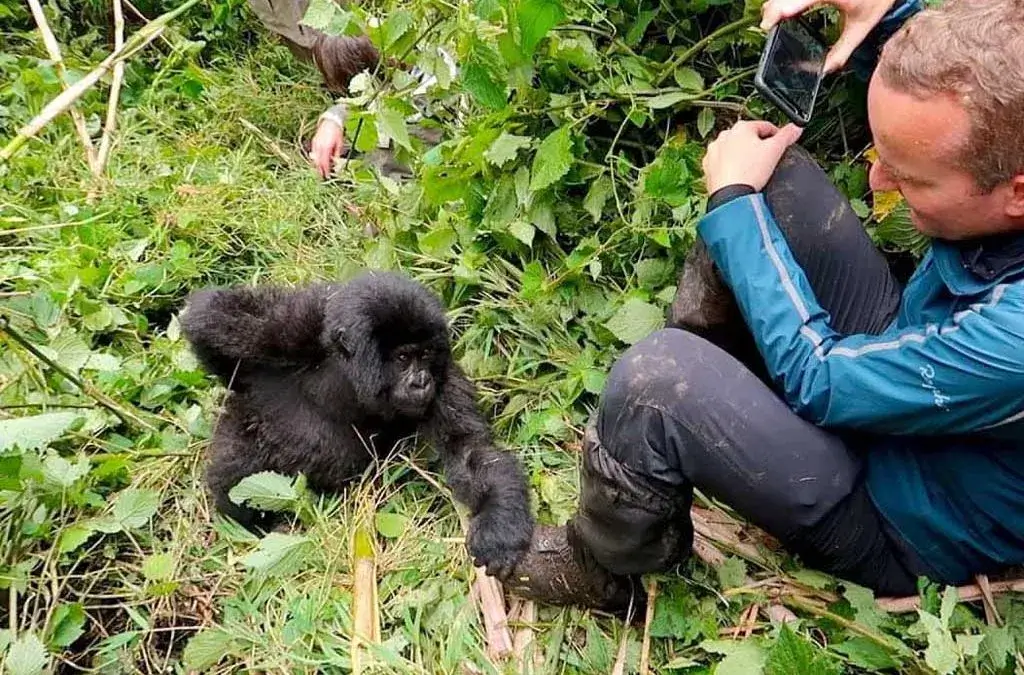 Scientifically known as Gorilla bringei beringei, mountain gorillas are a subspecies of the eastern gorilla only found in the East and Central Africa. These gentle giant are the biggest living primates, larger, more powerful and have thicker, longer fur than other gorilla species, which allows them to survive only in harsh environments at high altitudes and extreme cold.
Mountain Gorilla are the most threatened race to extinction and the only gorilla species found in East Africa – Uganda, Rwanda and DR.Congo. Uganda hosts over half of the world’s mountain gorillas. Mountain gorillas live in two populations that is one in Bwindi Impenetrable National Park and the second population in Virunga Conservation Area comprising of Mgahinga Gorilla National Park in Uganda, Virunga National Park in DR.Congo and Volcanoes National Park in Rwanda.
Though mountain gorillas are 98% genetically similar to humans, they are yet to have developed the necessary immunity to common human diseases, making then vulnerable to human illnesses.
With only 1,100 mountain gorillas surviving in the wild, mountain gorillas are still endangered. As far as we know, there are no mountain gorillas in captivity. Protecting these great apes in their natural habitat is the only way to ensure their survival. Officially, mountain gorillas are classified as Endangered on the IUCN Red List. Their status was changed from Critically Endangered in 2018 after years of concerted conservation efforts had helped to achieve a significant increase in the global mountain gorilla population.
Communicating Dominance
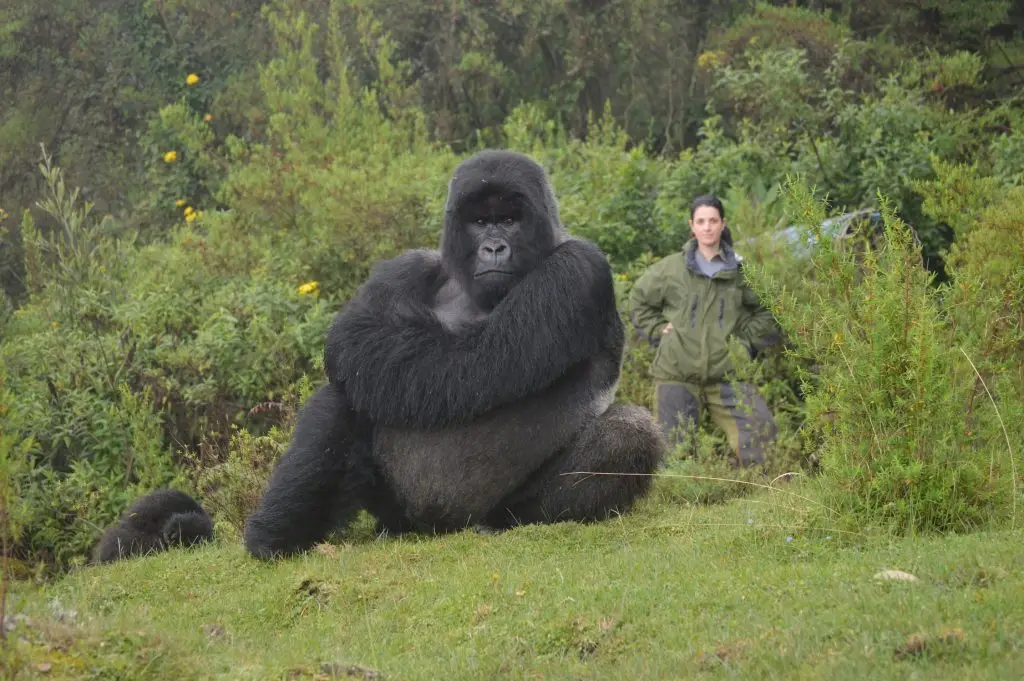
To communicate dominance, gorillas use a variety of behaviors and vocalizations. It can be as subtle as slightly moving out of the way of a dominant individual as he/she approaches, to an appeasement vocalization, which is often accompanied by a submissive posture like crouching, to a full-fledged display that includes through vegetation, chest beating, strut stances and even aggressive behavior like hitting or kicking.
 Play Face
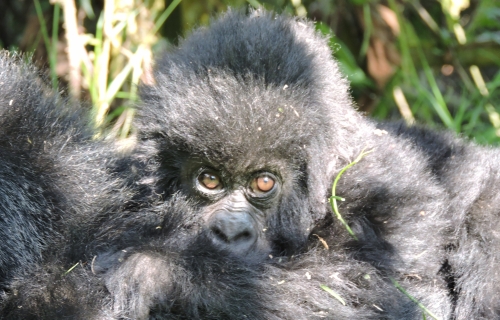
In gorillas, facial expressions can say it. Just like how you may be able to read a person’s mood by their expressions, sometimes you are able to with gorillas as well as other apes. One common and distinctive expression is the play face.
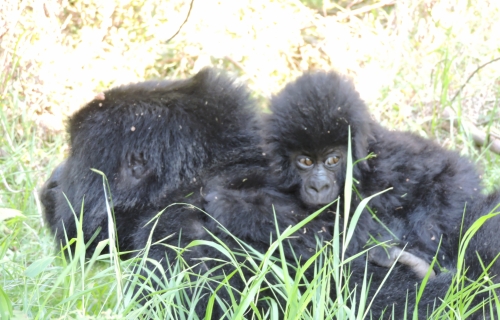
Place face consists of an open mouth with low hanging bottom lip and no teeth showing. Juveniles are the most common individuals to display the place face. This facial expressions is often paired with the gorilla equivalent of laughter.
Smiling and Yawning
Occasionally you may see gorilla communicate in a couple of different ways by showing their teeth. One being “bared – teeth”, where the mouth is open and both rows of teeth are showing. This is a sign of submission or appeasement and is thought to be tied to the origns of human smiling.
Gorillas, particularly males may also reveal their teeth through yawns. Yawning is thought to occur in context where males are distressed or anxious and could serve as a warning sign and display of dominance.
Vocalizations
Gorillas have many different vocalizations to communicate alarm, aggression, distress, contentment, and distress as well as group coordination. One of the most frequent vocalizations is the belch, which is used to convey a sense of contentment between individuals.
Also, gorillas hum or sing, this usually occurs content of finding a highly preferred food and usually involves several individuals or the whole group doing at the same time.
Chest Beat
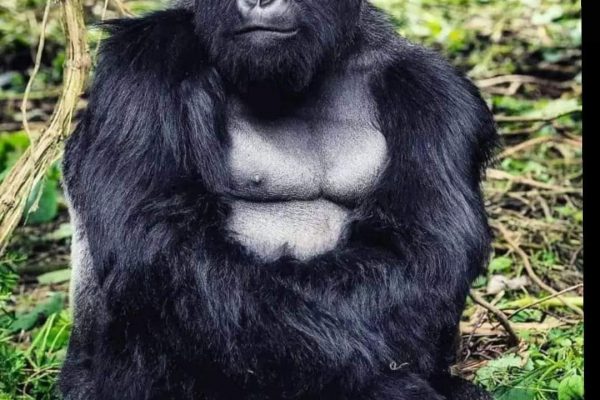
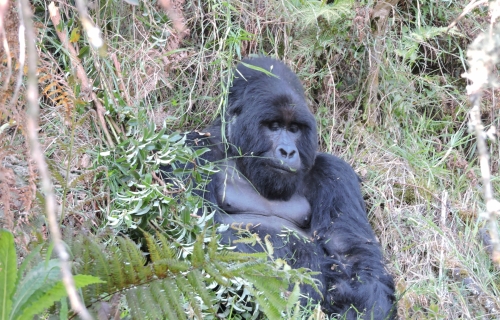
A chest beat in gorillas can have multiple meanings, the most well-known being in times of aggression in males (silverbacks). This method of communication is done by beating the chest with open palms, males have large air sacs located in their chests, which helps carry the sound over distances.
Also, chest beats are common in young gorillas, who do it while they are playing.
The 3 Days Uganda Gorilla Trekking Safari customized by Rwanda gorilla trek starts from Kigali airport crossing to Uganda via Katuna Border or Cyanika Border. Learn More
4 Days Uganda Gorilla Trekking starts from Kigali international airport drive through the land of thousand hills crossing to the pearl of Africa’s most known national park of Bwindi. Learn More
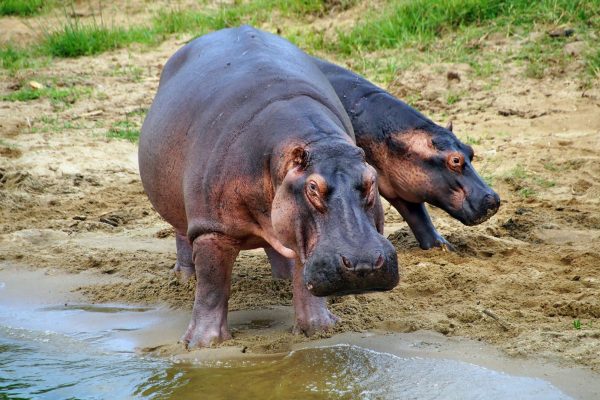
3 Days Uganda Wildlife Safari takes you to Lake Mburo National Park where you can spot rare wildlife such as lions, elephants, buffaloes, warthogs, antelope. Learn More
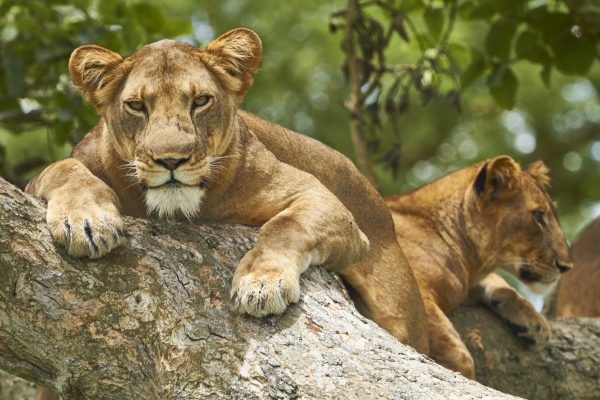
A 3 Day Uganda Wildlife Safari to Queen Elizabeth National Park can show you the magnificent wildlife of East Africa, such as lions, elephants, buffaloes. Learn More
5 Days Gorilla Trekking & Hiking trip to Mgahinga National Park located in southwestern Uganda. Plan a visit to the mountain gorillas, and golden monkey in Mgahinga. Learn More
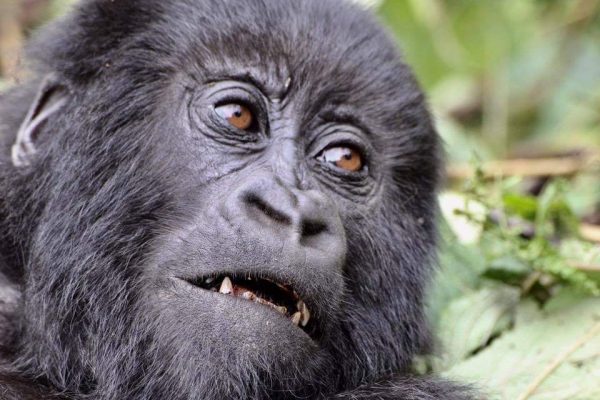
6 Days Uganda Gorilla trekking & wildlife safari tour to visit the mountain gorillas, Wildlife animals in Queen Elizabeth national park on a customized Uganda safari. Learn More
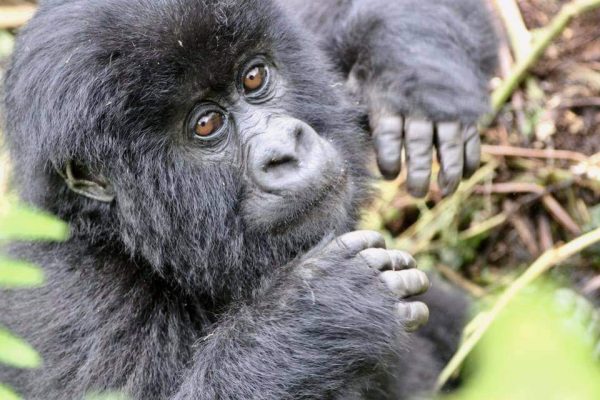
9 Days Uganda Safari to enjoy gorilla trekking on an ultimate gorilla safari adventure to Bwindi impenetrable forest national park, Wildlife viewing. Learn More
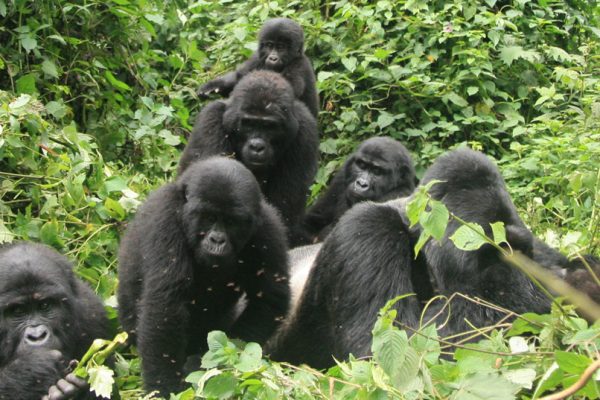
10 Days Uganda Gorilla & Wildlife Safari; Day 1: Arrival at Entebbe international airport, Day 2: Rhino Tracking at Ziwa & transfer to Murchison Falls, Day 3: Morning game drive and afternoon boat cruise, Day 4: Transfer to Queen Elizabeth National Park. Learn More
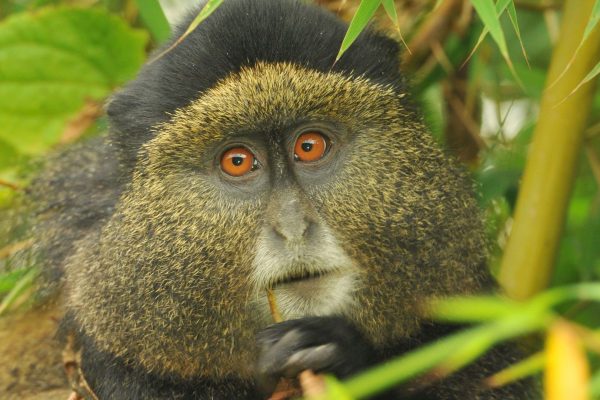
5 Days Uganda Primates Safari; Day 1: Arrival at Kigali international airport, Day 2: City tour, Day 3: Golden monkey habituation, Day 4: Gorilla Trekking Mgahinga national park, Day 5: Transfer to the airport. Learn More
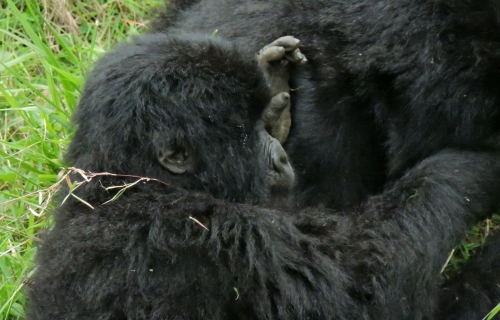
Book this 1 Day Rwanda Gorilla Trek and visit the mountain gorillas in Volcanoes National Park in the shortest time. Read More
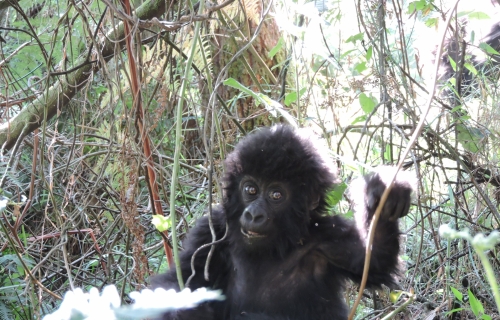
Book a Perfect 1 Day Gorilla tour to Bwindi Impenetrable Forest in southern Uganda. The trip starts from Kigali and can depart daily at 3:30 AM. Read More
Book 3 Days Gorilla Safari to Volcanoes. This trip combines gorilla trekking & Golden monkey tracking, a visit to the twine lakes, and a Kigali city tour. Read More
5 Days Uganda Rwanda Safari is perfect for a double gorilla trekking experience with a great chance of comparing gorilla trekking in Mgahinga National Park & Volcanoes. Read More
5 Days Rwanda Congo Safari is a perfect gorilla trekking & Nyiragongo hike in Congo on a combined multi Country safari to visit the mountain gorillas. Read More
Book 5 Days Rwanda Primate Tour offered by Rwanda gorilla trek the destination expert in Safaris to Rwanda throughout the entire year. Read More
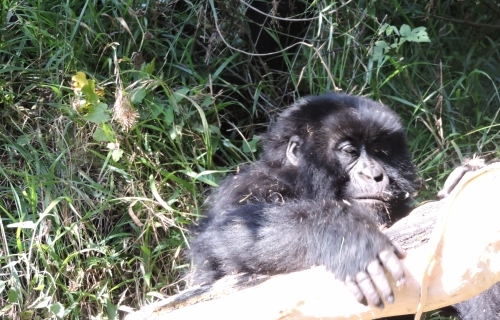
9 Days Gorilla Trekking Safari. Plan for a multi-country Safari to visit Africa? Click here to read about the Gorilla Trek within Rwanda, DR Congo & Uganda for Gorilla trekking. Read More
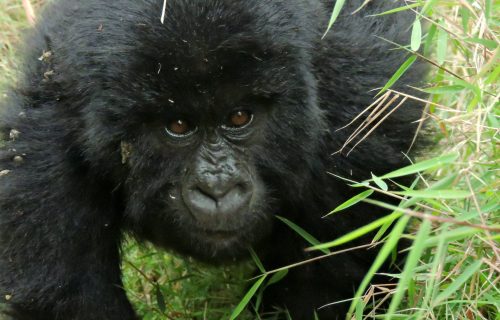
Get the Best out of 13 Days Rwanda Uganda Gorilla and Wildlife Safari with Active African Vacations that begins from Rwandan Airport Kigali and ends in Uganda. Read More
Book 5 Days Rwanda Primate Tour offered by Rwanda gorilla trek the destination expert in Safaris to Rwanda throughout the entire year. Read More
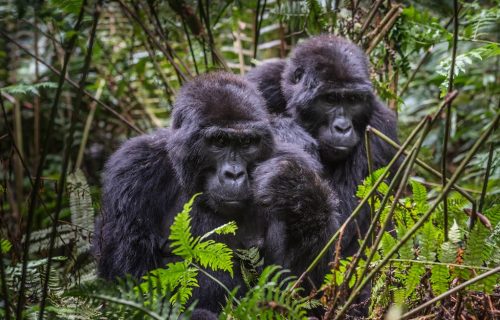
Plan for a 4 Days Double Gorilla Trekking Rwanda in volcanoes national park to visit the mountain gorillas two times watching the two different silverbacks. Read More
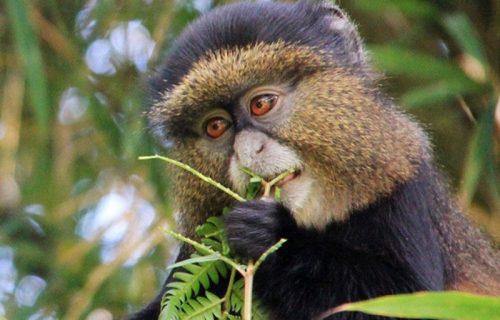
5 Days Uganda Primates Safari; Day 1: Arrival at Kigali international airport, Day 2: City tour, Day 3: Golden monkey habituation, Day 4: Gorilla Trekking Mgahinga national park. Read More
7 Days Rwanda Safari – Gorilla & Golden Monkey Trekking; Day 1: Arrival at Kigali international airport, Day 2: Transfer to volcanoes national park. Read More