
Why the Chobe River Cruise Is a Must-Do Safari Experience
The Chobe River Boat Cruise is widely regarded as one of Africa’s greatest wildlife encounters — a slow, peaceful journey along a waterway that sustains one of the continent’s densest concentrations of wildlife. Flowing along Botswana’s northern border with Namibia, the Chobe River forms the lifeblood of Chobe National Park, the country’s first and most iconic national park, established in 1967.
Unlike a classic game drive where your view is often obscured by bush and terrain, a boat cruise on the Chobe River places you at eye level with the animals — close enough to hear elephants splash, watch crocodiles slide silently into the current, and observe families of hippos grunting and jostling in the shallows. It is a fundamentally different and deeply intimate perspective on African wildlife.
Each year, thousands of travellers include the Chobe River cruise on their East and Southern Africa itineraries — and virtually every one of them calls it a highlight. This comprehensive guide covers everything you need to know: what to expect, the best time to go, what wildlife you will see, how to book, and how to get the most from your time on the water.
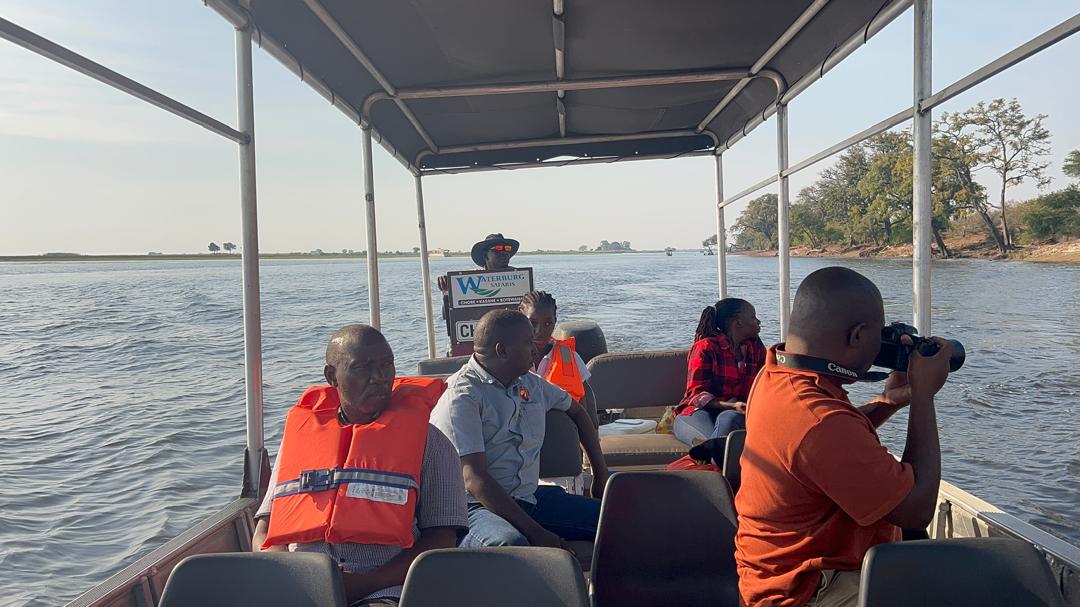 Chobe National Park: An Overview
Chobe National Park covers approximately 11,700 square kilometres in northern Botswana and is home to Africa’s largest elephant population — estimates suggest over 120,000 elephants roam within the park’s boundaries and the wider Chobe ecosystem. The park is divided into four distinct zones: the Serondela area along the Chobe River front, the Savuti Marsh, the Linyanti Wetlands, and the remote Ngwezumba pans.
For most visitors arriving via Kasane — the gateway town — the Chobe riverfront is the primary destination. It is here that wildlife gathers in extraordinary numbers during the dry season (May to November), when surface water elsewhere dries up and animals converge on the river’s reliable supply. The result is wildlife viewing of unmatched intensity: herds of several hundred buffalo, breeding herds of elephant with tiny calves, schools of hippos, and a dazzling array of waterbirds.
| Feature | Details |
| Park Size | 11,700 km² |
| Founded | 1967 |
| Elephant Population | ~120,000 (largest in Africa) |
| Gateway Town | Kasane, Botswana |
| UNESCO Status | Part of Kavango–Zambezi TFCA |
| Best Viewing Zone | Chobe Riverfront (Serondela) |
The Chobe River Boat Cruise: What to Expect
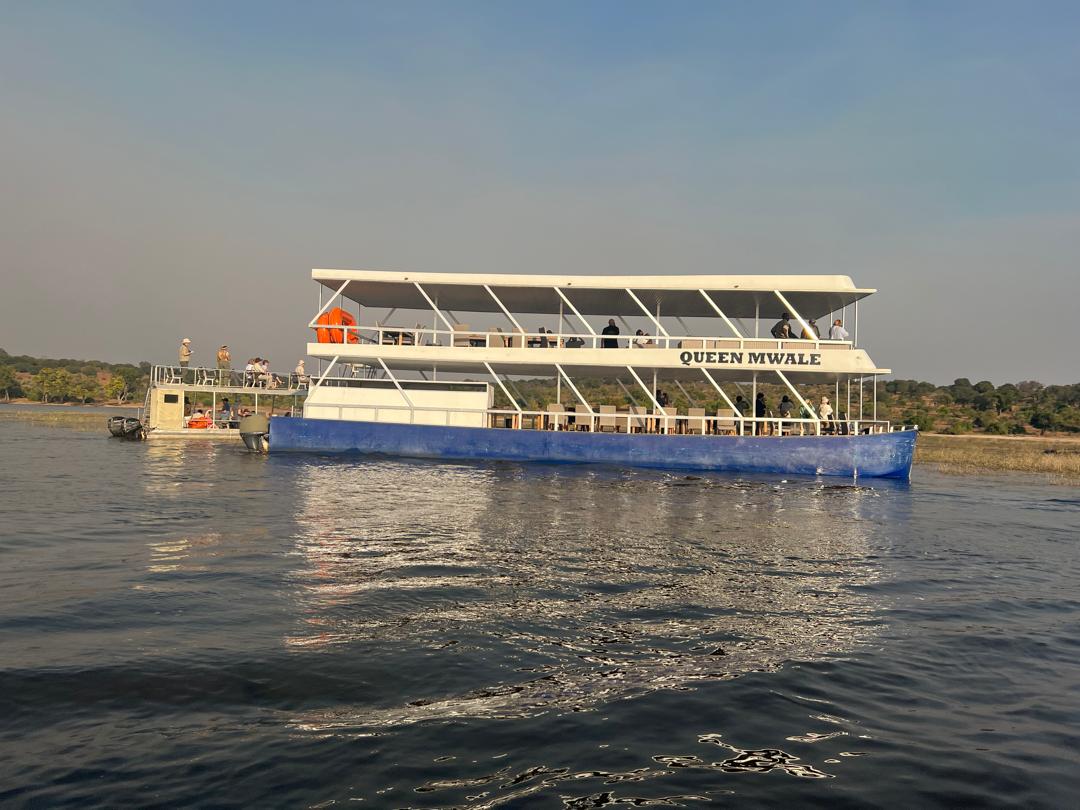
The Chobe River Boat Cruise is operated by numerous licensed companies in Kasane and from lodges along the riverfront. Most cruises run twice daily — one in the morning (typically departing around 7:00 AM) and one at sunset (around 3:30–4:00 PM). Both sessions offer outstanding wildlife, but each has a distinct character.
Morning Cruise
The morning cruise coincides with peak animal activity. Elephants arrive at the riverbank in large family groups to drink and bathe; lions and leopards — though more elusive — are occasionally spotted in the early hours. Birdlife is exceptional in the morning, with fish eagles calling, kingfishers diving, and herons stalking the shallows. The light is soft and ideal for photography.
 ✦ Typical duration: 2.5 to 3 hours
✦ Wildlife: Elephants, buffalo, hippos, crocodiles, waterbuck, puku
✦ Birdlife: African fish eagle, malachite kingfisher, saddle-billed stork, African skimmer
✦ Photography light: Soft golden light in the first hour
✦ Crowd levels: Moderate — less busy than sunset cruises
Sunset Cruise
The sunset cruise is the more popular option, and with good reason. As temperatures cool, animals emerge from shady retreats and head for the water. Elephant herds move in spectacular processions down to the riverbank; the light turns golden and then deep orange as the sun drops towards the Namibian floodplains on the opposite bank. The atmosphere is magical — arguably the most cinematic wildlife experience in all of Africa.
✦ Typical duration: 2 to 3 hours
✦ Wildlife: Larger elephant herds, hippos active at surface, impala and kudu
✦ Ambience: Golden hour light, dramatic sky reflections on the water
✦ Photography: Exceptional — silhouettes, golden light, and wide-angle riverscapes
✦ Crowd levels: Higher — book early or choose a smaller vessel
Pro Tip: Book the morning cruise for wildlife density; book the sunset cruise for atmosphere and photography. Doing both on the same day is highly recommended.
Wildlife You Will See on the Chobe River Cruise
Elephants
Without doubt, the star attraction of any Chobe River cruise is the African elephant. The Chobe riverfront hosts the highest concentration of elephants anywhere on Earth, and during the dry season, it is not unusual to observe hundreds of individuals at the water’s edge in a single afternoon. Watch as matriarchs lead their families down steep banks, calves tumbling into the shallows and crossing in noisy, splashing processions. Boats can approach elephants closely — sometimes within metres — without disturbing them, offering photography opportunities that game drive vehicles simply cannot match.
Hippos
The Chobe River supports a large hippo population. During the day, these massive animals rest in groups in the shallows or remain mostly submerged, surfacing periodically to breathe. Your boat captain will navigate carefully around pods, ensuring a safe but thrillingly close encounter. Listen for their deep, resonant honking calls — a sound that defines the African waterway.
Crocodiles
Nile crocodiles are abundant in the Chobe River. They are often seen basking on sandbanks with jaws agape — a thermoregulation behaviour — or sliding silently into the water as the boat approaches. Their prehistoric appearance and stealthy movement make them endlessly fascinating subjects for photographers.
Buffalo
Large buffalo herds frequently visit the Chobe riverfront, particularly in the dry season. Herds of several hundred individuals moving en masse to drink is one of the great spectacles of the African bush. From the boat, you can observe the entire herd spread along the bank — a panoramic view impossible from a game drive vehicle.
Birds
The Chobe River is a birder’s paradise. Over 450 species have been recorded in Chobe National Park, and a significant number are associated with the river habitat. Highlights include:
✦ African fish eagle — Botswana’s national bird, with its unforgettable cry
✦ Malachite kingfisher — vivid jewel darting along the water’s edge
✦ Saddle-billed stork — one of Africa’s most spectacular wading birds
✦ African skimmer — scything the water surface with its elongated lower bill
✦ Carmine bee-eater — brilliant red colonies nesting in the riverbanks (Aug–Nov)
✦ Rock pratincole — small, agile insectivore of the rocky rapids
✦ Goliath heron — world’s largest heron, stalking the shallows
| Animal | Best Season | Sighting Probability |
| Elephant | May – November | ★★★★★ Very High |
| Hippo | Year-round | ★★★★★ Very High |
| Crocodile | Year-round | ★★★★☆ High |
| Buffalo | May – October | ★★★★☆ High |
| Lion | Year-round | ★★☆☆☆ Low from Boat |
| African Fish Eagle | Year-round | ★★★★★ Very High |
| Carmine Bee-eater | August – November | ★★★★★ Seasonal Peak |
| Waterbuck | Year-round | ★★★★☆ High |
Best Time to Visit: Seasonal Guide
Dry Season (May – November) — Peak Wildlife Viewing
The dry season is undoubtedly the best time for the Chobe River cruise. As water sources across the landscape dry up, wildlife concentrates along the river in extraordinary numbers. Vegetation thins, making animals easier to spot. Skies are predominantly clear and blue, ideal for photography. The trade-off is that this is peak tourist season — accommodation is more expensive and should be booked well in advance.
Peak Months: June, July, August, September — best elephant concentrations; dry, cool, and clear
Green Season (December – April) — Lush Scenery & Birdlife
The wet season transforms the Chobe landscape into a lush, green tapestry. Migratory birds arrive from Europe and across Africa, and the park bursts with newborn animals. Wildlife disperses more widely across the floodplains and is harder to find in concentrated numbers, but the scenery is spectacular and rates are significantly lower. Some operators reduce their schedule during peak rains.
Note: Parts of the floodplain may flood, making some boat launches more challenging in February–March
Shoulder Season (April, November) — Best Value
April and November offer an excellent balance: wildlife is still concentrating at the river (animals don’t wait for May to start drinking), rates are dropping or have not yet peaked, and crowds are thinner. Many experienced safari-goers rate April and November among the very best times to visit Chobe.
How to Get to Kasane and Chobe National Park
By Air
Kasane International Airport (BBK) is served by scheduled flights from Johannesburg (OR Tambo), Maun, and Gaborone. Several regional airlines including Airlink, Air Botswana, and charter operators offer regular services. Flight time from Johannesburg is approximately 1 hour 45 minutes.
By Road — From Victoria Falls
Kasane is just 80 km from Victoria Falls in Zimbabwe, making it the most natural first or last stop on a classic Zimbabwe–Botswana itinerary. The drive takes approximately 1.5 to 2 hours and crosses at the Kazungula border post. Self-drive travellers should ensure they carry a valid carnet de passage or temporary import permit for their vehicle.
By Road — From Livingstone (Zambia)
Livingstone in Zambia is approximately 65 km from Kasane. The Kazungula road bridge — officially opened in 2021 — now provides a direct road crossing between Zambia and Botswana, eliminating the previously unavoidable ferry crossing.
| Origin | Distance to Kasane | Mode | Approximate Time |
| Johannesburg | 1,700 km | Flight | ~1h 45m |
| Victoria Falls (ZW) | 80 km | Road | ~1.5 hours |
| Livingstone (ZM) | 65 km | Road | ~1 hour |
| Maun (BW) | 570 km | Road / Flight | 5–6 hrs / 1h |
| Gaborone (BW) | 1,050 km | Road / Flight | 10+ hrs / 1.5h |
Booking Your Chobe River Cruise: Costs and Options
Types of Boat
Chobe River cruises are available on several types of vessel, each offering a different experience and price point:
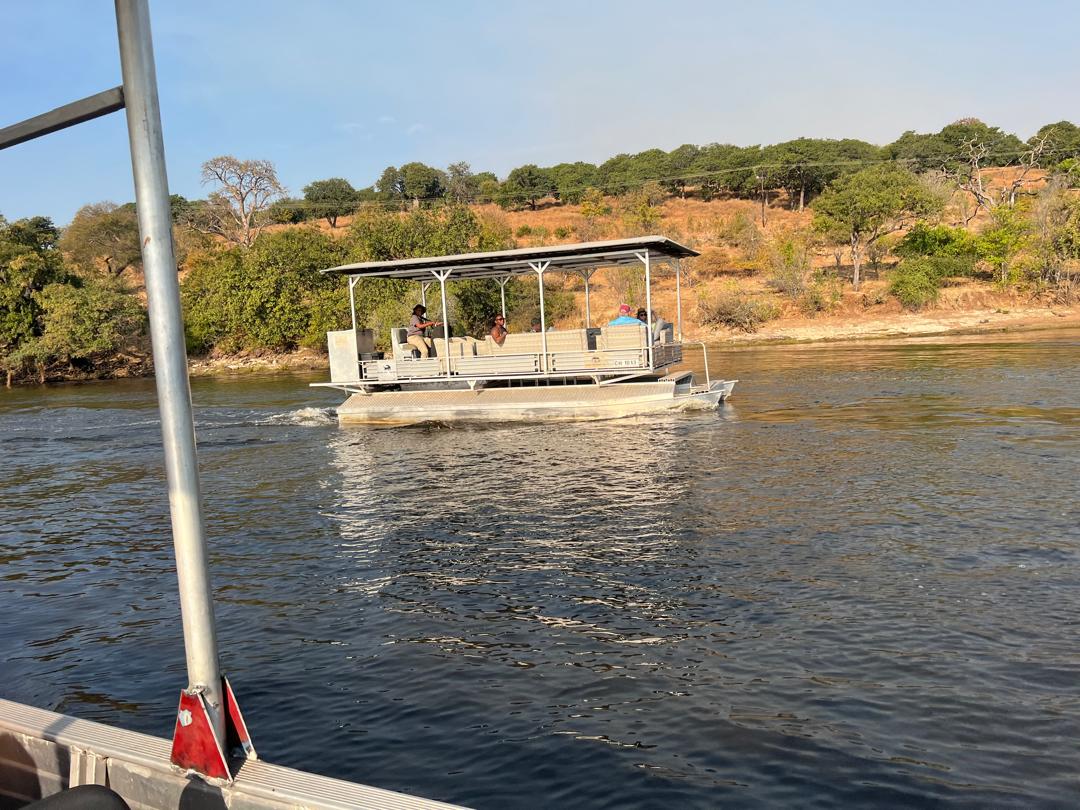
✦ Shared double-decker pontoon boats (15–30 passengers) — most affordable, typical of day-trip operators from Kasane town
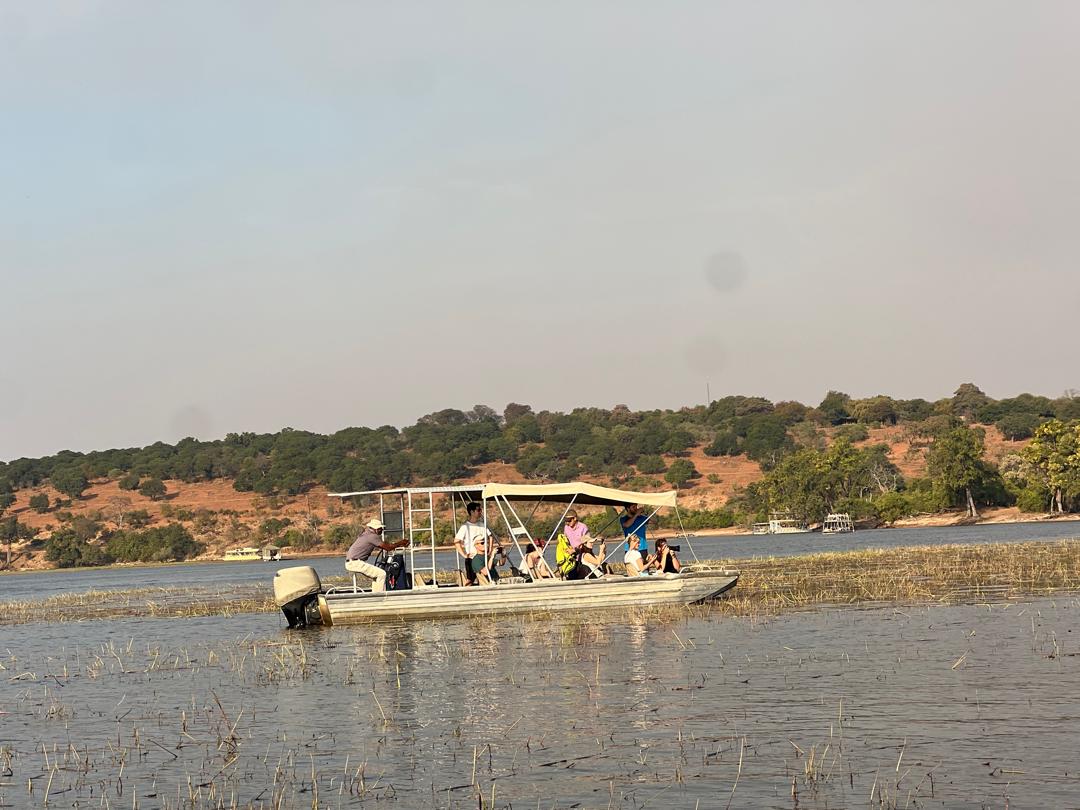
✦ Smaller private or semi-private pontoon boats (6–12 passengers) — better wildlife approach, preferred by serious photographers
✦ Private speedboats / tenders — maximum flexibility, book through upscale lodges
✦ Houseboat cruises — multi-day floating lodges combining game drives and river cruising
Pricing Guide
| Cruise Type | Price Per Person (USD) | Includes |
| Shared Pontoon (Budget) | $25 – $40 | Cruise only |
| Shared Pontoon (Mid-range) | $40 – $60 | Cruise + light snacks + drinks |
| Private Boat (6–8 pax) | $60 – $100 | Private + guide + drinks |
| Lodge-based Cruise | $80 – $150 | All-inclusive with lodge stay |
| Full-day Houseboat | $200 – $400 | Meals + activities included |
Booking Tip: Always book through your lodge or a licensed Kasane operator. Avoid unlicensed touts offering discounts at the waterfront — they operate uncertified vessels.
Recommended Operators
Several reputable operators offer excellent Chobe River cruise experiences:
✦ Chobe Game Lodge — Botswana’s most famous lodge, pioneering eco-friendly all-female guide team
✦ Pangolin Chobe Hotel — modern facilities with outstanding boat guides
✦ Chobe Safari Lodge — mid-range option with reliable shared pontoon cruises
✦ Kasane Safari Camp — budget-friendly with good access to the riverfront
✦ Cresta Mowana Safari Resort — comfortable 4-star option with daily cruises
z\Practical Tips for Your Chobe River Cruise
What to Wear and Bring
✦ Neutral-coloured clothing (khaki, olive, grey) — avoid white or bright colours
✦ Light fleece or jacket — mornings can be cool even in summer; evenings cool rapidly
✦ Wide-brimmed hat and high-SPF sunscreen — the sun reflects off the water
✦ Polarised sunglasses — reduce glare and improve water visibility
✦ Binoculars — 8×42 or 10×42 recommended for birdwatching
✦ Camera with telephoto lens — 200–400mm ideal; bring extra batteries and memory cards
✦ Insect repellent — particularly for the evening cruise
✦ Refillable water bottle — stay hydrated in the dry season heat
Photography Tips
The Chobe River cruise offers some of Africa’s most rewarding wildlife photography opportunities. Keep these tips in mind:
✦ Shoot in burst mode when elephants are crossing — action sequences reward rapid shooting
✦ Use aperture priority with a wide aperture (f/4–f/5.6) for animal portraits against blurred water backgrounds
✦ During golden hour, expose for the sky rather than the subject for dramatic silhouette shots
✦ African skimmers and kingfishers move fast — use continuous autofocus (AI Servo / AF-C)
✦ Bring a bean bag or gimbal head — the boat vibrates and a monopod is less effective on water
Health and Safety
✦ Malaria prophylaxis is strongly recommended — Chobe is a malaria area year-round
✦ Do not trail hands or feet in the water — hippos and crocodiles are present
✦ Listen to your boat captain at all times — do not stand suddenly or rock the vessel
✦ Carry a basic first-aid kit and any personal medications
✦ Yellow fever certificate may be required if arriving from endemic countries — confirm with your embassy
⚠️ Health Note: Consult a travel health clinic at least 4–6 weeks before departure for the most current malaria, vaccination, and health advice for Botswana.
 Combining the Chobe Cruise with Other Activities
Chobe Game Drive
Most visitors combine a morning game drive with an afternoon river cruise, or vice versa. The game drive offers a complementary terrestrial perspective — tracking lions, leopards, and wild dogs through the mopane woodland and floodplain areas inaccessible by boat. Many lodges and operators offer combined day packages.
Victoria Falls — 80 km Away
One of the Seven Natural Wonders of the World lies just 80 km from Kasane. Victoria Falls is easily visited as a full-day trip or — for most travellers — as the preceding or following stop on a Botswana itinerary. Activities at the Falls include white-water rafting, helicopter flights, bungee jumping, and sunset cruises on the Zambezi itself.
Okavango Delta
The legendary Okavango Delta lies approximately 570 km south-west of Kasane. A fly-in safari to one of the Delta’s luxury camps can be combined with a Chobe stay on a classic Botswana circuit. The Delta offers entirely different habitats and species — including red lechwe, sitatunga, and wild dogs — making it a natural pairing with Chobe.
Hwange National Park (Zimbabwe)
Zimbabwe’s largest national park is approximately 200 km from Kasane via the Kazungula border. Hwange is famous for its large elephant and lion populations and its extraordinary waterhole viewing. A Chobe–Hwange combination is a popular choice for travellers exploring the Kavango–Zambezi TFCA region.
| Destination | Distance from Kasane | Travel Mode | Recommended Duration |
| Victoria Falls (ZW) | 80 km | Road | 1–2 days |
| Livingstone (ZM) | 65 km | Road | 1–2 days |
| Hwange NP (ZW) | ~200 km | Road | 2–3 days |
| Maun / Okavango Delta | 570 km | Fly-in | 3–5 days |
| Moremi Game Reserve | 490 km | Road / Fly | 2–4 days |
Where to Stay in Kasane and Chobe
Luxury Lodges
✦ Chobe Game Lodge — Only lodge inside the national park; the most exclusive address in Chobe
✦ Chobe Chilwero — Hillside lodge above Kasane with breathtaking river views; superb dining
✦ Sanctuary Chobe Chilwero — Intimate luxury camp with personalised service
Mid-Range Hotels
✦ Pangolin Chobe Hotel — Modern, well-run with excellent guiding team; strong photography focus
✦ Cresta Mowana Safari Resort — 4-star riverside resort; good value for families
✦ Chobe Safari Lodge — Long-established, reliable mid-range lodge with riverfront access
Budget Options
✦ Old House Kasane — Comfortable guesthouse; good base for day-trip operators
✦ Thebe River Safaris — Budget camping and chalets at the edge of the national park
✦ Kasane Backpackers — Affordable dormitory and private room options
Sustainable and Responsible Tourism on the Chobe River
Chobe National Park is at the heart of the Kavango–Zambezi Transfrontier Conservation Area (KAZA TFCA), one of the world’s largest conservation areas spanning five countries: Botswana, Zimbabwe, Zambia, Angola, and Namibia. Responsible tourism plays a vital role in funding conservation and supporting local communities.
When booking your Chobe River cruise, consider the following:
✦ Choose operators who are licensed by the Botswana Tourism Organisation (BTO) and comply with boat capacity and approach distance regulations
✦ Look for lodges that employ local Botswana guides and support community-based natural resource management (CBNRM) programmes
✦ Do not purchase wildlife products including ivory, skins, or exotic feathers
✦ Keep noise levels low on the boat — sudden sounds disturb animals and other guests
✦ Never feed animals from the boat — it disrupts natural behaviour and creates dangerous associations
✦ Carry reusable water containers rather than single-use plastic bottles
Conservation Note: USD $25 per person per day of the national park entry fee goes directly to the Botswana Department of Wildlife and National Parks for conservation and anti-poaching operations.
Frequently Asked Questions (FAQ)
Is the Chobe River Cruise suitable for children?
Yes — the Chobe River cruise is one of the most family-friendly safari activities in Africa. There are no minimum age requirements for most shared pontoon boats, and the stable platform makes it suitable for young children. Children often find the close elephant encounters particularly memorable. Always bring children’s sun protection and insect repellent.
Do I need a visa to enter Botswana?
Citizens of most countries including the USA, UK, EU member states, Australia, and most SADC countries do not require a visa to enter Botswana for stays up to 30–90 days (varies by nationality). Visas are available on arrival for countries that require them. Always confirm entry requirements with the Botswana Immigration Department or your embassy well in advance of travel.
What currency is used in Botswana?
The official currency is the Botswana Pula (BWP). US Dollars, South African Rand, and Zimbabwean US Dollars are accepted at most lodges and safari operators in Kasane. ATMs are available in Kasane town. Credit cards are accepted at upscale lodges but may not work at smaller operators — carry some cash.
Can I combine Botswana and Zimbabwe in one trip?
Absolutely — and this is one of the most popular itineraries in southern Africa. The Chobe–Victoria Falls combination is a classic, and the Kazungula border crossing between Botswana and Zimbabwe is efficient and straightforward. Many operators offer transfers between Kasane and Victoria Falls, or self-drive is easy via a good tar road.
What is the best photography equipment to bring?
For wildlife photography from the boat, a DSLR or mirrorless camera with a 100–400mm telephoto zoom is the most versatile choice. A wide-angle lens (16–35mm) is useful for landscape and environmental shots, particularly at golden hour. Bring a lens cloth as the water surface kicks up spray; waterproof camera bags are advisable during the wet season.
Conclusion: Is the Chobe River Cruise Worth It?
The Chobe River Boat Cruise is not just worth doing — it is, for many travellers, the defining experience of their African safari. In no other setting can you drift within metres of bathing elephant herds, photograph crocodiles on golden sandbanks, and watch the African sunset paint the sky in fire above a panorama of undisturbed wilderness.
Whether you are a first-time safari-goer seeking your first authentic African wildlife encounter, or a seasoned traveller returning to Africa for the tenth time, the Chobe River delivers. The combination of extraordinary wildlife density, beautiful river scenery, and the unique perspective from the water creates an experience that photographs cannot fully capture and words struggle to convey.
Plan your time carefully, choose a reputable operator, bring your camera and binoculars, and prepare to be astonished. The Chobe River awaits.