
Chobe National Park
Chobe National Park is one of Africa’s most celebrated wildlife destinations, located in the far north of Botswana along the Chobe River bordering Namibia, Zambia, and Zimbabwe. Covering approximately 11,700 square kilometres, Chobe is Botswana’s first national park and is renowned globally for hosting the largest concentration of African elephants on the continent, with estimates of up to 120,000 elephants roaming its vast ecosystems.
Whether you are planning a luxury river cruise, a self-drive safari adventure, or a guided game drive, Chobe National Park delivers an extraordinary African safari experience. The park’s diverse habitats — from floodplains and riverine forests to mopane woodland and open savannah — support an astonishing variety of wildlife that draws thousands of visitors from around the world every year.
This comprehensive guide covers everything you need to know about visiting Chobe National Park: wildlife, park fees, best time to visit, accommodation, activities, and practical travel tips to help you plan the perfect safari.
 Location & How to Get to Chobe National Park
Chobe National Park is situated in the Chobe District of northern Botswana. The main gateway town is Kasane, which lies at the confluence of four countries — Botswana, Namibia, Zambia, and Zimbabwe — a unique geographical position known as the Kazungula Confluence.
Getting to Chobe: By Air
The most convenient way to reach Chobe National Park is by flying into Kasane Airport (BBK), which receives scheduled domestic flights from Sir Seretse Khama International Airport in Gaborone. International travellers often route through Johannesburg OR Tambo International Airport (JNB) in South Africa, connecting to Kasane or nearby Victoria Falls Airport (VFA) in Zimbabwe.
Getting to Chobe: By Road
Chobe is highly accessible by road for self-drive travellers. Key road connections include:
- From Victoria Falls (Zimbabwe): 80 km via the Kazungula Border Crossing — approximately 1.5 hours
- From Livingstone (Zambia): 60 km crossing via the Kazungula Ferry/Bridge
- From Maun (Botswana): approximately 600 km on the A3 highway — 6–7 hours
- From Johannesburg (South Africa): approximately 1,300 km — best combined with a fly-in
The Four Ecosystems of Chobe National Park
Chobe National Park is divided into four distinct ecological zones, each offering unique wildlife and landscape experiences:
1. Chobe Riverfront
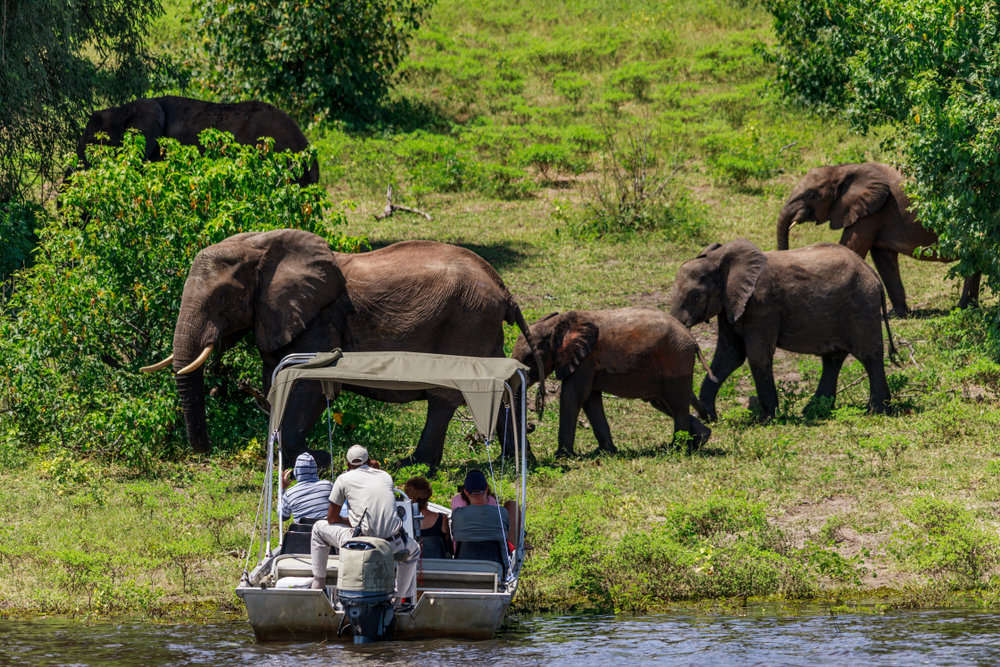
The Chobe Riverfront is the most visited and iconic section of the park, stretching along the northern boundary. This riverine ecosystem supports extraordinary concentrations of wildlife, particularly during the dry season when elephants, buffaloes, hippos, and crocodiles gather along the water. Boat safaris on the Chobe River are among the most popular activities in Africa.
2. Savuti
The Savuti region lies in the southwest of Chobe and is famous for its dramatic predator–prey dynamics. This area is renowned for resident lion prides, cheetah sightings, spotted hyena clans, and large herds of zebras and wildebeest. The ancient Savuti Channel, which flows intermittently, creates a vital wetland when active.
3. Linyanti Wetlands
The Linyanti area in the west is a pristine and exclusive area known for its spectacular wild dog sightings, roan and sable antelope, and superb birding. Fewer tourists reach this remote zone, making it ideal for exclusive, off-the-beaten-path wildlife encounters.
4. Nogatsaa/Tchinga
Situated in the park’s interior, the Nogatsaa and Tchinga pans are remote, seldom-visited woodland areas. This zone offers outstanding game viewing — especially during the wet season — with lions, wild dogs, and rare antelope species frequenting the area.
Wildlife in Chobe National Park
Chobe National Park is a Big Five destination, hosting elephant, lion, leopard, buffalo, and rhinoceros (though rhino are now very rare in the park). The park’s extraordinary biodiversity makes every game drive an unpredictable, thrilling adventure.
Elephants of Chobe
The African elephant (Loxodonta africana) is the undisputed star of Chobe. With a population exceeding 120,000 individuals, Chobe supports more elephants than any other park in the world. Herds of hundreds gather at the Chobe River during the dry season — a breathtaking spectacle that no visitor should miss. Watch them swim across the river, playfully interact in the shallows, and march in massive processions across the floodplains.
| ELEPHANT FACT |
| During peak dry season (July–October), over 1,000 elephants can be seen at the Chobe Riverfront in a single afternoon — one of Africa’s greatest wildlife spectacles. |
Big Cats
Lions are frequently encountered in both the Chobe Riverfront and Savuti regions. The Savuti pride is particularly famous for its unique elephant-hunting behaviour — one of the very few lion populations in Africa that regularly hunts adult elephants. Leopards are more elusive but can be spotted in riverine woodland areas, while cheetahs are most frequently seen in open Savuti grasslands.
Other Notable Wildlife
Beyond the big cats and elephants, Chobe is home to:
- African wild dog (Lycaon pictus) — best seen in Linyanti
- Spotted hyena — common throughout the park
- Nile crocodile and hippopotamus — abundant along the Chobe River
- Cape buffalo — frequently seen in large herds
- African wild cats, servals, and genets
- Puku, red lechwe, and impala along the floodplains
- Roan antelope, sable antelope, and tsessebe in Linyanti
- Zebra, wildebeest, and giraffe throughout the park
Birding in Chobe National Park
Chobe is a world-class birding destination with over 450 recorded bird species. The Chobe River and Linyanti wetlands attract enormous concentrations of waterbirds including African fish eagle, carmine bee-eater colonies (October–November), saddle-billed stork, goliath heron, giant kingfisher, and a variety of egrets, herons, and ducks. Raptors are well represented, with martial eagle, bateleur, and Pel’s fishing owl among the highlights.
Safari Activities in Chobe National Park
1. Game Drives
Game drives are the most popular way to explore Chobe. Both morning and afternoon game drives offer exceptional wildlife encounters. Self-drive safaris are permitted in the Chobe Riverfront and Savuti areas on designated tracks, and 4×4 vehicles are strongly recommended for Savuti and Linyanti. Guided game drives are available through most lodges and camps, offering expert tracking and interpretation.
2. Chobe River Boat Safaris
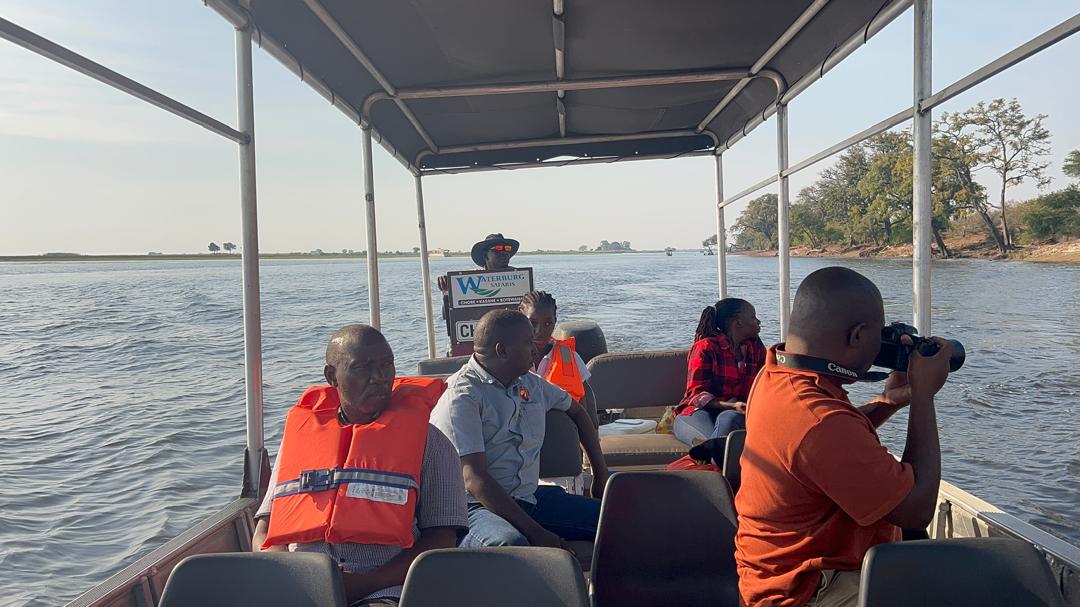
A boat safari on the Chobe River is an absolute must-do experience. Gliding quietly along the water offers unparalleled access to wildlife at eye level — elephants bathing, hippos yawning, crocodiles basking, and thousands of birds nesting in the riverine trees. Sunset boat cruises are particularly spectacular as golden light illuminates the elephant herds. Most Kasane lodges and operators offer 2–3 hour morning and afternoon boat tours.
 3. Night Game Drives
Licensed operators in Chobe offer night game drives after park closing hours, dramatically increasing chances of encountering nocturnal species such as leopard, lion, hyena, aardvark, scrub hare, African wildcat, genet, and civets. This is an exclusive experience not available in all African parks.
4. Walking Safaris
Walking safaris are available from selected camps in the Linyanti and Savuti regions, accompanied by armed professional guides. This ground-level experience connects visitors intimately with the bush, tracking wildlife, reading animal signs, and learning about the smaller fauna and flora.
5. Fishing
Sport fishing is permitted in designated areas of the Chobe River and Linyanti with the appropriate fishing permit. The river is excellent for tiger fish, catfish, and bream. The famous Tiger Fish Tournament is held annually on the Chobe River.
6. Cultural Village Visits
Day trips from Kasane to nearby Chobe villages provide cultural immersion, offering insight into the Subiya and Tswana peoples, their traditional crafts, and local way of life.
Best Time to Visit Chobe National Park
Chobe National Park can be visited year-round, but the experience changes dramatically with the seasons. Understanding Botswana’s two main seasons helps you plan the optimal visit.
| Season | Months | Highlights | Conditions |
| Dry Season ⭐ BEST | May – October | Huge wildlife concentrations at waterpoints; elephants at the river; excellent game viewing | Minimal rain; cooler May–Jul; hot Aug–Oct; dusty tracks |
| Peak Dry | July – October | Best elephant viewing ever; Savuti lions; boat safaris in full swing | Hot, dry, very busy — book well in advance |
| Green Season | November – April | Lush scenery; migratory birds; newborn animals; lower prices | Rains; some roads flooded; vegetation thick; wildlife dispersed |
| Shoulder Season | April & November | Excellent value; lighter crowds; wildlife still accessible | Unpredictable; weather transitioning |
| BEST MONTH TO VISIT |
| August and September are widely regarded as the optimal months for visiting Chobe. Wildlife concentrations at the Chobe River reach their peak, elephant herds are enormous, predator activity is high, and the dry, clear skies make for perfect photography conditions. |
Chobe National Park Entrance Fees 2026/2027
Entry fees for Chobe National Park are payable to Botswana Tourism Organisation (BTO) / Department of Wildlife & National Parks (DWNP). Fees are charged per person per day and are subject to annual revision.
| Visitor Category | Fee per Person per Day (USD) |
| International Tourist (Adult) | USD 25 – 30 |
| International Tourist (Child, 8–17 yrs) | USD 10 – 15 |
| SADC Citizen (Adult) | USD 8 – 10 |
| Botswana Citizen (Adult) | BWP 30 – 50 |
| Vehicle Entry (Foreign-registered) | USD 5 – 10 per day |
| Camping Fee (public sites) | USD 15 – 25 per person per night |
| Boat/Cruise Permit | USD 10 per person (some operators include this) |
| ⚠️ FEE NOTICE |
| Park fees in Botswana are subject to annual review. Always verify current rates directly with the Department of Wildlife & National Parks (DWNP) Botswana or your tour operator before travel. Fees are typically payable in USD or Botswana Pula (BWP) at the park gate. |
Where to Stay: Accommodation in and Around Chobe
Luxury Lodges & Camps
Chobe is home to some of Africa’s most celebrated luxury safari lodges, many located directly on the Chobe River with spectacular views over the floodplains:
- Chobe Game Lodge — the only permanent lodge inside Chobe National Park; iconic and historic
- Belmond Savute Elephant Lodge — deep in Savuti; renowned for elephant encounters
- Camp Savuti — luxury tented camp; excellent predator sightings
- Chobe Chilwero — elevated lodge above Kasane with panoramic river views
- Zarafa Camp (Linyanti) — ultra-exclusive; one of Africa’s most remote luxury camps
- DumaTau Camp — Linyanti; renowned for wild dog and rare antelope sightings
Mid-Range Accommodation
- Thebe River Safaris — well-positioned camp on the Chobe River, Kasane
- Chobe Safari Lodge — riverside; popular with independent and group travellers
- Elephant Valley Lodge — bordering the park; excellent value for money
Budget & Camping
Chobe has designated public campsites managed by DWNP. Serondela Campsite near Kasane is the most accessible. Facilities are basic, and campers must be fully self-sufficient. Wild camping outside designated sites is strictly prohibited.
Self-Drive Safari in Chobe National Park
Chobe is one of Botswana’s most self-drive-friendly national parks, particularly in the Chobe Riverfront sector. However, proper preparation is essential.
Vehicle Requirements
- 4×4 vehicle strongly recommended (essential for Savuti and Linyanti)
- High clearance essential after rains — tracks can be deeply rutted
- Carry sufficient fuel — distances between stations are vast
- Two spare tyres recommended for remote areas
- Vehicle recovery gear (hi-lift jack, sand tracks) for Savuti
Car Hire Near Chobe
Several 4×4 rental companies operate from Kasane, Maun, and Livingstone (Zambia), offering Land Cruiser, Land Rover Defender, Toyota Hilux, and Safari-spec 4×4 vehicles with rooftop tents for self-drive overlanding across Botswana. Booking well in advance is critical during peak season (July–October).
Combining Chobe with Other Destinations
Chobe National Park’s unique position at the junction of four countries makes it an ideal hub for multi-destination safari itineraries:
- Chobe + Victoria Falls (Zimbabwe): 80 km — a classic 3–5 day combination
- Chobe + Okavango Delta (Botswana): fly-in or drive via Maun — 7–10 day safari
- Chobe + Hwange NP (Zimbabwe): 4-hour drive for excellent lion and elephant viewing
- Chobe + Kafue NP (Zambia): 5-hour drive crossing at Kazungula
- Chobe + Moremi Game Reserve (Botswana): 10-day circuit via Maun
- Chobe + Lower Zambezi (Zambia): canoe and walking safari combination
Practical Travel Tips for Chobe National Park
Health & Safety
- Malaria: Chobe is a malaria zone — take prophylactics and use repellent
- Vaccinations: Yellow fever certificate required if arriving from endemic countries
- Sun protection: intense African sun — hat, SPF 50+ sunscreen essential
- Drinking water: carry 3–5 litres per person for full-day game drives
- Elephant safety: never approach elephants on foot; they are wild and unpredictable
What to Pack
- Neutral-coloured clothing (khaki, olive, beige) — bright colours disturb wildlife
- Binoculars (8×42 or 10×42) — essential for birding and distant sightings
- Camera with telephoto lens (minimum 400mm equivalent recommended)
- Warm fleece/jacket for early morning and evening game drives
- Insect repellent with DEET
- Headlamp or torch for camp use after dark
Visa Requirements
Most nationals receive a 30-day visa on arrival at Kasane/Kazungula border for Botswana. However, requirements vary by nationality — always check with your local Botswana embassy before travel. The KAZA UNIVISA (available to some nationalities) is a convenient single visa covering both Botswana and Zimbabwe.
Why Chobe National Park Should Be on Your Bucket List
In a continent of world-class safari destinations, Chobe National Park stands apart for several compelling reasons:
- World’s largest elephant concentration — nowhere else on Earth can you witness these numbers
- Unique four-country border position — combine Botswana, Zimbabwe, Zambia, and Namibia in one trip
- Spectacular river safari experience — the Chobe River boat cruise is Africa’s finest
- All-round Big Five safari with lion, leopard, buffalo, elephant, and occasional rhino
- World-class birding with 450+ species including Pel’s fishing owl and carmine bee-eaters
- Accessible self-drive options — one of Africa’s most welcoming parks for independent travellers
| ✈️ READY TO VISIT CHOBE? |
| Whether you are travelling independently or booking a guided safari, Chobe National Park promises an unforgettable African wildlife experience. Plan your trip for July–October for peak wildlife viewing, and book accommodation well in advance as the park’s best lodges and campsites fill up quickly during peak season. |
Frequently Asked Questions (FAQ) — Chobe National Park
Is Chobe National Park worth visiting?
Absolutely. Chobe National Park is widely considered one of Africa’s top five national parks, especially for elephant, lion, and river safari experiences. Its unique position bordering four countries and the extraordinary wildlife make it an unmissable African destination.
How many days do you need in Chobe?
A minimum of 2–3 nights is recommended to experience the Chobe Riverfront properly. For visitors wishing to explore Savuti and Linyanti as well, 5–7 days allows time in each region. Combining Chobe with Victoria Falls typically requires a minimum 4-day itinerary.
Can you self-drive in Chobe National Park?
Yes. Self-drive is permitted and popular in the Chobe Riverfront sector. Savuti and Linyanti require a 4×4 vehicle and are recommended for experienced self-drive travellers only. The park has clear signposting and a well-maintained track network in the main tourist areas.
What is the best wildlife to see in Chobe?
Elephants are undoubtedly the highlight — Chobe’s elephant herds are unlike anything else in Africa. Lions (especially Savuti prides), leopard, wild dog (Linyanti), hippo, and crocodile are among other top sightings. Birding is exceptional year-round.
Is Chobe safe for visitors?
Chobe National Park is very safe for tourists. Kasane is a small, peaceful border town with low crime. Standard safari precautions apply: remain in your vehicle during game drives, follow guide instructions, and treat all wildlife with respect. Malaria prevention is essential.
Conclusion
Chobe National Park is not simply a destination — it is an experience that redefines your relationship with the natural world. From the thunderous approach of a thousand-strong elephant herd to the haunting call of an African fish eagle at dusk over the Chobe River, every moment in this extraordinary park imprints itself permanently on the memory.
Whether you are embarking on your first African safari or adding Chobe to a long list of wildlife adventures, this remarkable park in northern Botswana will exceed your every expectation. Plan your visit carefully, respect the environment, and prepare to be utterly astonished by the sheer abundance of life that Chobe National Park harbours within its wild, untamed borders.